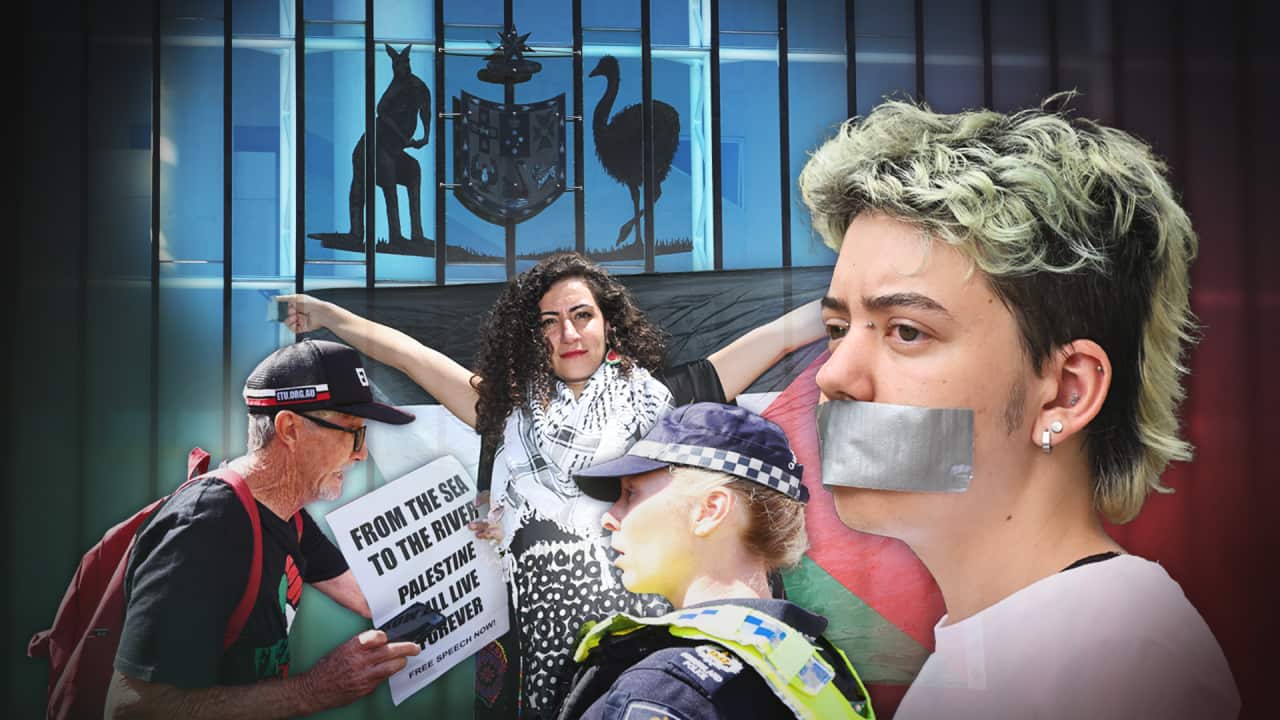
Australia's constitutional law and free speech experts say a pending legal challenge against Queensland's controversial prohibited speech laws has a reasonable chance of success.
The laws, passed earlier this year, ban the phrases "from the river to the sea" and "globalise the intifada", categorising them as hate speech against Jewish people.
Over two dozen people have been arrested under the laws so far — including two Jewish men last weekend — for allegedly chanting or showing the banned phrases.
Activists from pro-Palestinian groups have pledged to launch a constitutional challenge to laws under the implied right to the freedom of political communication.
Remah Naji, from Justice for Palestine Magan-djin, told SBS News the group was still in the initial phases of legal consultation and would look to file a case within the next month.
News that makes sense
Your trusted source for staying up-to-date with the world around you. Get free daily news updates and analysis, straight to your inbox.
"Justice for Palestine believes that the law is invalid because it contradicts the Australian constitution and our implied freedom to political communication," she said.
'Unusual' to criminalise certain speech
Bond University constitutional law expert Anthony Gray said it was "unprecedented" for legislation in Australia to criminalise the uttering of particular words.
"It's highly unusual," he told SBS News.
"The laws are highly vulnerable to a successful challenge."
He said the laws "discriminate" on the basis of viewpoint — and there were legal precedents of a successful challenge around this area.
"And whilst the right to freedom of speech is not absolute and some limits are acceptable, there are precedents where the court has noted that where legislation expressly discriminates on the basis of viewpoint, that makes it more likely to be unconstitutional, and this legislation certainly does discriminate on the basis of viewpoint."
Gray cited, as a legal precedent, Queensland's since-repealed Vagrants, Gaming and Other Offences Act which once criminalised the use of threatening, abusive or insulting words to a person in a public place.
The High Court in 2004 ruled that the legislation would only be valid if the speech would likely be a breach of the peace; if the speech was reasonably likely to lead to violence.
Gray also said the newly-banned phrases have different meanings for different people.
"I think they'll find it difficult to justify this legislation as dealing with incitement to violence, because the evidence that I have seen is just not there to support an argument that these restrictions relate to incitement."
He said there was also "fertile ground" for a challenge given last week's successful ruling against the Minns government's protest laws.
Constitutional law expert Anne Twomey said that case will be relevant to any challenge to the Queensland laws.
That case she said, even though was about protest rights and not slogans, went into arguments about the "importance of the fact that democracy means that you are allowed to dissent, you are allowed to express views that people find objectionable".
"All of that is relevant as to why the expressions were banned. If they're banned because there's a concern about social cohesion or concern about the fact that it's upsetting or inflammatory or divisive, well that's not a good enough reason."
She said it's unclear at this point whether a challenge could succeed because it will depend on the court's interpretation of the section of the law pertaining to the banned phrases.
"It will come down to the view that a court would have about whether the words 'menaced' and 'harassed', and whether ... the statement is tied to the way in which it's done, which must be a way that might reasonably be expected to cause a member of the public to feel that," Twomey told SBS News.
"Is that sufficient to cause your law to be valid? It's just unclear at this point. So there are arguments that could be made either way, because of that."
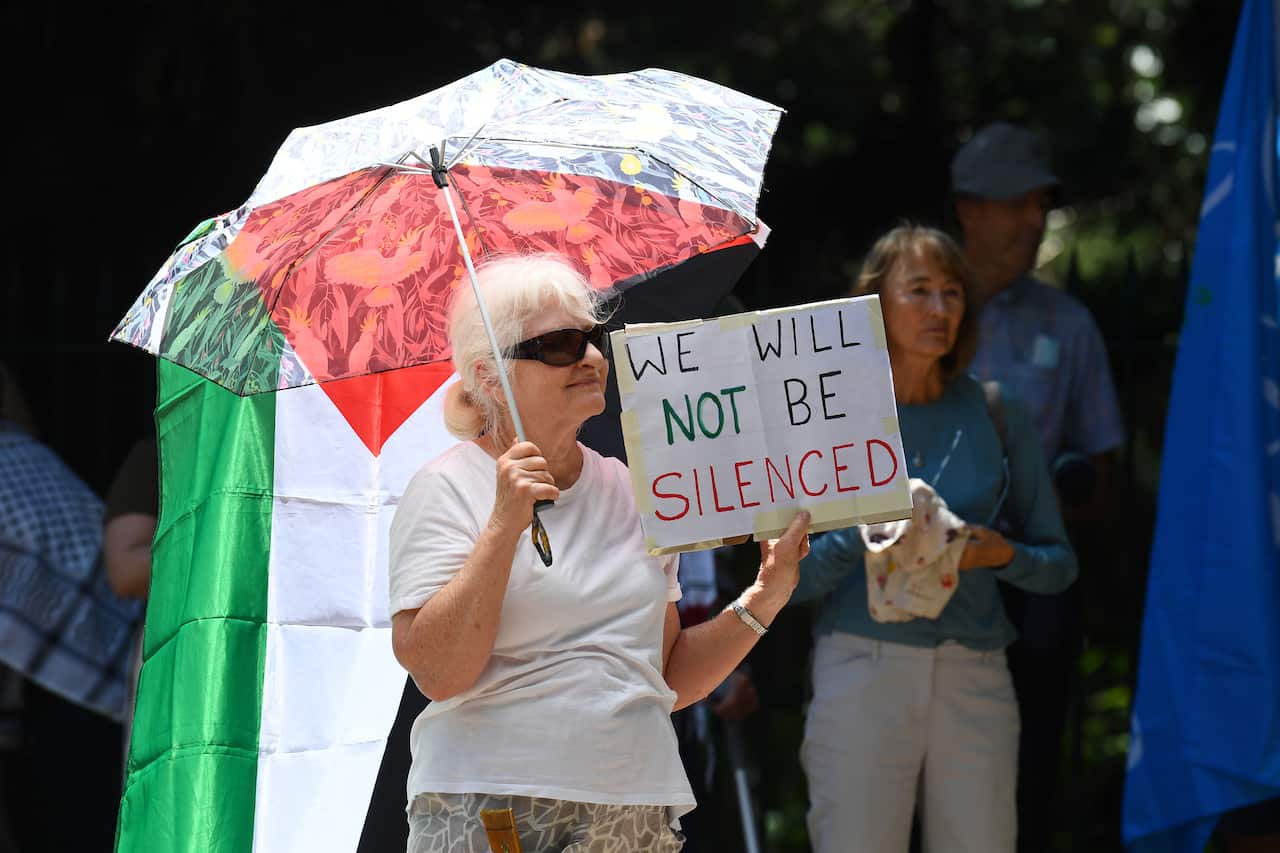
She said reports suggested people have been using the banned phrases to protest concerns about freedom of speech, not for the purposes of menacing, harassing or offending anyone.
"If that's the case, it might well be that they fall into a category of having a reasonable excuse.
"When you're dealing with reasonable excuses, it refers to things like genuine, artistic, educational, historical, etc, purpose, and so that can take into account."
Laws risk worsening social cohesion: expert
Kath Gelber, a professor of politics and public policy at the University of Queensland, believes the case has a "very high likelihood" of succeeding.
"There's no doubt at all that this law burdens the freedom of political communication," she told SBS News.
"I think it's very strongly arguable, that this law might not survive a constitutional challenge."
She said the laws were well-intentioned in its "legitimate aim" to combat antisemitism and improve social cohesion as a response to the "horrific" Bondi terrorist attack.
But there were existing laws and other means of achieving that aim, she said.
"Its impact on freedom of speech is too significant compared to the goal that is being sought," Gelber said.
"I think there is a risk here that the Queensland law in particular is so overly, overly burdensome, that it will generate the opposite of what they want to generate."
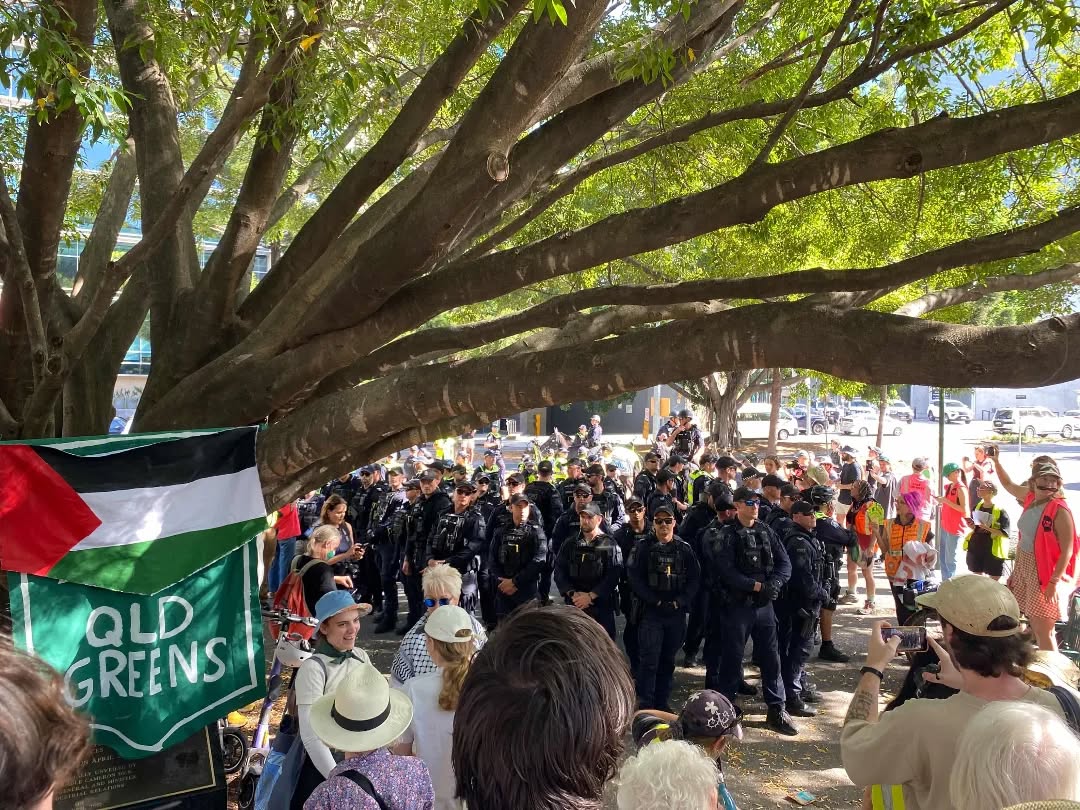
She said the laws have been impacting social cohesion.
"The vast majority of people do want to seek solidarity and the protection of human rights for everybody.
"And I think that our ability to reach across difference and have those dialogues is impaired by laws that criminalise one of the points of view, even when it's not (the) intention."
The Human Rights Law Centre said there was no evidence that criminalising specific expressions or phrases, without accompanying prevention programs, reduce racism, antisemitism, hatred, or radicalisation.
It said the state government should instead invest in community‑led prevention and education initiatives that promote respect and inclusion across communities.
"Far from combatting antisemitism, these laws are criminalising peaceful protesters — including two Jewish Australians arrested this weekend," senior lawyer Arif Hussein told SBS News in a statement.
Jewish Australians arrested under laws
When the laws were being introduced to parliament, the Queensland government argued it would protect the Jewish community following the Bondi terrorist attack and that it was "standing unwaveringly" with them in both words and action.
"We are bolstering protections for the Jewish community, so they know that this government is doing everything possible to stop the rise of antisemitism," Attorney-General Deb Frecklington said.
Queensland Jewish Board of Deputies president Jason Steinberg said the reforms would make the Jewish community feel safer and more protected.

"For the past two and a half years, the Jewish community has endured unprecedented levels of hate, intimidation and fear and the reforms send a clear message that antisemitism and hate have no place in Queensland," Steinberg said.
Two Jewish Queenslanders — Stephen Heydt and Ed Carroll — were among the 22 people who were arrested and charged on Saturday and Sunday under the banned speech laws.
Both identify as non-Zionist Jews and say the laws do not protect them as members of the community.
Carroll said he disagreed with the government's claim that it was protecting the community.
"Right from the get go with these laws, it was very clear it has nothing to do with Jewish safety, and everything to do with protecting Zionism as a political movement," he told SBS News.
"I think that our safety comes from a collective safety. When you have the freedoms and the rights being taken away from people that's never going to make our lives safer."
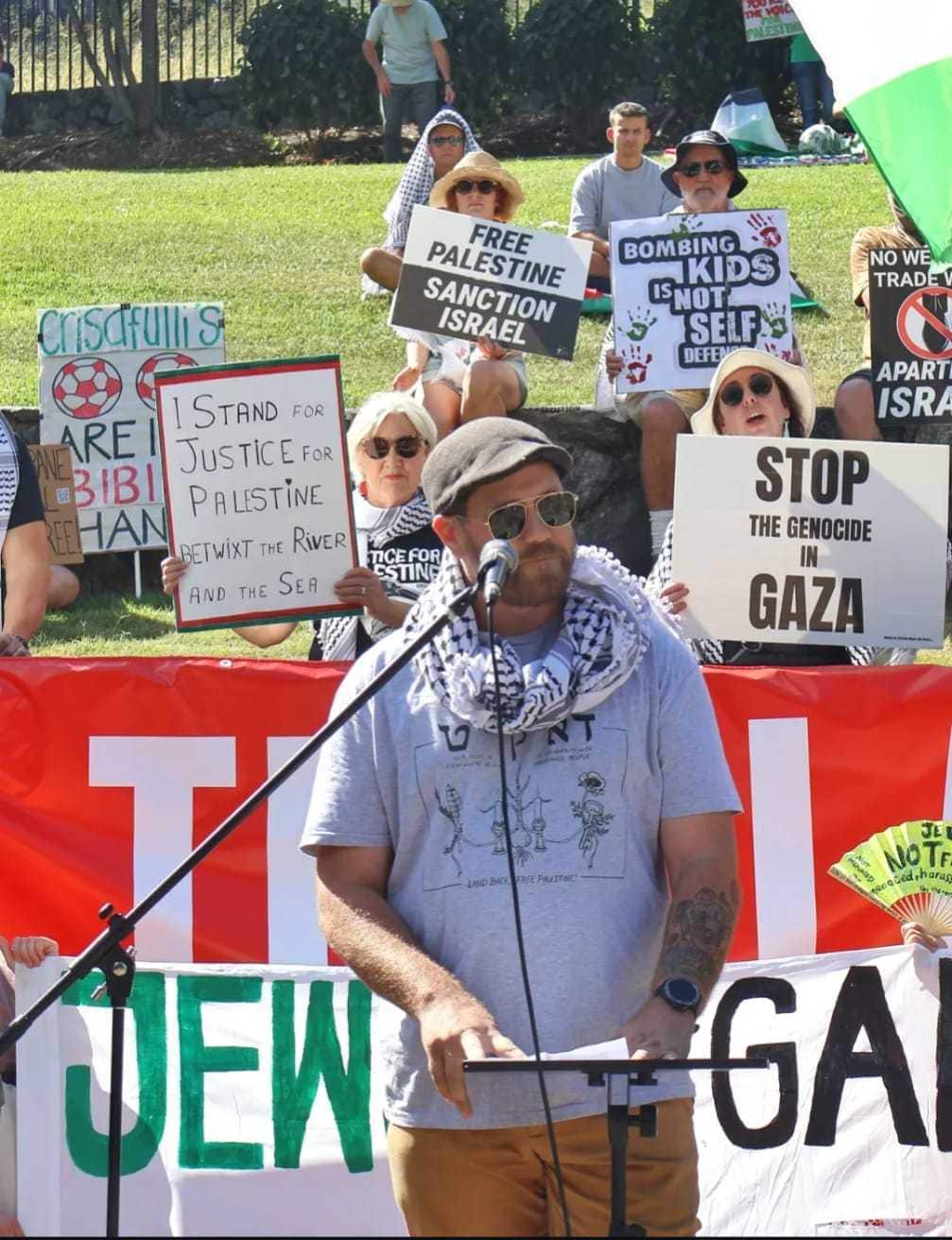
Heydt said he regarded the laws as "being completely racist".
"[That] there are potentially five meaningful words that were supposed to protect the Jews of Queensland or the Jews of Australia, is utter rubbish."
SBS News contacted the Queensland Jewish Board of Deputies and the Zionist Federation of Australia (ZFA) for comment.
The nation's peak Jewish organisations including the ZFA have argued the phrase "from the river to the sea" is "a violent, antisemitic call for the elimination of the State of Israel and the removal of its Jewish population".
On the other side, Palestinian groups including Australian Palestine Advocacy Network say the phrase is "a cry for liberation and justice" and "calls for an end to Israeli apartheid, and for the universal values of justice, freedom and human rights to be upheld for all people, including Palestinians."
Israel has denied claims of apartheid.
For the latest from SBS News, download our app and subscribe to our newsletter.







