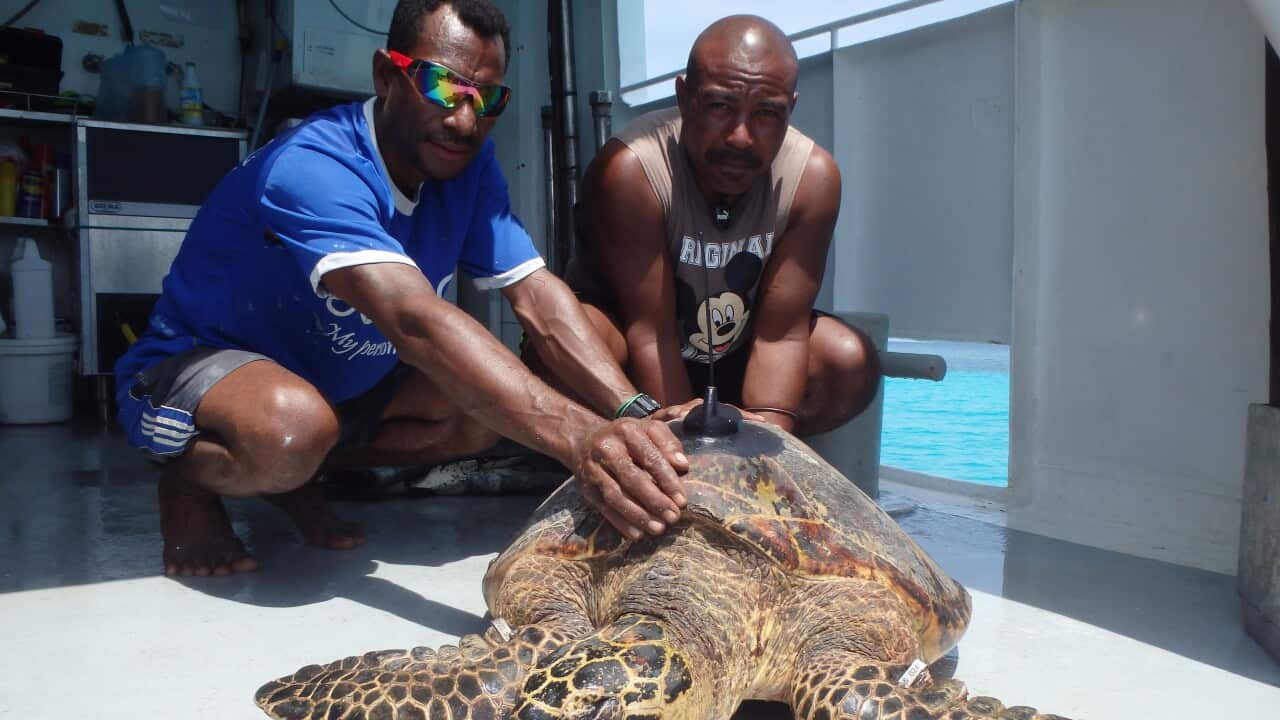
The epic journey of the hawksbill turtle to lay their precious eggs on the Queensland coast is the latest focus in a debate over federal government plans to roll back “no-take” zones.
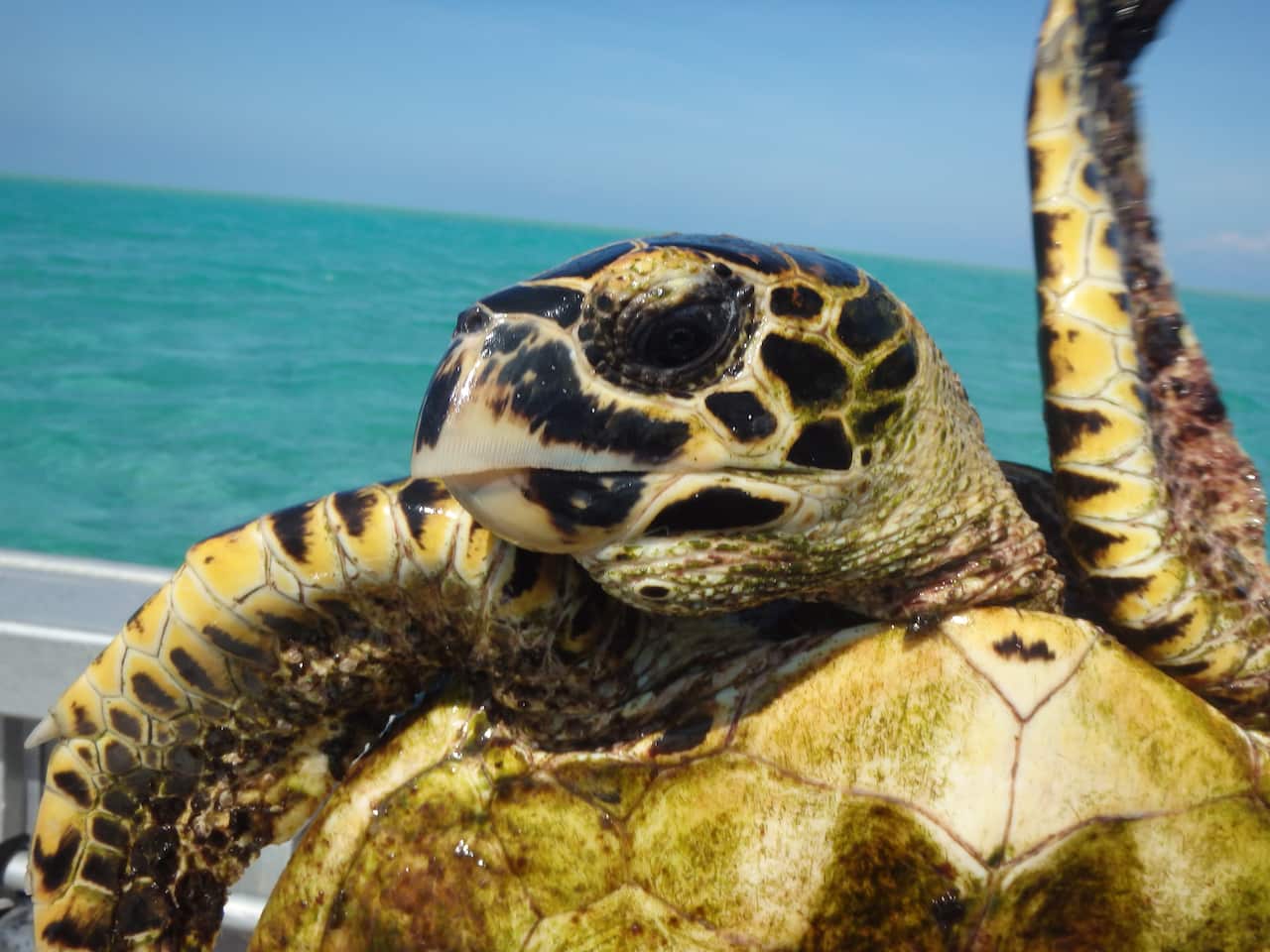
The hawksbill is “critically endangered” on the International Union for Conservation of Nature (IUCN) Red List, one step away from extinction in the wild, and classed as “endangered” in Australia but not listed in PNG.
World Wildlife Fund (WWF) researchers using satellite trackers on ten turtles recorded their 1,000 kilometre swim between January and May this year.
News that makes sense
Your trusted source for staying up-to-date with the world around you. Get free daily news updates and analysis, straight to your inbox.
“We had no idea where the turtles would go because they’re one of the least studied turtles in the world, let alone Papua New Guinea, so it was a surprise to us they travelled this way,” said Christine Hof, a WWF marine scientist.
“Turtles nest approximately every five years and then travel to a feeding ground, so we need to find out what the threats are that they’re facing, where they’re feeding and migrating then we can suggest management plans to recover that population.”
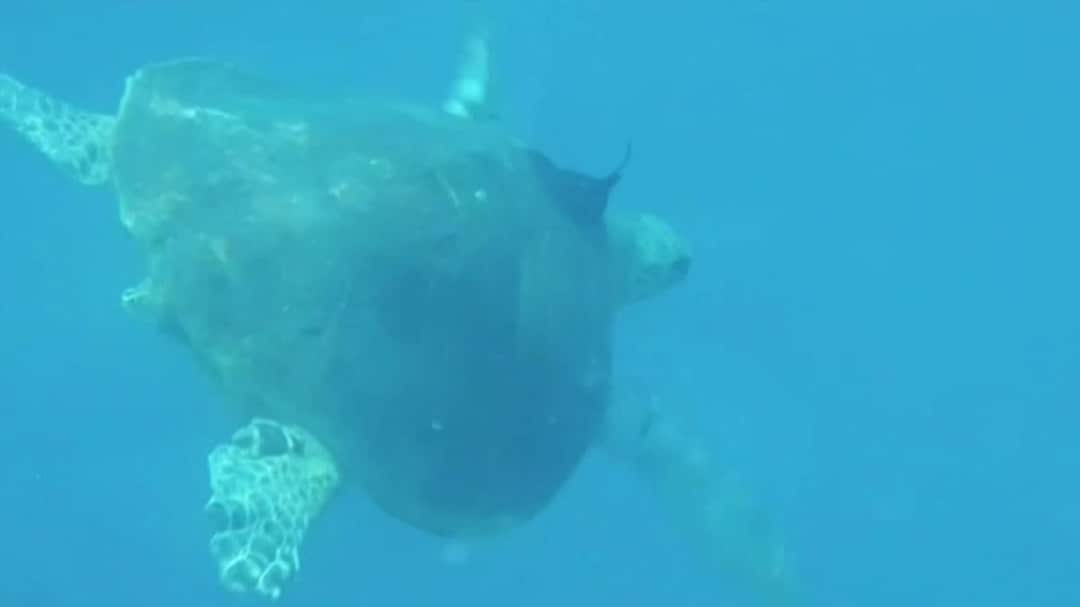
From the Conflict Islands on PNGS south-eastern tip, the turtles went straight through the 1,000,000 square kilometre Coral Sea Marine Park, an ocean superhighway between the Pacific Islands and Australia and also a lucrative multimillion dollar commercial fishing zone.
“Ecological assessment has been undertaken and we’re quite confident to say that the hawksbill turtle isn’t one of the species that there is any concern about being caught in the Coral Sea, so we're quite confident that species isn’t under threat from activities undertaken in the Coral Sea,” said Jane Lovell, CEO of the Seafood Industry Australia.
Under the last Labor government, large parts were declared “no take” areas but never enforced.
When the Coalition came to power five years ago it suspended the declaration and now plans to roll back the “no-take” zones.
“Labor proclaimed those areas and the management plans (but) the unfortunate thing is the Turnbull-Abbott government never implemented them and they’re trying to say their bad plan is better than no plan at all,” said Labor senator Louise Pratt.
Senator Pratt along with the Greens have moved a disallowance motion in the Senate to stop any rezoning of the “no take” areas due to be voted on by August.
“The best of the marine science says to protect biodiversity you need large areas of protection that are enforced what we’re seeing is the Coalition gutting 50 per cent of the area Labor had put in place,” she said.
Federal environment minister Josh Frydenberg in a statement said the government has a recovery plan for turtles and they are protected by the International Convention for the Conservation of Migratory Species.
“All six species of marine turtle found in Australian waters are listed and protected under this treaty,” Senator Frydenberg said in a statement.
“In June last year, the Turnbull Government approved a new ‘Recovery Plan for Marine Turtles in Australia’, which identifies actions to address nine significant threats to marine turtles. These threats include international take and trade, and fisheries by-catch.
“The Coral Sea Marine Park Management Plan 2018 will significantly improve protection of marine habitats and species compared to current arrangements, under which the park is not subject to a management plan.
“Increased protection for nesting and foraging turtles is provided under the Plan, with closures to commercial long-lining around all Coral Sea islands and reefs where turtles nest and forage.”
The hawksbill spends very little time nesting and otherwise is at sea in what is known as the “lost years” in the Coral Sea.
“Now we know that information we need to look at the threats that they face along that migratory route, what we do know is that the interaction with fisheries has increased because of the new electronic observer programs in place,” said WWF’s Ms Hof.
“There’s been little research done on the by-catch in the Coral Sea and the connectivity between PNG and Australia except what we are aware of from log books in commercial fisheries.
“With the new electronic observer system in place there’s a lot more information, we’re not 100 per cent sure what the interaction means and what it’s doing to the population but it’s analysis we definitely need to do.”
The fishing industry believes the fears for the hawksbill are unfounded.
“What we would say about the latest information from WWF and the hawksbill turtle is we have actually been fishing in that area for the last 20 years so we have great fisheries management practices in place and we don’t see that there’s any risk to the hawksbill, in particular, I’d like to point out that the tuna fishery that works up there is MSC (Marine Stewardship Council) certified,” said Ms Lovell.
“We are aware of the fact that fishers in that area are quite heavily regulated, so there are four cameras on each of the vessels working that area and soon as they start fishing those cameras come into play and we have very good information about their activities and what they are catching.”







