
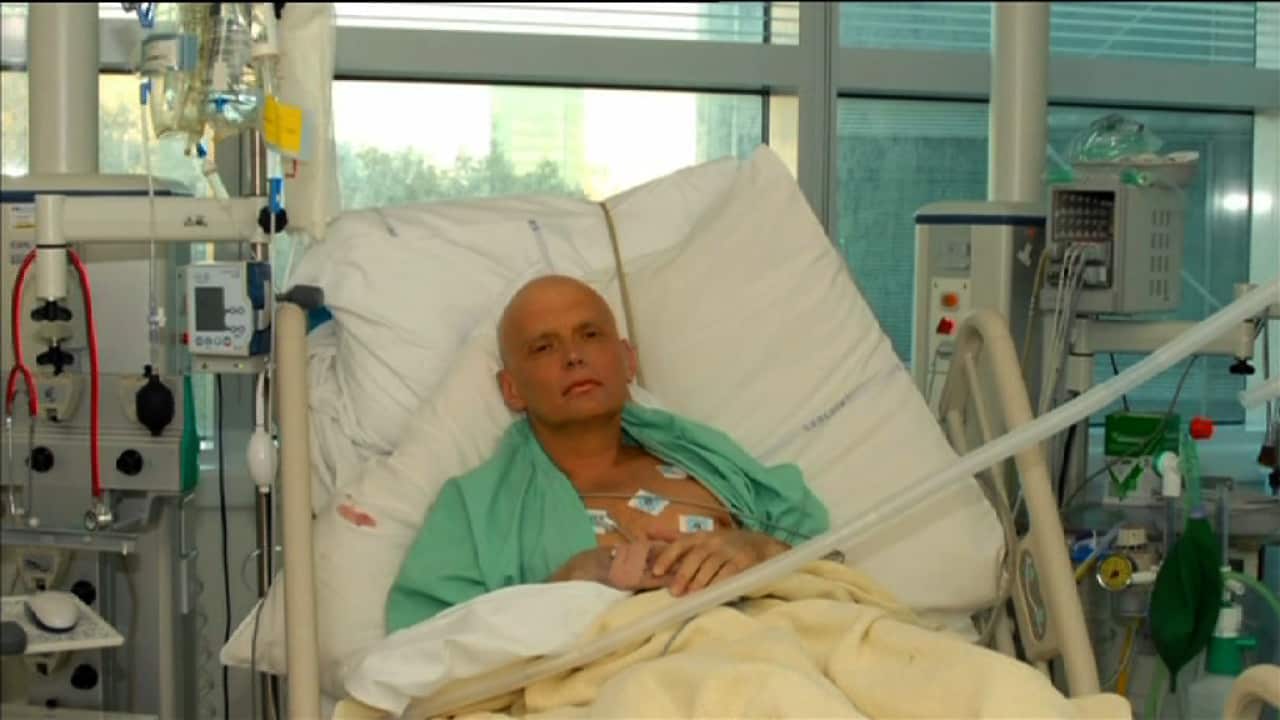
The autopsy on the body of poisoned Russian former spy Alexander Litvinenko was described as one of the most dangerous ever on day two of an inquiry into his death.
Litvinenko died in a London hospital on November 23, 2006, three weeks after drinking tea infused with deadly polonium-210 at a luxury hotel in the city's Mayfair district.
Medical staff had to don two white safety suits, protective gloves and special hoods to conduct the examination a week later which determined how he died.
They found that the 43-year-old had orally ingested a large quantity of polonium-210.
Dr Nathaniel Cary, the pathologist who led the examination, told the public inquiry into Litvinenko's death on Wednesday: "It has been described as the most dangerous post-mortem examination ever undertaken in the Western world and I think that is probably right".
Hours after drinking the tea, Litvinenko suffered from sickness and stomach pains.
He later lost all his hair and died 22 days after the meeting from a cardiac arrest caused by organ malfunction.
Cary said that the polonium-210 was the "smoking gun in the case - it shows you what happened".
British police have named two chief suspects they want to question in connection with Litvinenko's death - Andrei Lugovoi and Dmitri Kovtun - but Russia refuses to extradite them.
In a letter dictated from his deathbed, Litvinenko accused Russian President Vladimir Putin of having ordered his murder, an accusation which the Kremlin denies.
The inquiry also heard from the first of a string of witnesses expected to give evidence in secret due to the sensitivity of their testimony.
The witness, a specialist in nuclear science, confirmed that a teapot from the hotel which had been found to have traces of polonium-210 was likely the source of the contamination.
She added that it was impossible to know where the substance had come from.
The expert estimated that some 100 grams of polonium-210 were produced globally each year, the vast majority in Russia.





