
5 min read
This article is more than 8 years old
Explainer
Death and corruption: Why is Pakistan's election so volatile?
Tens of millions of voters in Pakistan will go to the polls on Wednesday, in an election that has featured violence, corruption and accusations of military interference.
The historic vote will choose a successor to the Pakistan Muslim League-Nawaz (PML-N) - marking only the second time there has been a transition from one civilian government to another since the country gained independence in 1947.
But democracy has been overshadowed by a string of attacks, including the second deadliest bombing in Pakistan’s history.
What has caused such instability?
Extremist groups
A number of attacks have targeted politicians during the campaign, including a suicide attack at a rally in the southwestern Baluchistan province which killed 130 people on 13 July.
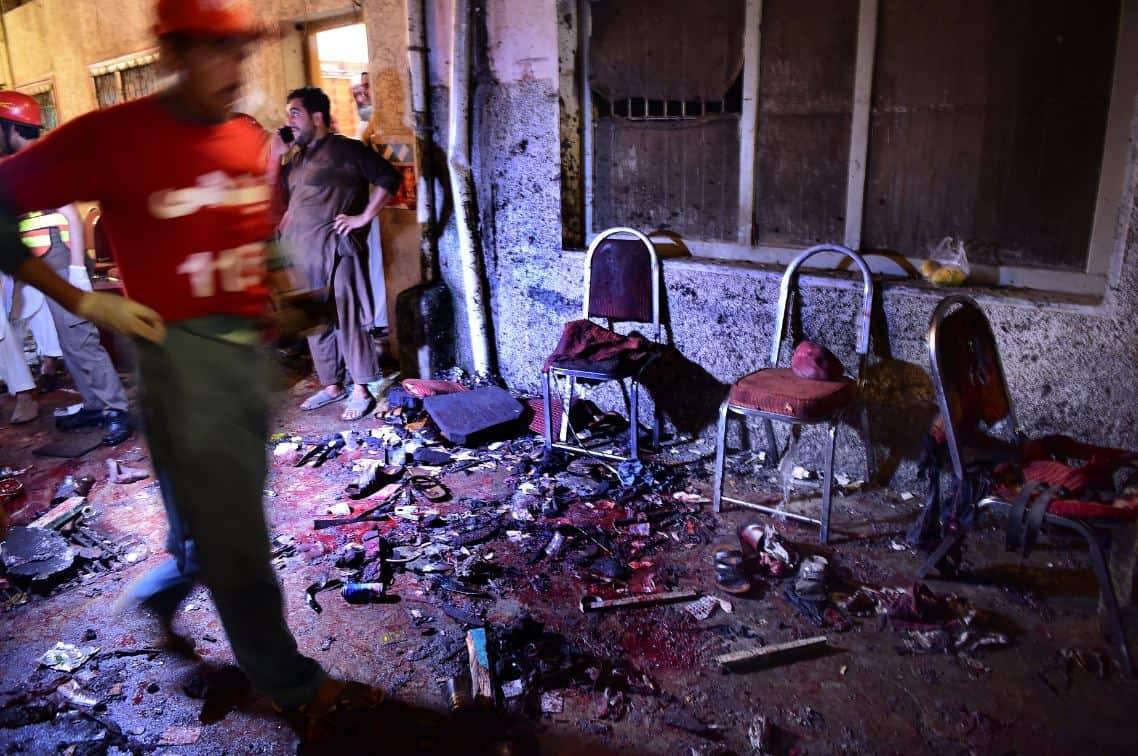
Just three days earlier, Haroon Bilour, leader of the Awami National Party, was killed in Peshawar along with 21 other people in an attack claimed by the Pakistan Taliban.
Dr Claude Rakisits, Honorary Associate Professor in Strategic Studies at Deakin University’s School of Humanities and Social Studies, told SBS News the attacks have sought to “destroy and derail” the election campaign in light of successful military offensives against the Pakistan Taliban in recent years.
Corruption and a cricketer
Three main parties are vying for power in this election. The incumbent PML-N currently holds the highest number of seats at 182, with its stronghold the Punjab province. Yet the party has been hit by controversy, with ousted prime minister Nawaz Sharif jailed for 10 years earlier this month for corruption.
Experts say the second most popular party is the Pakistan Tehreek-e-Insaf (PTI), led by former international cricket hero Imran Khan. Then there is Bilawal Bhutto Zardari’s Pakistan People’s Party (PPP) - its leader is the son of former prime minister Benazir Bhutto.
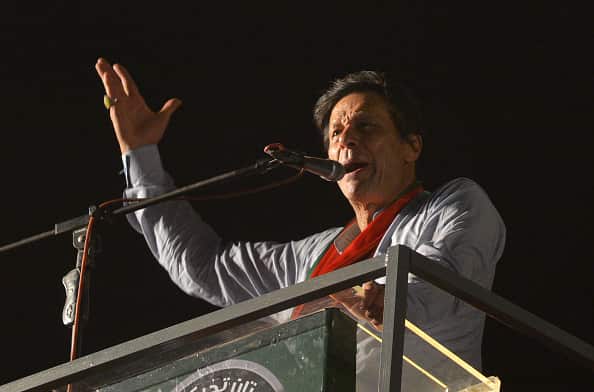
Professor Samina Yasmeen, Director of the Centre for Muslim States and Societies at the University of Western Australia, said the PML-N has been weakened over the past two years with members either “enticed away”, changing political loyalties or facing corruption investigations.
She said the general consensus is that the military is behind this, although it strongly denies this.
“With someone like Nawaz Sharif, he is a politically elected leader whose power is in the electorate and not the military,” Prof Yasmeen, who is also Political Science and International Relations lecturer at the university's School of Social and Cultural Studies, told SBS News.
“The military was having differences of opinion with PML-N and so it is reasserting its power.”
Dr Rakisits agrees: “A lot of people say it’s the military that pushed the judiciary to go after Nawaz Sharif,” he said.
This is in stark contrast to Mr Khan, who Prof Yasmeen said has been “supported by the military from the start” and has never criticised the army.
“I think Imran Khan is favoured because he is a creation of the military and he is pliable,” she said.
“The PTI has been given more space meaning more people have heard his message. He uses popular cricket terminology which really goes into the heart of people’s imagination."
New hardline parties
The election has also seen new hardline parties emerge on the political scene.
Tehreek-e-Labaik Pakistan (TLP), a religious party which calls for blasphemers to be put to death, is fielding more than 100 candidates in Punjab’s constituencies.
According to Prof Yasmeen, Islamisation has gained momentum since the 1980s due to “political leaders and the military engaging these groups when it suited them”.
This concerns Prof Yasmeen if neither the PML-N or Mr Khan’s PTI wins a clear majority because other parties will be crucial to forming a government.
“If it’s a hung parliament, it will not just be a choice between the three parties because there will be so many other small players who can confuse the picture, and that’s very concerning," she said.
Military power
The army, perceived as the country's strongest institution, has ruled Pakistan for roughly half its nearly 71-year history and is widely believed to control foreign and defence policy.
But that’s not all it may control, with critics accusing the military of election engineering.
“Certainly they really feel they have a prerogative in running the country because of national security given Pakistan is a country with no strategic depth and is in between two countries, Afghanistan and India, who hates them,” Dr Rakisits, who is also head of the International Affairs consultancy, said.
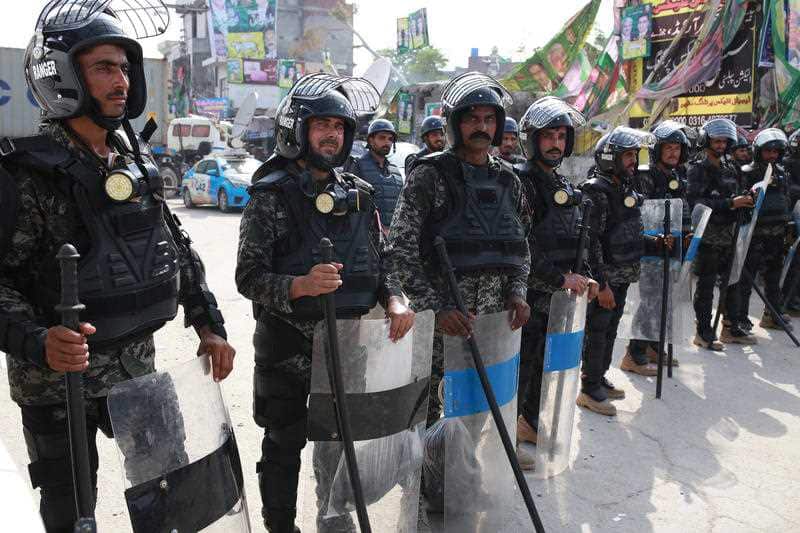
The PML-N has complained of a targeted crackdown, with police opening criminal cases against nearly 17,000 of its party members.
There has also been heavy censorship of the media.
But Prof Yasmeen argues that the military is not trying to create instability in the country.
“They define what democracy is and what is acceptable,” she said.
“From their perspective, they are doing what is best for Pakistan, but if you look at it objectively it’s one of the most dangerous.”







