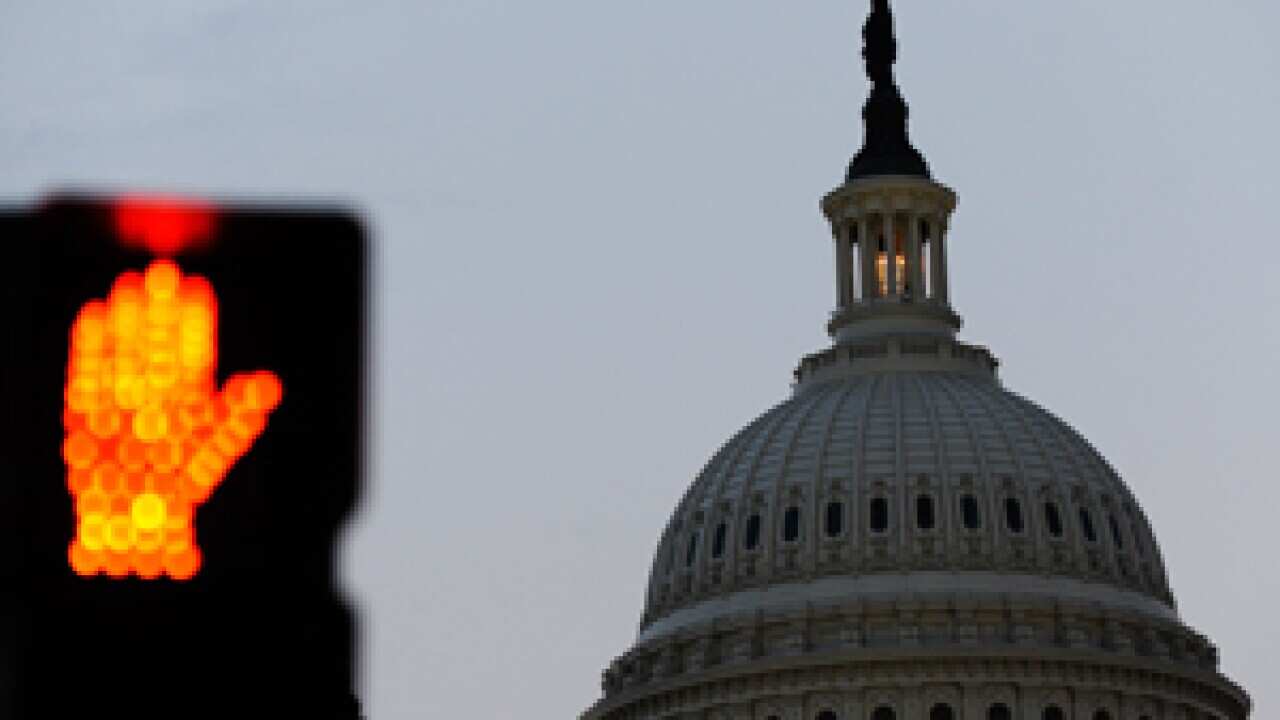
“Supposedly”?
This quite peculiar American conundrum is far from resolved. Which is why, really, no one is happy.
For those who came in late, or are confused by what's happening in America, let me break it down to its simplest form. Mainly because it is one big hot mess.
In brief, the US owes a lot of people a bunch of money – an unsustainable situation. The complication is disagreement over how to fix it.
The US political system is so equally divided between right and left that when ideology overrules common sense nothing is ever agreed upon.
This has been super-emphasised since Tea Party candidates won election last year and have gridlocked Congress with the hard line principles that got some of them elected in the first place. Fair enough – that's political power – but this has been largely at the expense of any compromise in moving forward.
So the lines were simply drawn. Right wing Republicans (and Tea Partiers) wanted the government to cut spending to trim the national debt while refusing to raise any taxes.
Democrats wanted to raise taxes, especially those of the rich, and refused to cut much government spending, especially for the poor and disadvantaged.
And so, American politicians butted heads and President Obama stood on the sidelines hoping his reelection prospects would not be damaged by the circus of Congress.
Finally, on Sunday, as the clock ticked down (several TV networks actually had 'clocks', ticking down to default) Congress reached some kind of agreement.
The White House released a get-the-facts statement to cut off either side claiming any kind of victory, which included a key message:
“The President did not agree to any entitlement reforms outside of the context of a bipartisan committee process where tax reform will be on the table and the President will insist on shared sacrifice from the most well-off and those with the most indefensible tax breaks.”
In other words, watch this become an election issue in 2012 because – SURPRISE! – some people are about to find out what cutting government spending actually means.
While the army, air force, navy, and mailmen will now get paid this week, it's not looking so good for states and cities that rely on Federal funding.
“They mean fewer cops, fewer firefighters and less money for job creation projects, housing and elderly care,” said Tom Cochran, the executive director of the United States Conference of Mayors.
“As relieved as we are about ending the debt ceiling crisis, we are just as concerned about these cuts and potentially more cuts to come in the future. We must close tax loopholes to the wealthy and corporations and look at other revenue adjustments.
But actually, not everyone was unhappy. The vote to pass the bill saw Gabrielle Giffords return to Congress after surviving an assassination attempt in January.
“The #Capitol looks beautiful and I am honored to be at work tonight,” she wrote on her Twitter account.
So hooray for that.
Share


