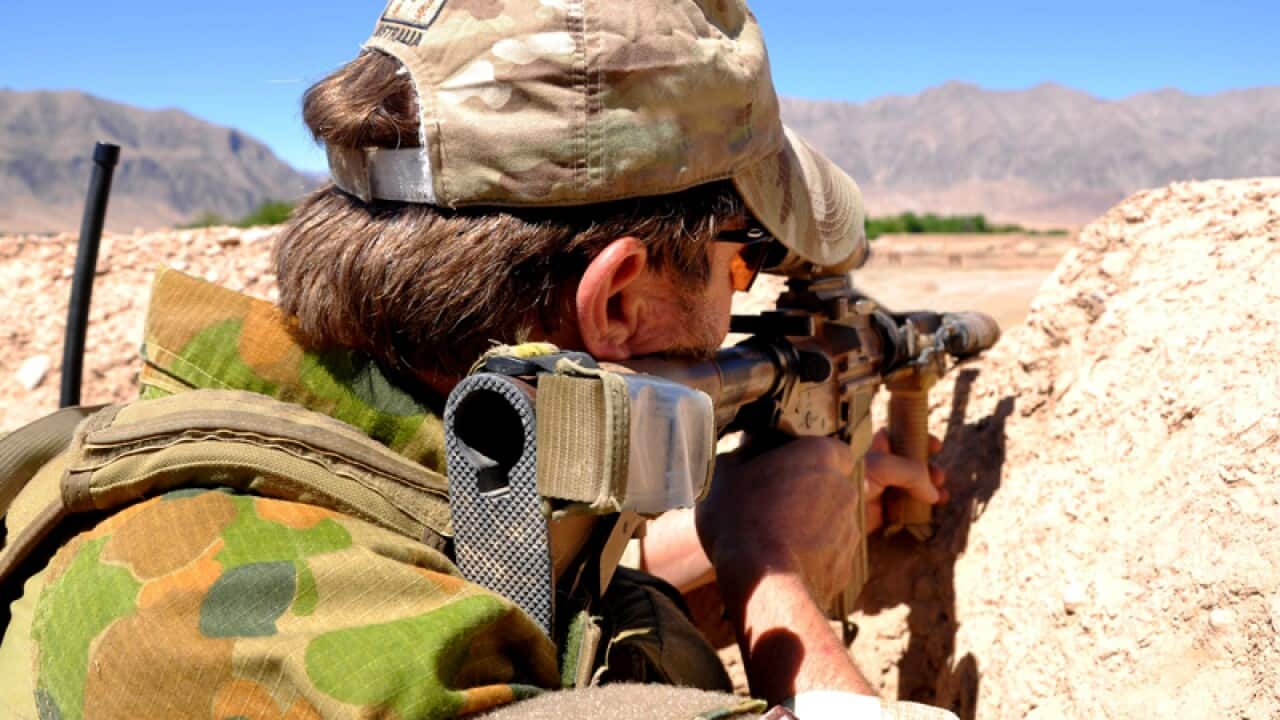
The Defence Department has apologised and the Government is now revising its foreign aid calculations after almost $200 million in military spending was wrongly categorised as “aid”.
Defence officials have revealed to a Senate inquiry into aid in Afghanistan that they had counted $200 million in spending dating back six years as aid – but discovered after questions from the Greens, that they had made a mistake.
“I wish to apologise for this error and any inconvenience it has caused,” Defence Department Deputy Secretary Brendan Sargeant told the committee on Monday.
The error undermines the Government's attempts to reach its stated goal of foreign aid spending equalling 0.5 per cent of Australia's GDP within three years.
Spending is currently at 0.35 per cent and the Government faced strong criticism from aid groups for delaying a scheduled increase in the May Budget to claw back $3 billion.
News that makes sense
Your trusted source for staying up-to-date with the world around you. Get free daily news updates and analysis, straight to your inbox.
“The Australian aid budget is looking rubbery,” Greens' Senator Lee Rhiannon said. “… The Australian Government largely has had a good-faith arrangement with the Australian people that our aid dollar is working to relieve poverty. There's now a big question-mark over to what extent that is really happening.”
The international Organisation for Economic Cooperation and Development (OECD) sets guidelines for what can and cannot be categorised as aid, for the purposes of calculating national aid budgets.
It stipulates that the costs of having military personnel help deliver aid may be included but “not their regular salaries and expenses”.
Dating back to 2006, Defence had included some such expenses. It has also included the cost of force protection for the year 2010-11 – something which Chief of the Defence Force General David Hurley explicitly assured a Senate estimates committee in October was not included.
The cost of engineering and trades training and of operating military checkpoints had also been incorrectly included. Defence officials have written to the Senate committee to correct their figures on Defence's contribution to Australia's foreign aid commitment – from $255 million to $57 million.
Defence has also corrected the CDF's testimony to the committee.
A spokesman for AusAID confirmed the Government was now revising what was included in the overall Afghanistan aid budget.
Liberal Senator Helen Kroger asked the officials on Monday in which category trades training would now fall.
The officials were uncertain. “I'm not suggesting you guys are doing anything wrong, but this is serious smoke and mirrors that's going on here,” Senator Kroger said.
Defence Chief Finance Officer Phillip Prior responded: “I can assure you, we are not trying to do any smoke and mirrors.”
The Australian Council for International Development estimates the Defence Department mistake accounts for 30 per cent of Australia's overall aid budget for Afghanistan. “Really, it begs the question 'Why is Defence and ADF in this space at all, in delivering aid?',” ACFID's executive director Marc Purcell said.
“It should be left to the aid professional, AusAID, to the businesses that do this and to the non-government organisations that know how to alleviate poverty.”
ACFID argues many projects described as aid and development and delivered through Defence are “white elephants” which local communities don't use and don't want but which are delivered as part of military counter-insurgency strategy.
Aid groups – and the Greens – are also unhappy that part of the Foreign Affairs aid budget for Papua New Guinea is being spent on immigration arrangements on Manus Island.
“We think this is actually undermining public faith in the aid program because it indicates it is not for alleviating poverty, it is actually for other objectives.”







