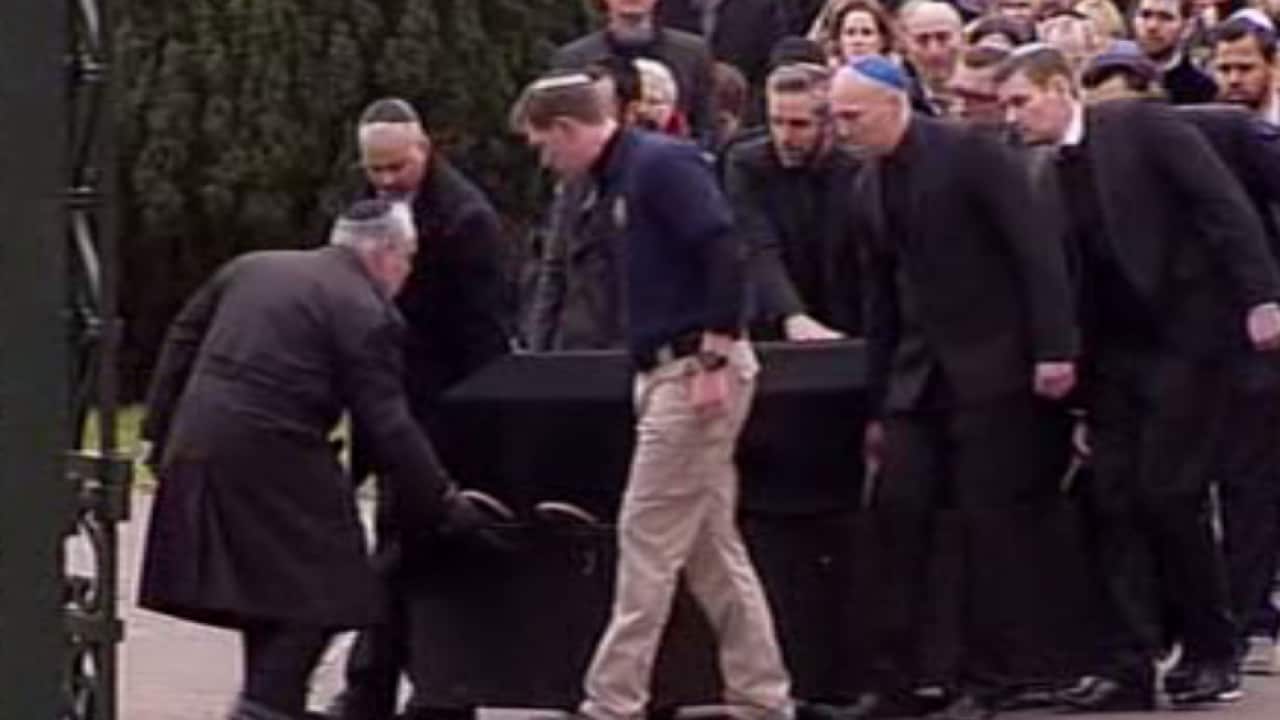
Security was tight as crowds gathered at a Jewish cemetery for the funeral of 37-year-old Dan Uzan, with police out in force with sniffer dogs and snipers posted on nearby rooftops.
The weekend attacks on a cultural centre and a synagogue by Omar El-Hussein, a 22-year-old Danish man of Palestinian origin who reportedly became radicalised in prison, have raised questions about security in the normally peaceful Nordic nation.
The violence has also triggered fears of a new wave of anti-Semitic violence after last month's jihadist attacks in Paris.
"It was a funeral I hoped I would never (have to) conduct," chief rabbi Jair Melchior told AFP.
"We did not want anything like that to happen, but we accept the reality and we said goodbye to a dear friend."
Uzan, a volunteer security guard, was shot dead outside Copenhagen's main synagogue hours after the gunman opened fire at a cultural centre hosting a debate on Islam and free speech, killing documentary maker Finn Noergaard.
One of the participants at the debate was controversial Swedish cartoonist Lars Vilks, who was believed to be the target of the attack and has now been forced into hiding.
The suspect was eventually shot dead by police in a pre-dawn shootout.
Thorning-Schmidt and other European leaders have rushed to reassure Jews over their security after the killings and rebuff calls by Israeli Prime Minister Benjamin Netanyahu for European Jews to emigrate to the Jewish state.
Denmark's Jews have shown little inclination to leave the country where the vast majority of them were born and grew up.
"It's the same in Israel as Denmark. You are not more safe in Israel," said a 69-year-old woman who attended the funeral, giving her name as Sylvia.
Danish security services have come under scrutiny over what action had been taken to prepare for possible attacks in the wake of the Islamist killings in Paris just weeks before.
The domestic intelligence agency admitted the prison service had raised concerns last year that El-Hussein was "at risk of radicalisation" but that there was no evidence he had been planning attacks.
But police dismissed criticism they had failed to boost security after the Paris attacks, which killed 17 people including four Jews.
"The security level was raised after the incident (in Paris)," Peter Dahl, a senior police official, told the Jyllands-Posten newspaper.
But members of the Jewish community in Denmark have said they did not notice any increased police protection ahead of the attacks.
Share


