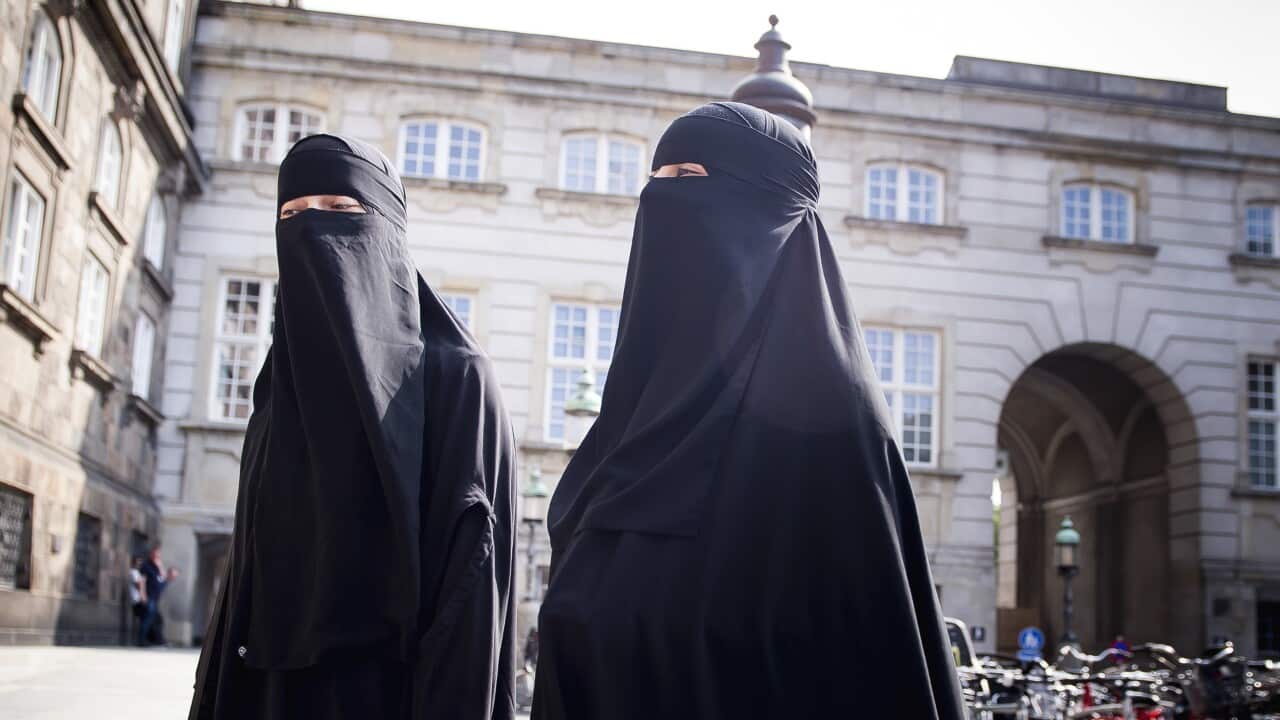
Denmark has joined other European countries in banning garments that cover the face, including Islamic veils such as the niqab or burqa.
"Anyone who wears a garment that hides the face in public will be punished with a fine," says the law, which was passed by 75 votes to 30 in the Danish parliament.
Presented by the centre-right government, the legislation was also backed by the Social Democrats and the far-right Danish People's Party.
The new rule will take effect on August 1.
Wearing a burqa, which covers a person's entire face, or the niqab, which only shows the eyes, in public will lead to a fine of 1,000 kroner ($156, 134 euros).
The ban also targets other accessories that hide the face such as balaclavas and false beards. Repeated violations will be fined up to 10,000 kroner.
It is not known how many women wear the niqab and burqa in Denmark.
"I don't think there are many who wear the burqa here in Denmark. But if you do, you should be punished with a fine," Justice Minister Soren Pape Poulsen was quoted as saying by Ritzau news agency in February.
'Neither necessary nor proportionate'
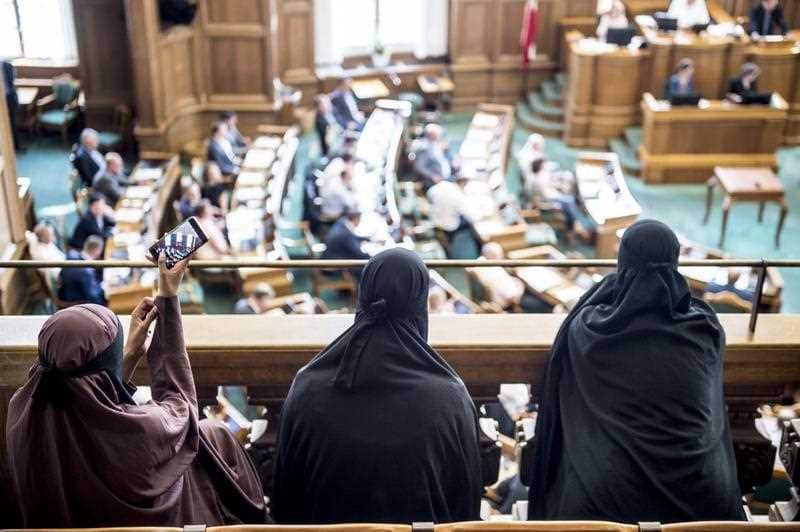
Amnesty International condemned the law as a "discriminatory violation of women's rights", especially against Muslim women who choose to wear the full-face veils.
"Whilst some specific restrictions on the wearing of full-face veils for the purposes of public safety may be legitimate, this blanket ban is neither necessary nor proportionate and violates the rights to freedom of expression and religion," the organisation's Europe director Gauri van Gulik said in a statement following the vote.
"If the intention of this law was to protect women's rights, it fails abjectly. Instead, the law criminalises women for their choice of clothing and in so doing flies in the face of those freedoms Denmark purports to uphold," she added.
Supporters argue the ban enables better integration of Muslim immigrants into Danish society, claiming the garment is used to oppress women.
"Some people use (the full-face veil) to promote an ideology which, if successful, would mean many others would lose their right to freedom. It's a matter of balance," Martin Henriksen, spokesman for the anti-immigration Danish People's Party, told Ritzau.
'Rather leave than take veil off'
But Ayesha Haleem, a Pakistani woman who has been wearing the niqab for the past six years that she's lived in Denmark, said no one, including her husband, forced her to wear it.
"Many people believe that men force us to wear the niqab or burqa. That's completely wrong," she told Danish public broadcaster DR.
"If I didn't want to wear the niqab then I wouldn't, even before meeting my husband," Haleem said. "I'd rather leave the country than take my veil off."
The full-face veil is a hot-button issue across Europe.
Last year, the European Court of Human Rights upheld a Belgian ban on wearing it in public.
France was the first European country to ban the niqab in public places with a law that took effect in 2011.
German lawmakers approved a partial ban on "covering the face" last year.
According to that legislation, civil servants and officials including judges and soldiers must have their faces uncovered. People can also be required to remove facial coverings in order to match them with their identity papers.
Austria's law on banning the full-face Muslim garment in public spaces came into force last year.