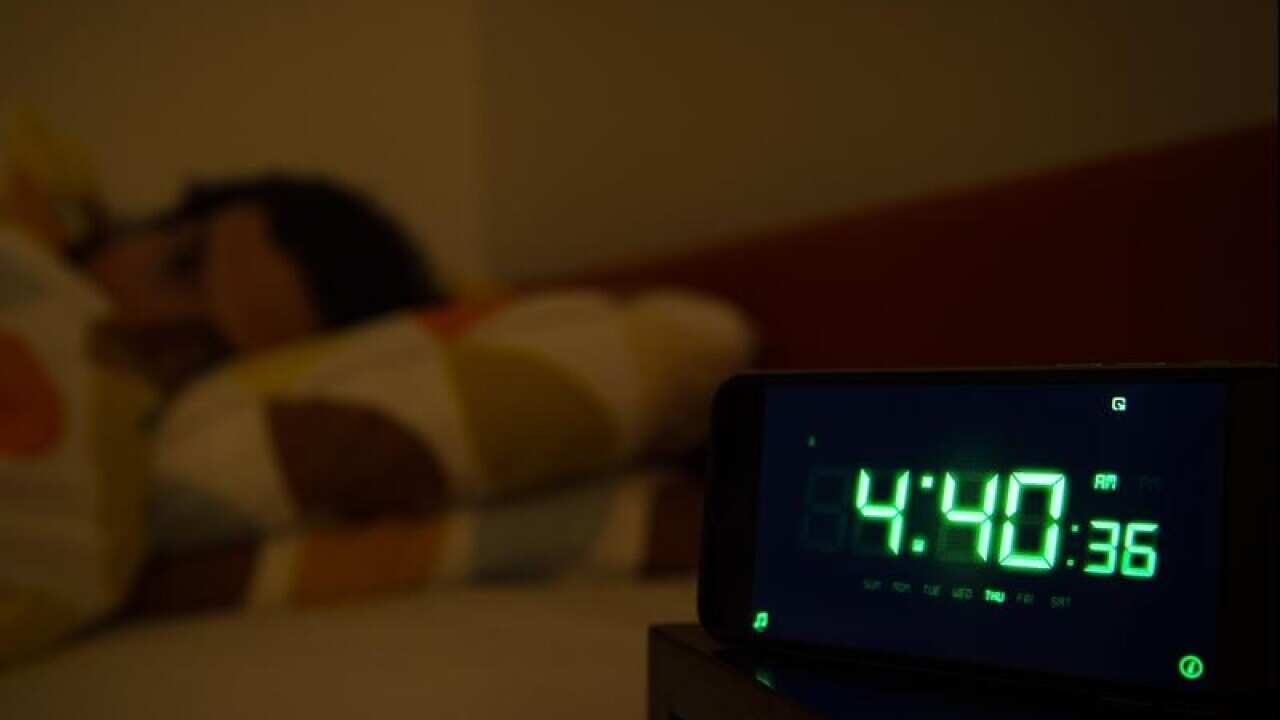
It's the digital age but it may be time for teens to wind back the clock to get the 9.3 hours of shut eye they need every night for the sake of their physical and mental wellbeing.
New research shows more teens than ever aren't getting enough sleep and too often their phones and tablets are to blame.
A US study of more than 360,000 teens, led by San Diego State University Professor of Psychology Jean Twenge, found one in four adolescents in 2015 slept less than seven hours a night.
The analysis of two long-running government funded surveys suggests this is 58 per cent more than in 1991 and 17 per cent more than in 2009.
The data also showed the more time young people spent online, the less sleep they got.
Teens who spent five hours a day online were 50 per cent more likely to not sleep enough than their peers who only spent an hour online each day.
"Teens' sleep began to shorten just as the majority started using smartphones," Prof Twenge said. "It's a very suspicious pattern."
Pediatricians have increasingly become concerned about the impact of excessive night time technology use on sleep.
One of those concerned is Dr Arthur Teng, head of the Sleep Medicine unit at Sydney Children's Hospital in Sydney.
"There is an epidemic of media activity in the night which is suppressing melatonin secretion and we are just scratching the surface as to what the consequences will be years down the track; all these teenagers chronically sleep deprived," Dr Teng said.
Melatonin is the body's natural sleep pill - secreted deep in the brain when the eye detects the change from light to dark.
"Teenagers need exactly 9.3 hours of sleep overnight, not the seven, eight that you adults need; and that is seldom reached in most teenagers," he said. "And of course if they do have ADHD it can only makes things worse," Dr Teng warned.
For many, smartphones and tablets are an indispensable part of everyday life, so they key is moderation, says Prof Twenge.
"Given the importance of sleep for both physical and mental health, both teens and adults should consider whether their smartphone use is interfering with their sleep," she says. "It's particularly important not to use screen devices right before bed, as they might interfere with falling asleep."
To achieve this it means turning back the years, Dr Teng says.
"I always tell my patients its like going back to the 19th century; candle lit suppers, dim lighting. If you need to read a chapter of a history book do it in the evening, if you need to type up your assignment on the computer do it when the sun is still up," he said.
Share


