In Brief
- The Scanlon Foundation Research Institute interviewed more than 8,000 migrants from the fastest-growing communities.
- Their research found most migrants felt a growing sense of belonging in Australia but many experienced discrimination.
While most migrants feel a growing sense of belonging in Australia, particularly within local communities, many who have recently moved to Australia still experience discrimination at a higher level, according to a new study.
The Scanlon Foundation Research Institute interviewed more than 8,000 migrants from the fastest-growing communities — China, India, Pakistan, Nepal, the Philippines and Iraq — to examine how migrants experience belonging in Australia.
Over half of the women surveyed from the above countries (51 per cent), which make up the top five fastest growing migrant populations, said they had experienced discrimination in Australia in the last year.
For the total population, nearly half (45 per cent) of migrants reported experiencing discrimination in the last 12 months, compared to only 13 per cent of people born in Australia.
Older migrants had a stronger sense of belonging, with 62 per cent of migrants over the age of 65 reporting a sense of belonging, compared to 50 per cent of those aged 18-24 years.
News that makes sense
Your trusted source for staying up-to-date with the world around you. Get free daily news updates and analysis, straight to your inbox.
But the study authors note a sense of belonging is complex — this figure was contrasted by more third generation migrants (58 per cent) compared to first generation migrants (56 per cent) reporting a sense of belonging.
Senior researcher Trish Prentice told SBS the study, which was commissioned by the Department of Home Affairs, aimed to record experiences of belonging, participation and social connection.
"Connections were really strong at a neighbourhood level and they made people feel that they belong to those communities. When we looked at belonging to Australia, that was a little bit more complex."
Among longer-term migrants, 71 per cent agreed they belonged in their neighbourhoods, compared with 64 per cent of people who had recently arrived.
Belonging at a national level is low
According to a study published in the 2025 International Journal of Public Administration, when someone doesn’t feel like they belong, they can experience increased stress, decreased physical and mental health, and a reduced capacity to participate in various spheres. This can impact the process of social integration, connection with broader society, and the development of share identity — foundational for social cohesion.
Prentice said: "So when I asked people, do you feel you belong to Australia? Some people said: 'yep, I definitely do'. And some people said: 'not so much'."
The study found only 32 per cent of respondents from the focus countries felt a great sense of belonging compared to almost half of Australian-born residents.
However, most respondents felt a qualified version of belonging.
"When I asked people about those experiences, some of the factors that made them feel like they belong to Australia were things like their visa situation, having security, having had major experiences which connect them to the country more so than to a previous country, sometimes it was a sense of being shaped by Australian values," Prentice said.
Around 17 per cent of those from the focus countries reported only a slight sense of belonging, as opposed to 12 per cent of the Australian-born population.
Belonging also varied by length of residency. Those who have been in the country for longer reported similar levels of belonging to the Australian-born population. More recent arrivals then experienced a lower sense of belonging.
Sense of belonging also varied according to gender, with men tending to feel a stronger sense of belonging, regardless of whether they were born in Australia, born overseas or born in one of the focus countries.
Online rhetoric troubling
Racial justice youth advocate Varsha Yajman told SBS she’s witnessed the increasing bullying of the South Asian community in Australia.
"I remember there being a plane crash with a bunch of Indian passengers on it, and people just chose to make fun of that instead of understanding that so many people died, and seeing those things become a viral meme, and then seeing politicians also choose to talk about anti-immigration, how we should have a ban on Muslim migration and those sorts of things. It's feeling like instead of talking about social cohesion, they're just talking about division," she said.
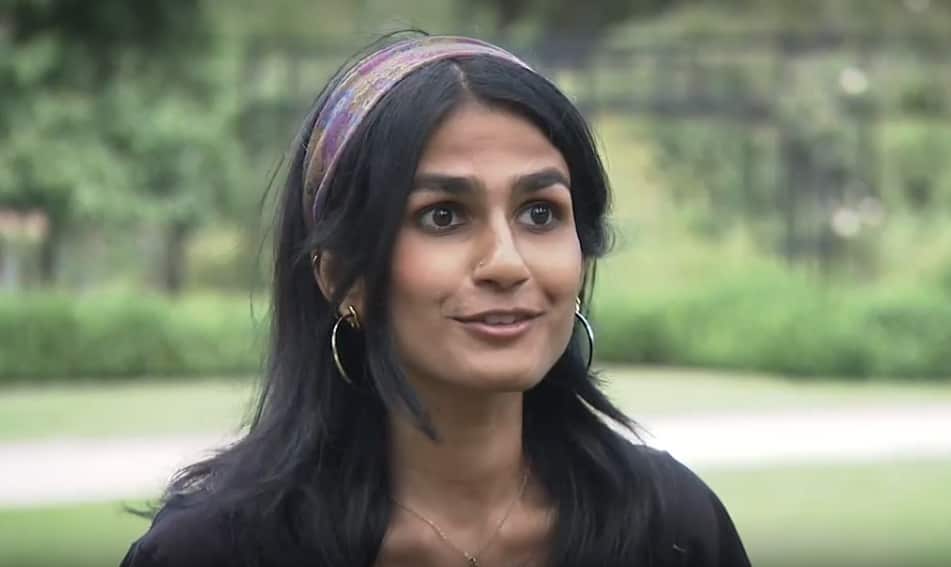
"I think our politicians love to use phrases like social cohesion or multiculturalism and then not actually define what that means and not really take the steps to achieve it."
Yajman said people are using immigration as a scapegoat for the cost of living and housing crises.
'Belonging in Australia becomes conditional'
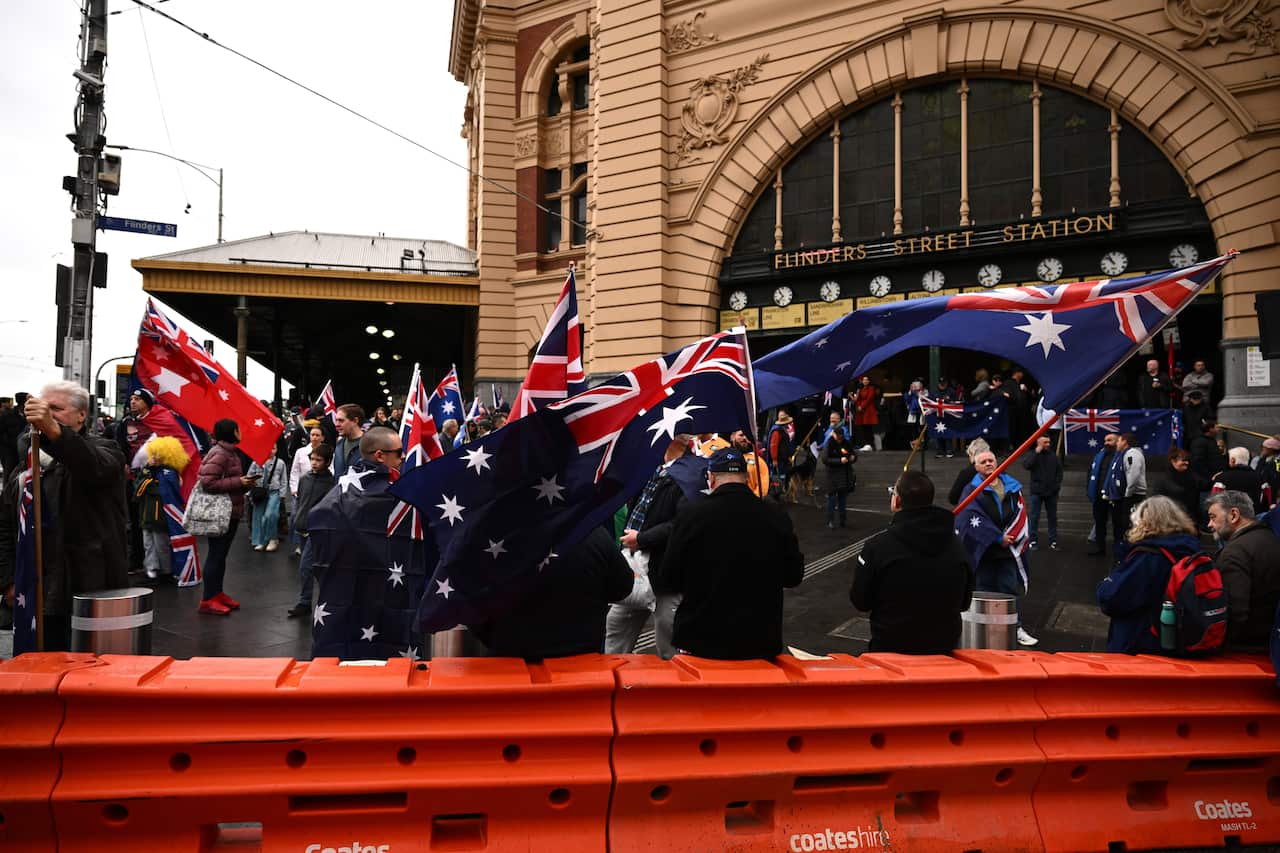
Associate professor at Monash University Pearl Subban told SBS belonging is dependent upon how the mainstream feel, citing the recent anti-immigration marches.
Subban is an immigrant herself, and her research focuses on racial equity.
"I think for immigrants in Australia, particularly immigrants of colour, these marches are just reminders that belonging in Australia becomes very conditional," she said.
She said the current climate makes everyday interactions for migrants fraught.
"It becomes sites where you negotiate and you calculate and ask: 'Is this space safe? Is this person safe?'"
The study found respondents born in one of the focus countries are significantly more likely to have experienced discrimination because of their skin colour, ethnic origin or religion in the past 12 months.
Being subjected to derogatory comments or insults, being told they were taking away opportunities from Australians or should ‘go back to their country,’ being stared at, being bullied, physical assault or feeling as though they were not being taken seriously when dealing with authorities, were experiences reported by the interviewees.
The study notes that experiences of discrimination or racism have the power to significantly undermine a sense of belonging by creating feelings of 'otherness'.
Such acts have the potential to disrupt an individual’s feelings of being accepted or valued as part of a community or nation. They can erode trust, weaken social connections and discourage participation in community life.
Social cohesion built from the ground up
The study found that belonging is strongest at a local level.
Migrants' sense of belonging thrived when they could contribute through volunteering, lived in a neighbourhood where people provided for and supported each other, and had close access to public spaces and their own cultural communities.
Prentice said the study helps people to understand the dynamics when it comes to migrants and belonging, connection and social participation.
"I think sometimes discussions around migration, for instance, are very one-sided about should we or shouldn't we, and what the numbers look like and things like that. And underlying that are a whole lot of human experiences."
For the latest from SBS News, download our app and subscribe to our newsletter.







