Imagine you’re scrolling through TikTok and come across an image of a lotus seed pod or sponge.
You might not think much about it, but some people instantly feel sick. Their skin crawls, they feel nauseous, disgusted or very uncomfortable, and quickly swipe away.
The object is harmless. So why does it trigger such a strong reaction?
This reaction is known as trypophobia, an aversion to clusters of holes or circular patterns.
About one in six people have at least some degree of discomfort when seeing these patterns.
News that makes sense
Your trusted source for staying up-to-date with the world around you. Get free daily news updates and analysis, straight to your inbox.
What is trypophobia?
Despite the "phobia" in its name, trypophobia is not simply a "fear of holes". It is also not recognised as a standalone mental health disorder. Unlike many phobias, disgust (rather than fear) is often the more dominant emotion.
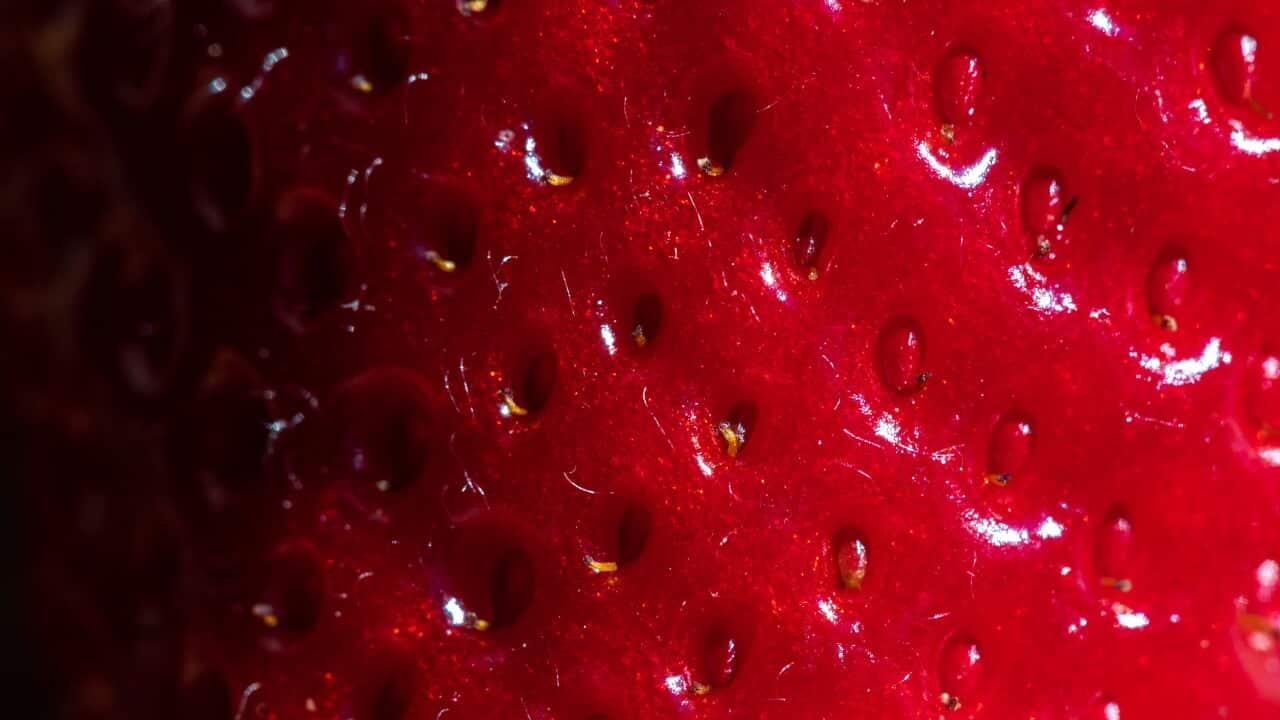
Common triggers are lotus seed pods and honeycomb, or even everyday objects such as sponges, crumpets, bubbles, aerated chocolate or strawberries.
For most people with trypophobia these reactions are mild and can include disgust, nausea, skin crawling sensation, fear and anxiety.
But for a small group, symptoms can become so distressing they lead to people avoiding particular images, objects, or situations. This is a level of avoidance usually seen in specific phobias, such as arachnophobia, a fear of spiders.
In my own research, some participants avoided strawberries, cooking or baking, clothing, and even showers because of trypophobia-related triggers. These examples show trypophobia can sometimes significantly affect a person’s life.
Why is trypophobia having a moment?
The short answer is social media. Media stories, TikTok videos and online communities helped make trypophobia mainstream.
Shared images are often digitally altered to maximise discomfort and provoke strong reactions.
Research also suggests social media might influence how people experience trypophobia. For instance, in one 2024 study, almost two-thirds of people heard about it through social media. Those who had previously heard of trypophobia reported stronger reactions than those who had not.
But that doesn’t mean social media created trypophobia. Around one-quarter of people with trypophobia in the same study had never heard of it. Social media might increase awareness, but it cannot explain why some people react so strongly in the first place.
Why do some people react this way?
Scientists still debate why trypophobia exists, with two leading explanations emerging.
The first is the threat-detection theory. Some researchers argue trypophobic images resemble patterns found on poisonous or dangerous animals, such as snakes. According to this theory, humans might have evolved to react negatively to these visual cues because they can signal danger.
The second theory focuses on avoiding disease, with support from increasing evidence. Clusters of holes can look like skin lesions, rashes, parasites or signs of infection. Although lotus seed pods or honeycomb are completely harmless, the visual resemblance might activate psychological systems that evolved to help us avoid contamination and disease.
Both theories suggest trypophobic patterns might resemble things that historically posed a threat to human health or survival. In other words, the holes themselves might not be the problem. Instead, the brain might interpret these patterns as signs of a biological threat.
What people react to is not the object itself, but what the brain subconsciously thinks the pattern might represent. This might explain why harmless objects can trigger reactions that seem far stronger than the situation warrants.
Does it need treatment?
Fortunately, most people only have mild symptoms and do not need treatment. Understanding that trypophobia is a recognised and common phenomenon can often be reassuring.
However, if symptoms cause significant distress or begin to interfere with daily life, it might be worth seeking professional support.
Even though trypophobia is often associated with disgust, many people also experience fear and anxiety. So treatments used for specific phobias, particularly exposure-based approaches, might be helpful.
This might involve gradually and safely confronting feared or uncomfortable images, situations or sensations while reducing avoidance. Over time, people learn they can tolerate their distress and that the anticipated harm does not occur.
Until recently, no treatment had been specifically tested for trypophobia. However, a recently published study I co-authored found a single intensive treatment session targeting fear and disgust reduced symptoms and helped participants engage more fully in daily activities.
The bottom line
Trypophobia is more than an internet meme. It is a genuine psychological experience that can range from mild discomfort to significant distress.
Growing evidence suggests these patterns might activate ancient psychological systems designed to detect danger, contamination and disease. The brain could be responding as if it has detected a threat, even when there is no threat.
For most people, reactions are brief. But if not, support is available. Ask your GP for a referral to a psychologist.
Simone Hain is a Research Psychologist at University of Technology Sydney; Macquarie University.
Simone Hain does not work for, consult, own shares in or receive funding from any company or organisation that would benefit from this article, and has disclosed no relevant affiliations beyond their academic appointment.
For the latest from SBS News, download our app and subscribe to our newsletter.
https://counter.theconversation.com/content/291263/count.gif?distributor=republish-lightbox-advanced" alt="The Conversation" width="1" height="1" style="border: none !important; box-shadow: none !important; margin: 0 !important; max-height: 1px !important; max-width: 1px !important; min-height: 1px !important; min-width: 1px !important; opacity: 0 !important; outline: none !important; padding: 0 !important" referrerpolicy="no-referrer-when-downgrade" />







