in brief
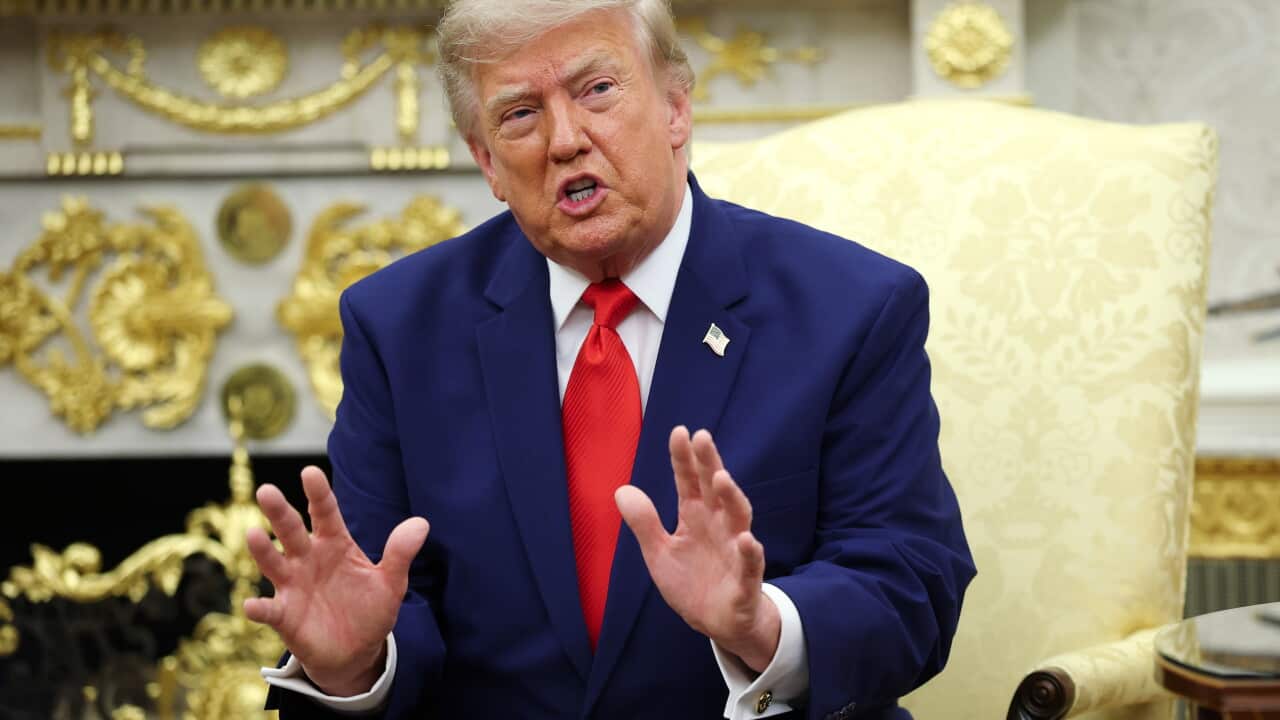
- US President Donald Trump has unveiled sweeping new international trade tariffs.
- Australia is one of dozens of countries hit with a new 12.5 per cent levy on trade goods.
The government has hit back at blanket new 12.5 per cent tariffs imposed by the United States on Australian goods, which came into effect on Friday.
The new permanent levy replaces a temporary 10 per cent tariff due to expire at the same time and is part of what the US claims is an effort to tackle the global issue of "forced labour" in supply chains.
Whilst the government insists its handling of forced labour and modern slavery is top-tier, one expert has said Australia's protections are greatly lacking, while another has suggested that Australia is a victim of Trump's tensions with China in this scenario.
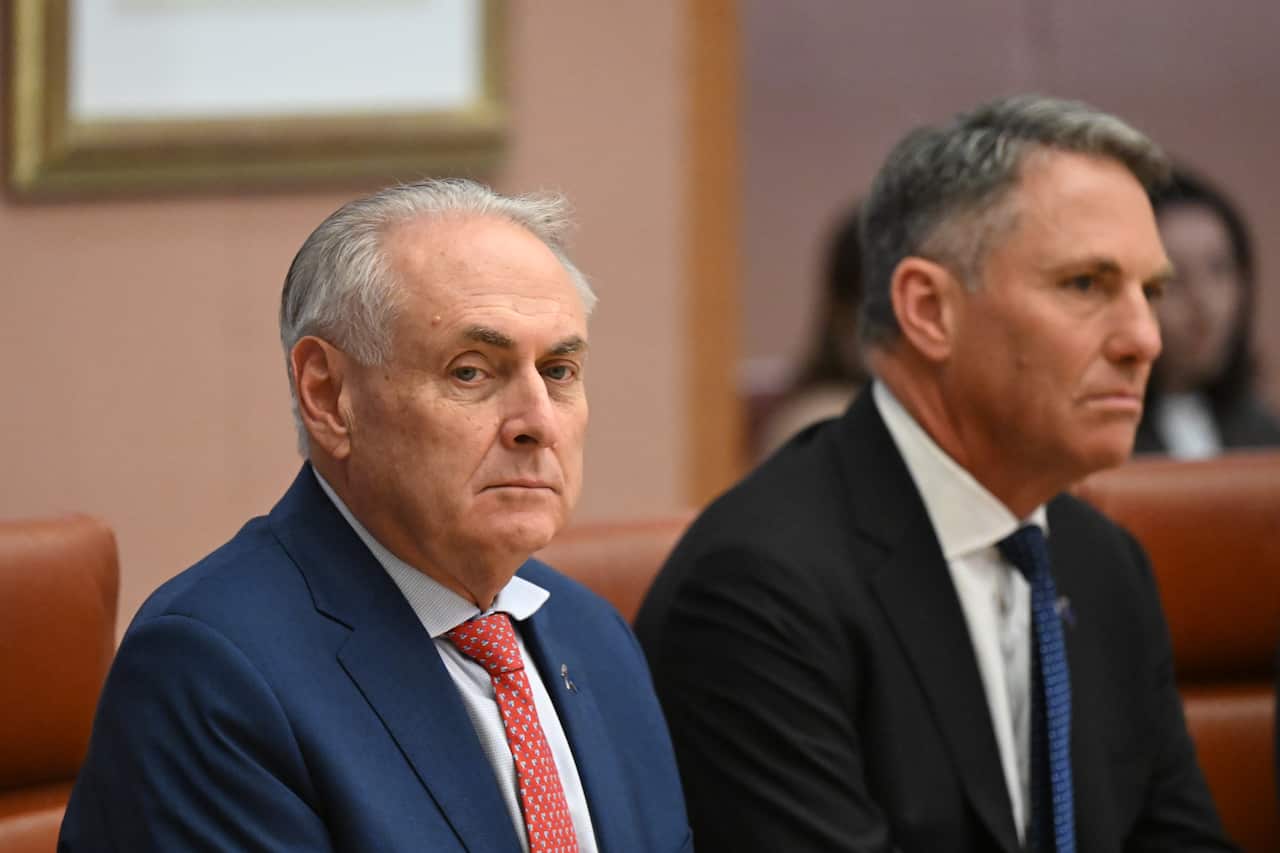
Australian Trade Minister Don Farrell has called for the tariff measures to be reversed, telling SBS News that they are "unjustified" and "inconsistent" with existing free-trade agreements with the US.
"These tariffs … should be removed," he said in a statement.
News that makes sense
Your trusted source for staying up-to-date with the world around you. Get free daily news updates and analysis, straight to your inbox.
"Australia's measures to combat forced labour and modern slavery are among the strongest in the world, and we are recognised globally, including in the US, for our leadership."
Almost all goods sent to the US will be affected at the specific direction of US President Donald Trump.
However, roughly 70 per cent of Australian exports are already covered under existing tariff exemptions, although it is not clear whether these exemptions will roll over under the new, higher rate.
SBS News has contacted the Office of the US Trade Representative for comment.
Australia has increased its exports to the United States by 67 per cent since April 2025, when a blanket 10 per cent global tariff was applied on Trump's so-called "Liberation Day", Farrell said.
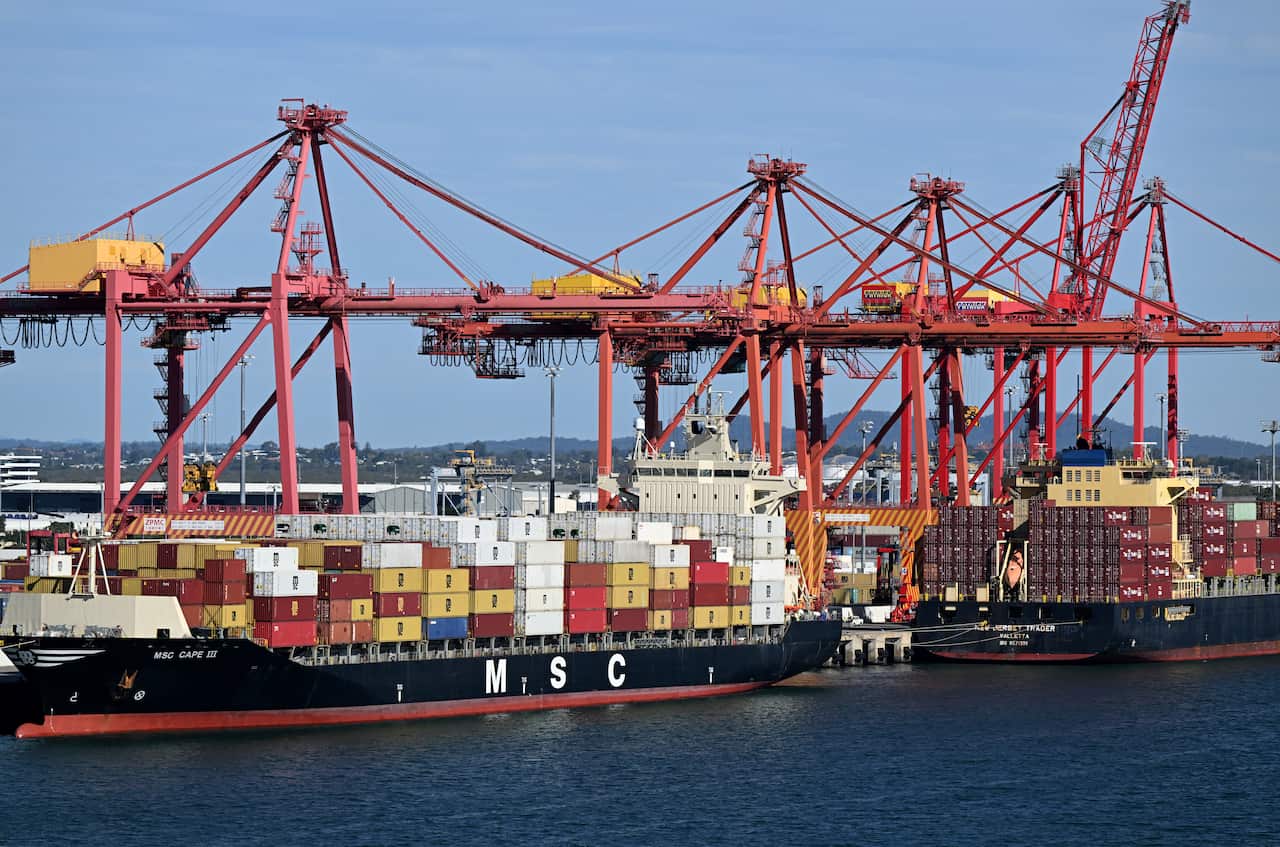
Primary exports to the US include beef, gold, wine, medical products, and various mining resources, the volume of which has increased dramatically, Farrell said, bringing the total value of the trading relationship to $1.32 trillion.
"Our largest exports to the United States continue to get into the United States tariff-free. What are they? It's beef, it's gold, and it's copper," Farrell told a press conference on Friday.
Australia is among 41 other economies the US trade department claims have failed to "impose and effectively enforce a prohibition on the importation of goods produced with forced labor". These include Brazil, China, Egypt, India, Israel, Japan, Norway, Russia, and Singapore.
Other regions, which the US claims have also failed to "enforce" forced labour prohibitions, face a 10 per cent tariff. These include Canada, the European Union, the United Kingdom, and Mexico.
The action is being taken against the US' 60 largest trading partners in an effort to "correct what is both a human rights abuse and a distortive trade practice to improve the welfare of workers everywhere".
The Australian Industry Group has described the tariffs as "both disappointing and meritless".
"Unfortunately, a tariff regime now appears to be the new normal when dealing with the United States and signals a further blow for Australian aspirations for a free and open global trading system," CEO Innes Willox said.
Justification under question
Trump has made tariffs central to his second term in office — arguing their use will deliver economic prosperity to the US — however, his previous attempt to impose them was struck down by the US Supreme Court in February, prompting the temporary 10 per cent levy.
Democrats in the US, like Linda Sánchez, have criticised the move as an "end-run" around the US Supreme Court to "reimpose his illegal tariffs".
Many experts have said the "forced labour" argument is something of a smokescreen.
Professor Lisa Toohey, international trade law expert at the University of New South Wales, told SBS News the European Union "has a more strict legal regime to prevent forced labour" than the US, and yet it is also subject to the new tariffs.
"The United States doesn't seem to be doing that much to address its own forced labour," she said. "The United States is one of a handful of countries where it has forced prison labour. Australia, by contrast, does not have forced prison labour."
She added that there is a perception these tariffs are "discriminatory" and there is no indication that the money raised will go toward addressing the issue of modern slavery.
Modern slavery a 'really serious' issue
Defence Minister Richard Marles has argued that the tariffs make "no sense".
While modern slavery is "definitely something which needs to be combated around the world", Australia has "among the strongest" laws globally to address it, Marles told ABC radio.
However, professor Justine Nolan, director of the Australian Human Rights Institute, told SBS News that Australia's Modern Slavery Act 2018 is "inadequate" to deal with the issue.
The framework requires companies with an annual revenue above $100 million to report on supply chain risks.
"They don't have to do anything about it," Nolan said. "There is no obligation to take action, and it doesn't have an effective enforcement framework, so no sanctions."
Earlier this month, Labor announced it would be reforming the act to include financial penalties for non-compliance and criminal sanctions for failing to prevent modern slavery.
Those changes, Nolan argued, would put Australia "back into the world-leading category of tackling the issue", however Labor's lack of commitment to an import ban may result in US tariff measures being kept in place.
Countries paying just the 10 per cent tariff are those with forced labour import bans, the same mechanism used by the US, or ones that have committed to imposing one.
Some 50 million people around the world are estimated to be in modern slavery, with more than half of those in supply chains. In Australia, 40,000 people are thought to be living in modern slavery conditions, which includes both forced marriage and forced labour.
It's a "really serious global issue," Nolan said, and Australia has seen examples of it in the agricultural, cleaning, and construction sectors.
"There's mixed motivations for the US, and perhaps the instrument they're applying is blunter than would be useful, but if it also motivates countries like Australia to strengthen our legal approach and to strengthen regulation, then that's a useful thing," she added.
No going back
In the post-World War Two era, the US had been the global champion of free trade. Experts now warn this latest move represents another shift toward a more fractured, less cooperative world.
Nicholas Frank, international political economist at Monash University, told SBS News that the broader context is the ongoing economic rivalry between the US and China — smaller players like Australia are simply caught up in it.
These new tariffs, he argued, could be an attempt by the US to "kind of carve up global trade and reduce China's influence and role in the global economy".
"That's why they are so widespread: they're hitting everyone because everyone does business with China," he said.
Trump's tit-for-tat trade war with China last year saw the US impose 145 per cent tariffs on Chinese goods, with China retaliating at 125 per cent. The Asian superpower and Australia's largest trading partner has also been hit by the new 12.5 per cent charge.
Rivalry between the two nations continues to play out in dominance over energy and artificial intelligence, with trade simply being another front, Frank argued.
Having lost much of its manufacturing sector to Asia, the US may well force nations to "pick between the US and China", in an effort to pull back global trading power.
"There is a much larger story about what's actually happening to the global trade system and how," he said. "This is just a small piece of it."
For the latest from SBS News, download our app and subscribe to our newsletter.







