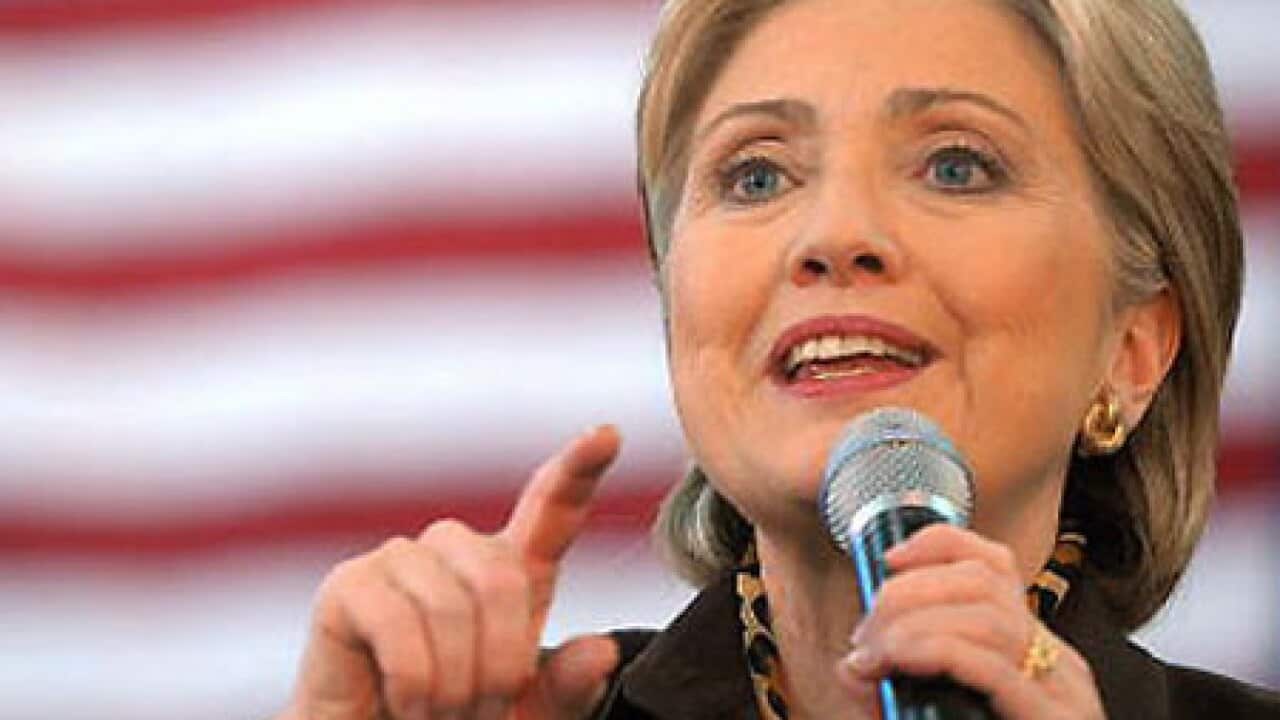
"These drug cartels are showing more and more indices of insurgencies," Clinton said. "It's looking more and more like Colombia looked 20 years ago, when the narcotraffickers controlled certain parts of the country."
Clinton told the Council on Foreign Relations that for stability, Mexico needs a "combination of improved institutional capacity... married to political will to prevent this from spreading."
News that makes sense
Your trusted source for staying up-to-date with the world around you. Get free daily news updates and analysis, straight to your inbox.
Mexico's war on drug cartels was launched when President Felipe Calderon took office in 2006 with 50,000 soldiers dispatched to aid police. But more than 28,000 people have died in rising drug-related violence since that time.
Mexican officials were swift to downplay Clinton's comparison with Colombia.
"We don't share this opinion. There are very significant differences between what Colombia faced and what Mexico is facing," national security spokesman Alejandro Poire told a news conference in Mexico City.
Poire said that almost 40 percent of Colombia was once controlled by insurgents and that Mexico had not fallen to the same levels of political infiltration by drug traffickers.
Maybe "the criminal phenomenon in Colombia and Mexico are alike in that both feed off the enormous demand for drugs from the United States," Poire retorted.
Clinton also said that Mexico had the capacity, along with some US aid, and is "willing to use that capacity" to fight the cartels.
However, she warned, "the small countries in Central America don't have that capacity. We need a much more vigorous US presence."
Drug violence -- including beheadings, hangings and shootings -- has expanded from the border area to more of the country, including several car bombs for the first time this year.
Mexican drug gangs have been blamed for the significant uptick in violence, increasingly against government officials and institutions.
On Wednesday, the lead investigator into the massacre of 72 migrants in the northeast of the country, along with another police officer who went missing during the probe, turned up dead.
The two disappeared just days into the investigation into the biggest mass killing yet discovered in Mexico's brutal drug war.
The news comes as an armed gang stormed a municipal building and shot dead a mayor in north eastern Mexico, it is the sixth killing of a Mexican mayor so far this year.
The attack occurred in San Luis Potosi state near the border with the drug violence-wracked border state of Tamaulipas, where a governor was gunned down before July elections and 72 migrants were found massacred last month.
Alexander Lopez, mayor of El Naranjo town, was killed Wednesday afternoon, according to an official, declining to be named, from the Institutional Revolutionary Party (PRI), the country's main opposition and Lopez's party.
San Luis Potosi is one of the least affected states in a wave of violent crime which has left more than 28,000 dead, according to official figures, since President Felipe Calderon launched a military crackdown in 2006.
"The only danger in El Naranjo was its proximity to Tamaulipas state," the official said.
A turf war between the powerful Gulf cartel and its former hitmen the Zetas is blamed for a spike in violence in north eastern areas in recent months.







