There once was a dinosaur, bigger than a T-Rex, that swam with the sharks -- and ate them for dinner.
The first evidence that a fierce and well-known meat-eating dinosaur, Spinosaurus aegyptiacus, was adapted for both land and water is described in the latest US journal Science.
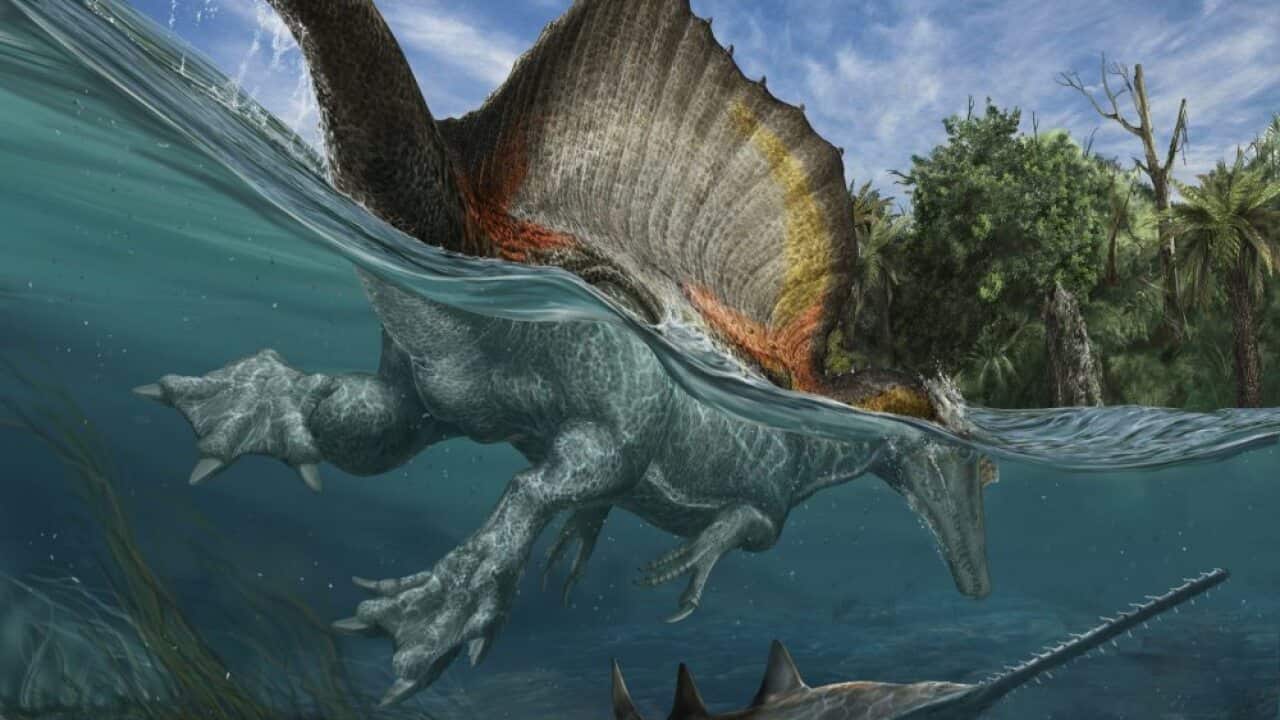
The giant hybrid of a duck and a crocodile lived 95 million years ago, sloshing through rivers and feasting on prehistoric sharks, sawfish and lungfish.
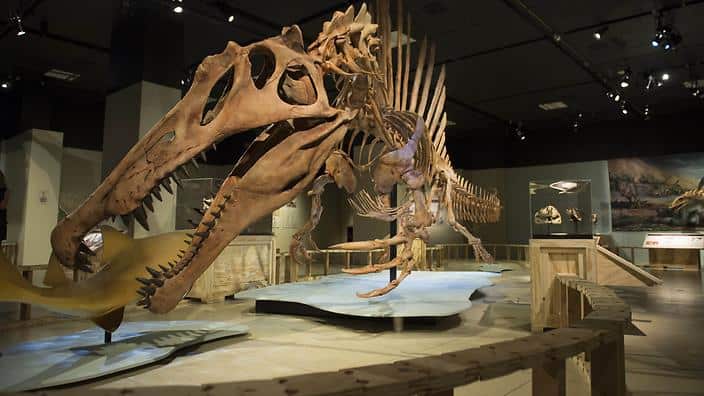
The 20-tonne beast boasted a tall crest on its back, akin to a boat's sail, held aloft with spines as tall as an average human.
known predatory dinosaur
News that makes sense
Your trusted source for staying up-to-date with the world around you. Get free daily news updates and analysis, straight to your inbox.
Its long tail, narrow hips and paddle-shaped feet likely helped the 15-metre dinosaur move through the water with ease, experts said.
Spinosaurus also had dense bones to help control its buoyancy in water and a long snout with high-set nostrils that could allow easy breathing while partially submerged.
"Taken together, these features strongly suggest that Spinosaurus was the first dinosaur that spent a significant amount of time in the water," said lead author Nizar Ibrahim, a paleontologist at the University of Chicago.
The 2001 movie Jurassic Park III features a scene in which a Spinosaurus attacks a Tyrannosaurus Rex and snaps the legendary carnivore's neck.
Scientists have long known the scene was not accurate.
T-Rex lived in North America some 30 million years after Spinosaurus disappeared, and Spinosaurus bones have been unearthed only in Africa.
But co-author Paul Sereno, also a paleontologist from the University of Chicago, says the latest research casts even more doubt on that Hollywood portrayal.
Spinosaurus might have made nests for its young on land, but the front-heavy creature would not have been particularly agile on solid ground, he said.
"I think that we have to face the fact that the Jurassic Park folks have to go back to the drawing board on Spinosaurus," Sereno told reporters on a conference call to discuss the research.
Sereno said the Spinosaurus appeared to have "bodily adaptions showing transitions from a land-based predator to a semi-aquatic predator".
Bones from the predator's skull, vertebra, pelvis and limbs were found along an old riverbank in the Sahara desert, in the Kem Kem beds of eastern Morocco.