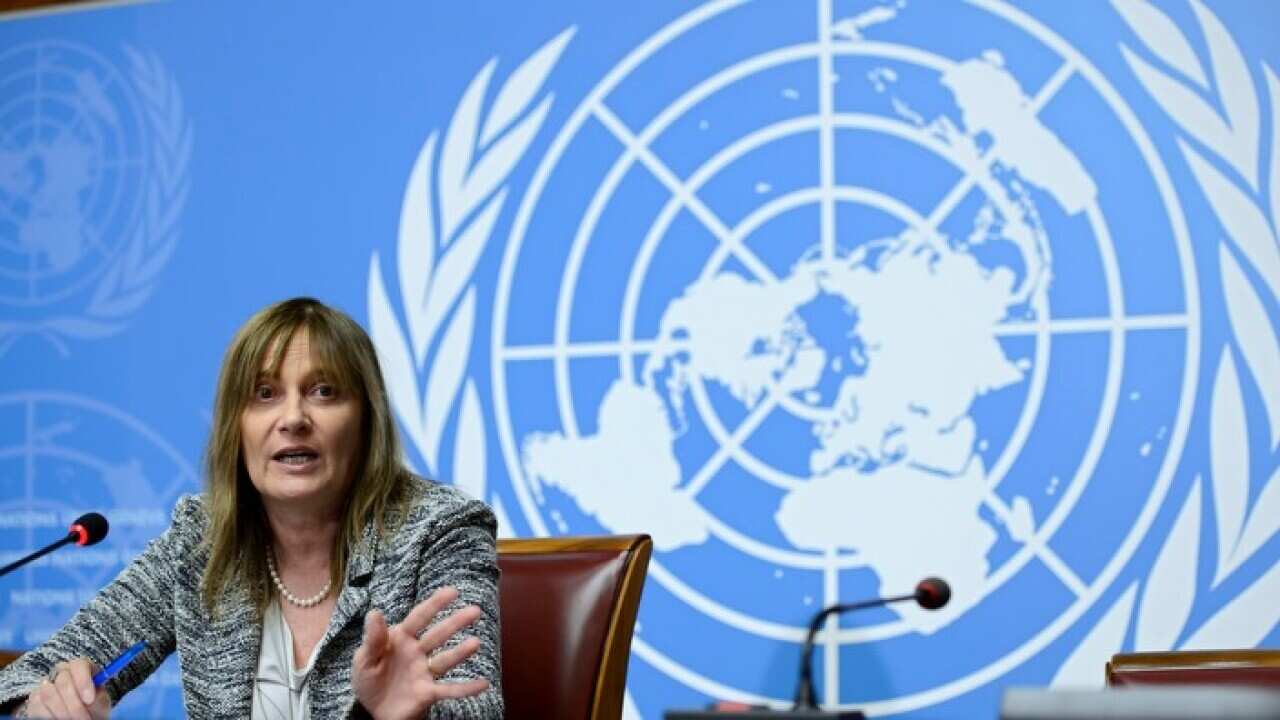
The World Health Organisation is set to unveil an emergency vaccine program to fight the deadly Ebola virus in the coming days.
Currently, there are no vaccines proven to protect against the virus, but trials of several potential Ebola vaccines are under way worldwide.
Meanwhile, some of the world's biggest drug companies say they plan to work together to produce millions of doses of vaccines to combat Ebola by early next year.
Several different types of Ebola vaccines are currently being developed globally, with some created almost 10 years ago but never tested.
That is because drug companies had considered previous outbreaks of the virus too small to warrant the costs of producing a vaccine.
However, now the virus threatens to spread across the world, the race is on to halt the spread of this strain of Ebola -- which, so far, has defied all attempts at containment.
The World Health Organisation, or WHO, has identified two potential vaccines as promising candidates to limit the spread of the virus.
Both will undergo clinical tests by November the 1st while medical experts assess their safety and immune response.
WHO Assistant Director General for Health Systems and Innovation Dr Marie-Paule Kieny says, once that is done, the hope is to have a vaccine available by the start of next year.
"These trials will incorporate the largest number of volunteers and will be very important in terms of determining both the safety and the immuno-genecity. And these data are absolutely crucial to allow decision-making on what dose level should go in the efficacy-testing."
Johnson and Johnson Chief Scientific Officer Paul Stoffels says, even though human trials of different Ebola drugs are in their early stages, any one of them could offer the solution.
"This crisis is running out of hand, and we have to be there with vaccines as quickly as possible to keep it under control. That is the request of the world community, and that's what we respond to."
Johnson and Johnson, a firm based in the United States, is among the international companies working to create a vaccine.
It is aiming to produce at least a million doses of its two-step vaccine next year.
The company says it has already discussed collaborating with the British company GlaxoSmithKline -- also working on its own vaccine -- and the US company Pfizer.
Paul Stoffels says collaboration is needed to fast-track the production of a vaccine.
"We also collaborate with the regulators to discuss how we can accelerate clinical trials, and, the know-how and the insights of how and whether these vaccines will work, we will exchange between industries to learn, so that we can learn from each other to go faster."
But because of the need to produce a vaccine urgently, there is limited time to fully test for side effects.
That has raised concerns the drug could be released to people at risk of catching the virus without understanding the long-term health consequences.
Drug-makers are now seeking indemnity from governments to avoid any legal claims arising from the emergency release of an Ebola vaccine.
The London School of Hygiene and Tropical Medicine's Professor Brian Greenwood has told the BBC any Ebola vaccine is better than none.
"The risk is very high to people who are in close contact with the patients, and I think there's absolutely no doubt that, for those people, even a vaccine that was 50 per cent effective and there was a small risk that it might have some bad side effects, (they) would take that if you gave people the chance."
Meanwhile, the WHO says it is confident Ebola is not spreading in any significant numbers across borders in West Africa.
The WHO's Emergency Committee advising on Ebola says screening people leaving Liberia, Sierra Leone and Guinea by air, land and sea remains critical for reducing its spread.
Assistant Director General Dr Keiji Fukuda says, although the virus remains a serious concern in the countries affected, he is reasonably confident it has not spread outside.
"I think that there is reasonable confidence right now that we are not seeing widespread transmission of Ebola into the neighbouring countries. It remains a big concern for everybody, but we think that, right now, we are n
The World Health Organisation is set to unveil an emergency vaccine program to fight the deadly Ebola virus in the coming days.
Currently, there are no vaccines proven to protect against the virus, but trials of several potential Ebola vaccines are under way worldwide.
Meanwhile, some of the world's biggest drug companies say they plan to work together to produce millions of doses of vaccines to combat Ebola by early next year.
Several different types of Ebola vaccines are currently being developed globally, with some created almost 10 years ago but never tested.
That is because drug companies had considered previous outbreaks of the virus too small to warrant the costs of producing a vaccine.
However, now the virus threatens to spread across the world, the race is on to halt the spread of this strain of Ebola -- which, so far, has defied all attempts at containment.
The World Health Organisation, or WHO, has identified two potential vaccines as promising candidates to limit the spread of the virus.
Both will undergo clinical tests by November the 1st while medical experts assess their safety and immune response.
WHO Assistant Director General for Health Systems and Innovation Dr Marie-Paule Kieny says, once that is done, the hope is to have a vaccine available by the start of next year.
"These trials will incorporate the largest number of volunteers and will be very important in terms of determining both the safety and the immuno-genecity. And these data are absolutely crucial to allow decision-making on what dose level should go in the efficacy-testing."
Johnson and Johnson Chief Scientific Officer Paul Stoffels says, even though human trials of different Ebola drugs are in their early stages, any one of them could offer the solution.
"This crisis is running out of hand, and we have to be there with vaccines as quickly as possible to keep it under control. That is the request of the world community, and that's what we respond to."
Johnson and Johnson, a firm based in the United States, is among the international companies working to create a vaccine.
It is aiming to produce at least a million doses of its two-step vaccine next year.
The company says it has already discussed collaborating with the British company GlaxoSmithKline -- also working on its own vaccine -- and the US company Pfizer.
Paul Stoffels says collaboration is needed to fast-track the production of a vaccine.
"We also collaborate with the regulators to discuss how we can accelerate clinical trials, and, the know-how and the insights of how and whether these vaccines will work, we will exchange between industries to learn, so that we can learn from each other to go faster."
But because of the need to produce a vaccine urgently, there is limited time to fully test for side effects.
That has raised concerns the drug could be released to people at risk of catching the virus without understanding the long-term health consequences.
Drug-makers are now seeking indemnity from governments to avoid any legal claims arising from the emergency release of an Ebola vaccine.
The London School of Hygiene and Tropical Medicine's Professor Brian Greenwood has told the BBC any Ebola vaccine is better than none.
"The risk is very high to people who are in close contact with the patients, and I think there's absolutely no doubt that, for those people, even a vaccine that was 50 per cent effective and there was a small risk that it might have some bad side effects, (they) would take that if you gave people the chance."
Meanwhile, the WHO says it is confident Ebola is not spreading in any significant numbers across borders in West Africa.
The WHO's Emergency Committee advising on Ebola says screening people leaving Liberia, Sierra Leone and Guinea by air, land and sea remains critical for reducing its spread.
Assistant Director General Dr Keiji Fukuda says, although the virus remains a serious concern in the countries affected, he is reasonably confident it has not spread outside.
"I think that there is reasonable confidence right now that we are not seeing widespread transmission of Ebola into the neighbouring countries. It remains a big concern for everybody, but we think that, right now, we are not seeing it. We think it would be very difficult to miss, basically. "
Share


