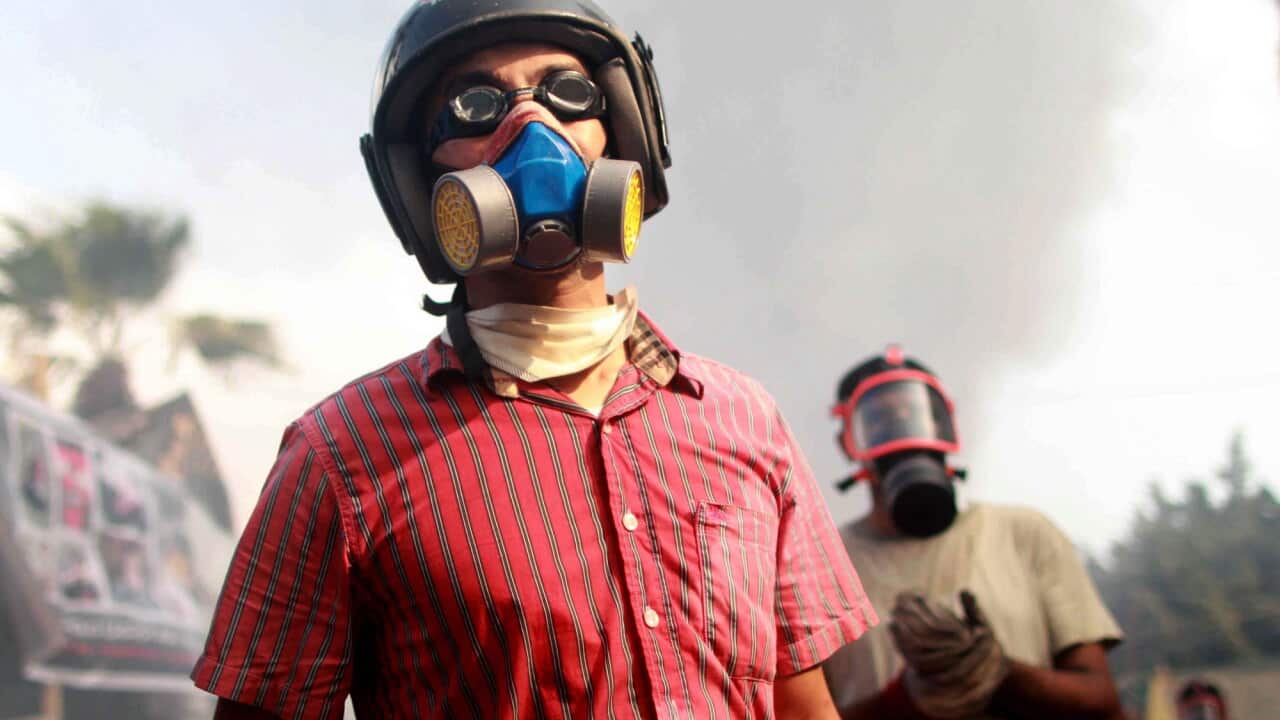
Egypt's bloody crackdown on supporters of ousted president Mohamed Morsi has triggered widespread condemnation as the international community reacted with alarm to what some termed a "massacre".
The United Nations, the United States, Britain, France, Iran, Qatar and Turkey on Wednesday strongly denounced the use of force by the military-backed interim government to clear two protest camps in Cairo.
The action has resulted in at least 149 deaths, according to the health ministry, while the UN said the death toll could run into the hundreds.
UN Secretary General Ban Ki-moon expressed regret that "Egyptian authorities chose instead to use force to respond to the ongoing demonstrations", while US Secretary of State John Kerry, whose government had offered qualified backing to the interim government, called the bloodshed "deplorable".
British Foreign Secretary William Hague said he condemned the use of force in clearing protests, and called for security forces "to act with restrain"
News that makes sense
Your trusted source for staying up-to-date with the world around you. Get free daily news updates and analysis, straight to your inbox.
Swedish Foreign Minister Carl Bildt tweeted: "Main responsibility with regime forces. Extremely hard to restore political process."
Qatar, a main backer of the pro-Morsi Muslim Brotherhood, issued a similar message.
"Qatar strongly denounces the means by which peaceful protesters in Rabaa al-Adawiya camp and Al-Nahda square have been dealt with and which led to the killing of several unarmed innocent people among them."
Turkey, which had strong ties with Morsi's government, urged the international community to act immediately over what it said was an "unacceptable" response to the protests.
"The international community, particularly the UN security council and Arab League, must act immediately to stop this massacre," the prime minister's office said in a statement.
Iran also termed the crackdown a "massacre", and Palestinian Islamist movement Hamas, which rules Gaza, called for "an end to the bloodshed".
France, Germany and Italy refrained from apportioning blame for the crisis, calling for calm from both sides.
The European Union also appealed for restraint, with EU foreign policy chief Catherine Ashton's spokesman saying: "Confrontation and violence are not the way forward."
Russia also "called on all political forces ... to show restraint and calm ... in order to avoid a further escalation and further loss of life."







