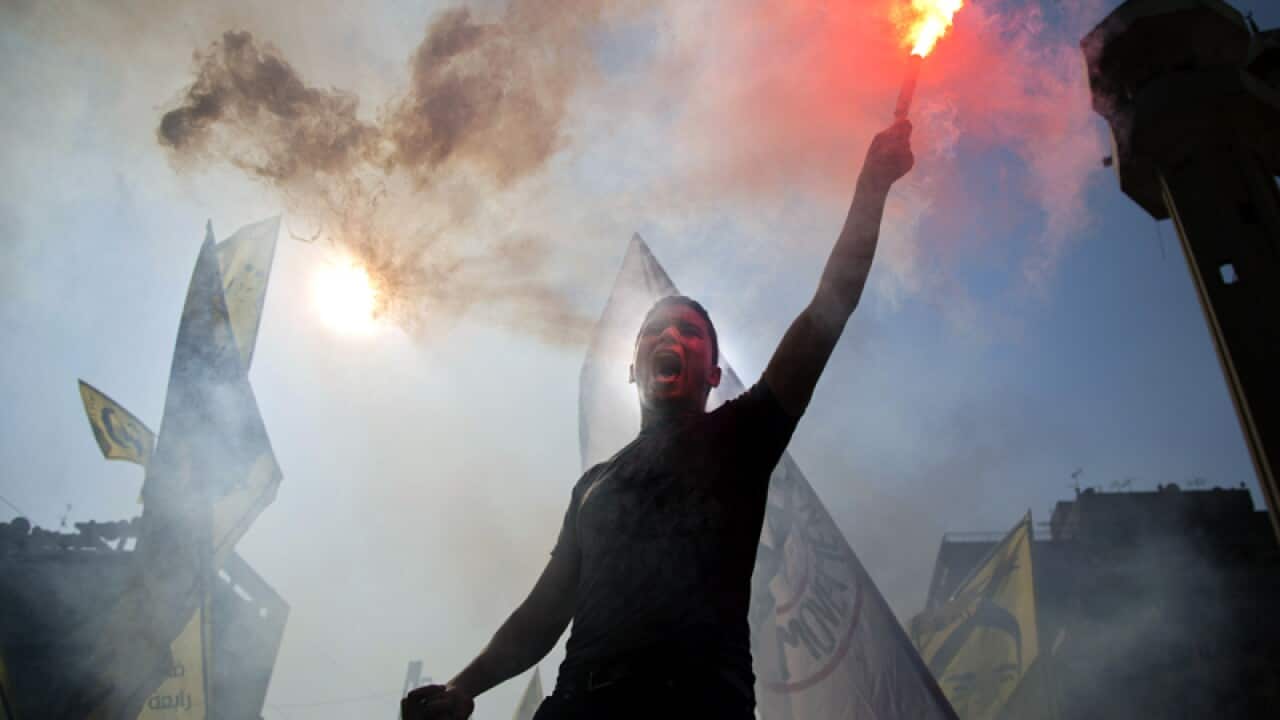
Egypt has enacted tough new restrictions on demonstrations, banning public gatherings of more than 10 people without prior police approval and imposing hefty fines.
Egypt's interim president, Adly Mansour, imposed the law by decree on Sunday, acting under powers he was given when the military ousted President Mohammed Morsi in July.
The new law seems designed to ensure the end of large protests. It requires that groups apply to the police for permission to demonstrate three days in advance. An application must spell out what the demonstration is protesting, where it will be held, how long it will last and what goal the demonstration's organisers are hoping to achieve. Any gathering of more than 10 people without police permission is illegal under the law.
The interior ministry and police can cancel or move a protest, and while the law says only appropriate force can be used to break up an illegal protest, it says the security forces have the right to defend themselves.
But what constitutes self-defence is not defined, and recent history suggests that forces will interpret that broadly. On August 14, security forces attacked sit-ins in support of Morsi, killing about 1100 people.
News that makes sense
Your trusted source for staying up-to-date with the world around you. Get free daily news updates and analysis, straight to your inbox.
The law also allows provincial governors to establish protest-free zones around government buildings. Violators face as much as 10 years in prison and fines of up to about $US43,000 ($A46,792).
Free-speech advocates say it will suppress protests against the current military-imposed government. "This must be a joke. We used to blame Morsi for passing laws without holding public discussions. What is the difference now? At least Morsi used to pretend that he held public discussions, but they don't even try," said Ahmed Maher, the founder of the Sixth of April movement, which helped spur the 2011 uprising in Cairo's Tahrir Square that led to the Mubarak's fall.
Observers say the new government is becoming increasingly repressive. On Thursday, the Egyptian cabinet gave police permission to enter university campuses, a birthplace of national uprisings and where Morsi supporters have protested, without prior permission if facilities or students are under threat. Last week, a court sentenced 12 pro-Morsi students to 17 years in prison for attacking administrative office at Cairo's al Azhar University.
Maher said his organisation will test the new law soon and go ahead with a planned protest on Monday at the country's legislative building to object to a draft constitution that would allow some civilians to be prosecuted in military courts.
"We will see what will they do with us. Let them implement the law. We will defy the law," Maher said. "This law is against the Muslim Brotherhood and anyone who opens his mouth."







