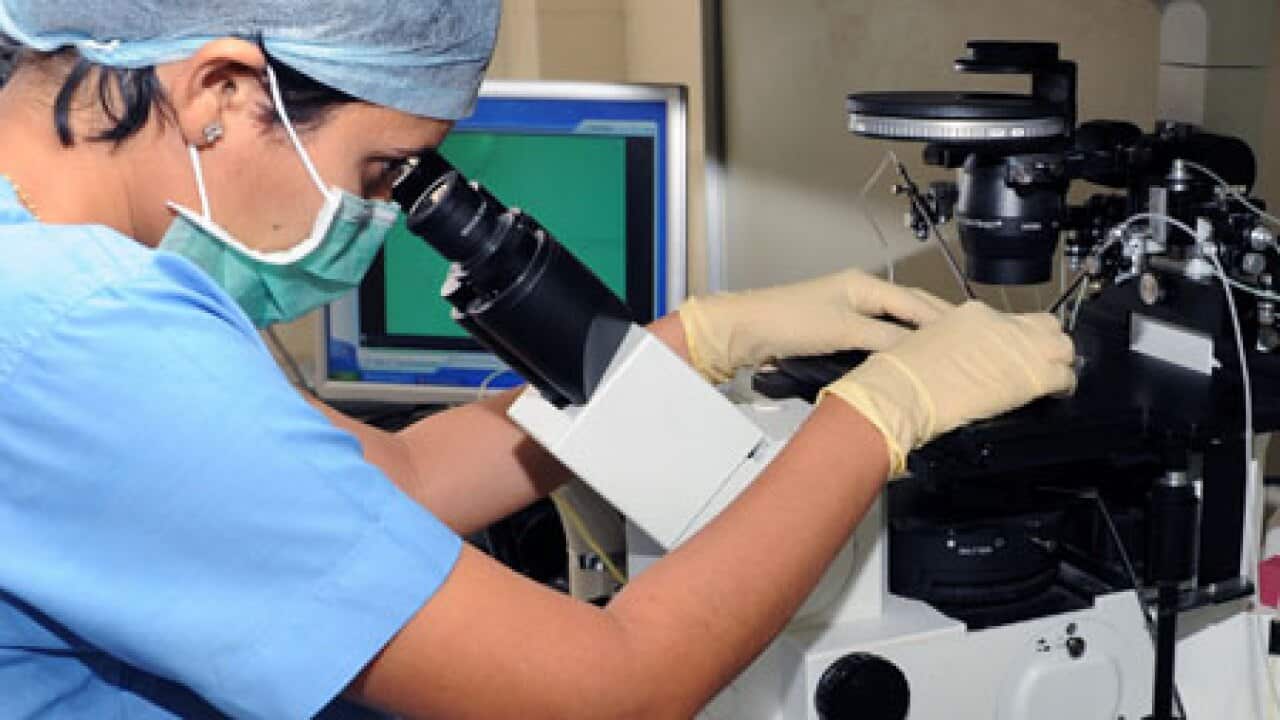
The bacteria, found to have microscopic "wires" sticking through their cell walls, might also be used to clean up oil spills or uranium pollution, according to the report in the U.S. journal Proceedings of the National Academy of Sciences.
The discovery about the exact structure of the bacteria and their atom-sized wires would permit researchers to design electrodes with better contacts to pick up the charges, let off by the microbes to avoid a build-up of electricity.
"We should be able to use this finding to harvest more electricity from the bacteria," lead author Tom Clarke of the University of East Anglia in England told Reuters by telephone.
"Until now it's been a bit like trying to build a radio when you don't know what type or size of battery you are going to put into it," he said.
"Now we have a blueprint of what the battery looks like," he said of the study, also involving scientists at the U.S. Pacific Northwest National Laboratory.
"All living things generate electricity, it's not the stuff of science fiction," he added. Humans, for instance, use electricity to keep their hearts pumping and brains thinking.
And the bacteria use their wires to discharge excess electricity. "If they get a build-up of charge then everything else stops," from feeding to respiration, he said.
LIGHTS, PHONES
Still, it could take perhaps a decade to develop use of the bacteria, a type called Shewanella oneidensis that live in oxygen-free environments, as an attractive power source for everything from lights to mobile phone chargers.
Before that, existing uses of such bacteria needed to become 100 or 1,000 times more efficient, he said.
The findings could also help speed development of microbe-based agents to clean up oil or uranium pollution, as well as use of fuel cells powered by sewage or compost.
"These bacteria don't need energy-rich fuels. They can take in oil slicks, waste oil ... degrade it and at the same time produce energy," he said of the research, funded by the British Biotechnology Council and the U.S. Department of Energy.
Or in stricken nuclear plants, bacteria could separate uranium from waste water, he said. Microbes might in future be enlisted to clean up any accidents such as Japan's Fukushima Daiichi disaster in March.
Share


