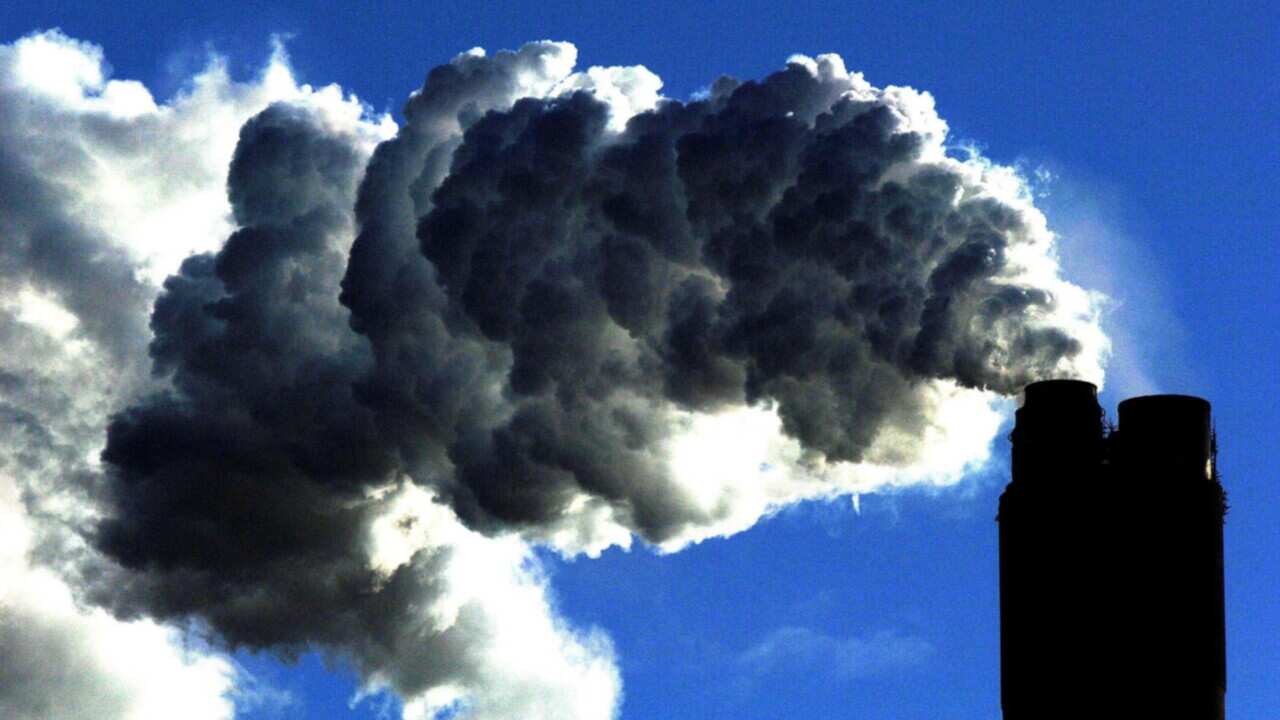
The Climate Council says the electricity sector accounts for one-third of Australia's greenhouse gas emissions, making it the single biggest source of emissions.
The report's author, Andrew Stock, says Australia also produces more greenhouse gas emissions per unit of electricity than almost any other developed country.
He says the Climate Council would like to see the government and the energy-supply sector fast-track changes in Australia's electricity sector.
"Plants, as they get older, they can be maintained, but they're costly. But you can't reduce the emissions that they make without very large investments in things called carbon capture and sequestration," he said.""We're making progress in renewables, but it's patchy....Overall in Australia, we're way behind."
"With plants that will be that old by then, it's hard to see that that investment would meet economic hurdles. So we're sort of getting trapped. And that's why we believe, as the Climate Council, we need to have a discussion in Australia now about how we're going to prepare for that low-emissions world in electricity in 2030 and beyond."
News that makes sense
Your trusted source for staying up-to-date with the world around you. Get free daily news updates and analysis, straight to your inbox.
Mr Stock says it takes over a decade to plan, design, finance and build major new power infrastructure.
He says he does not believe the electricity sector is doing enough to prepare for a world where deep emission cuts are becoming a reality.
But Andrew Dillon from The Energy Supply Association of Australia, representing the stationary-energy sector, says the sector is steadily adapting to more renewable energy.
"From a business point of view, there's no doubt that climate change is a risk."
"Transition in Australia's electricity generation is well and truly underway. We've seen, over the last decade or so, probably in the last four or five years, major drops in electricity demand."
"You're seeing smelters close across the country and a range of manufacturing industries winding back as well. And at the household level, we're seeing a huge array of changes, particularly a great uptake of energy efficiency. Many households are choosing to put in solar panels and install their own electricity, and this is all leading to major changes, as you can imagine, on the supply side as well."
"We're seeing a lot more renewables coming in under the renewable-energy target and, also, as part of that, solar panels going up on roofs. And so we're already seeing a change in our generation mix, and we expect that to continue in the years ahead."
The report is optimistic about the uptake of renewable electricity and energy in some parts of Australia, describing the uptake in some jurisdictions as world class.
Australia falling behind on an international level
But Andrew Stock says Australia is still falling behind on an international level.
"We're making progress in renewables, but it's patchy. States like South Australia in wind and solar, Queensland with solar and the ACT with renewables, they're at world-leading levels. But overall in Australia, we're way behind."
"The United States, China and Europe are rolling out large quantities of renewables now. So around the world now, over 100,000 megawatts of new capacity in renewables was added last year. So, there are big steps being made, and the cost reductions that are coming are huge."
The report says political uncertainty in Australia over climate-change policies is another area of concern.
Andrew Dillon from The Energy Supply Association of Australia agrees that, with so much uncertainty, it is difficult for the sector to adapt and plan for the future.
"From a business point of view, there's no doubt that climate change is a risk, and it's a risk that needs to be managed."
"One of the challenges the electricity sector has faced over the past few years and, unfortunately, still faces, as the report clearly outlines, is that we're investing here in very long-life assets. You're talking 20, 30 and even more years of investment."
"If you're starting to invest in that sort of environment, you want, as much as you can, policy certainty about where the settings are going forward."
"There can be multiple ways that the government can approach reductions in emissions. They can go more regulatory approaches, they can go cap-and-trade, emissions-trading schemes. Both of these can work to reduce emissions, there's no doubt about that. The challenge for investors coming in is, 'What are the ground rules going to be now? What will they be in five years' to 10 years' time?'"