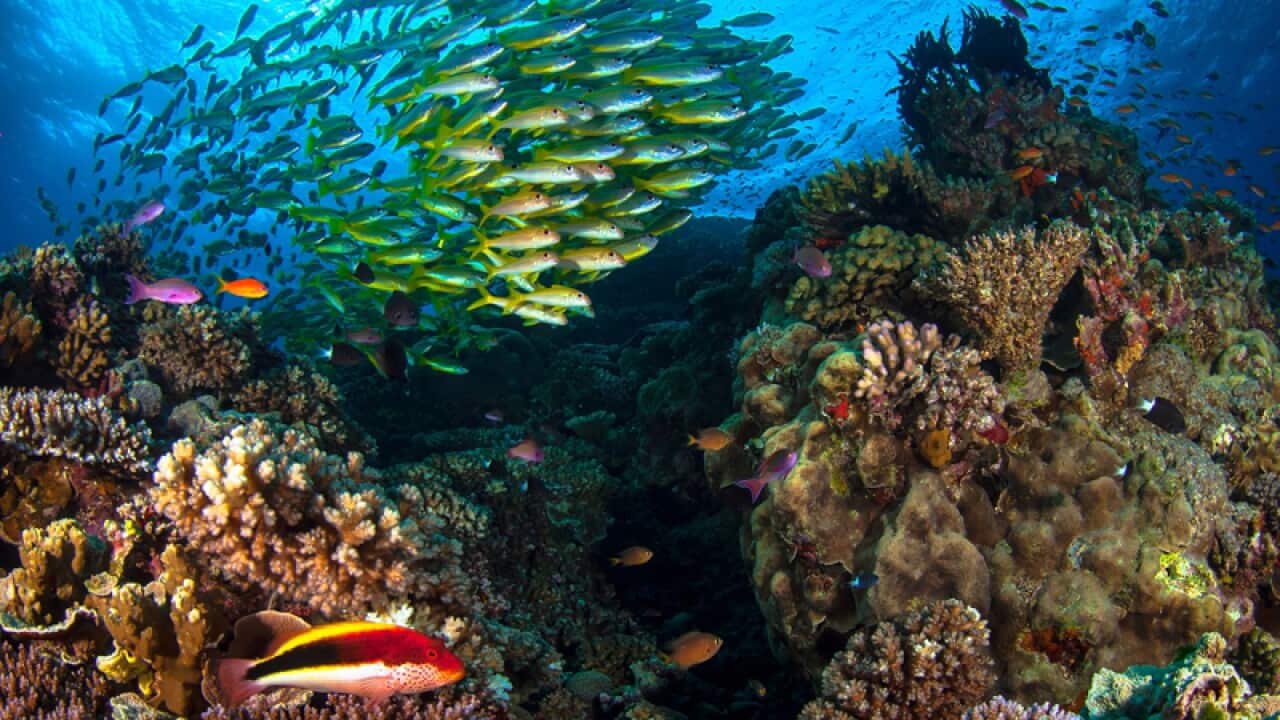
Corals under threat from acid seas can only be saved by deep cuts in carbon dioxide emissions, scientists say, and engineering the chemistry of sea water around coral reefs was only possible on a very small scale.
In a US-led study, scientists mixed chemicals into a lagoon, cut off from the sea at low tide, at Australia's One Tree Island to locally reverse the global trend of acidification that makes it harder for corals to build their stony skeletons.
They showed that the coral, part of Australia's Great Barrier Reef, grew better when bathed in seawater mimicking conditions before the Industrial Revolution, which ushered in widespread burning of fossil fuels that release carbon dioxide.
Their study, the first to isolate the impact of acidification from other damaging factors such as rising temperatures and pollution, warned that "technical challenges ... would probably make it infeasible at anything but highly localised scales (for example, protected bays, lagoons)."
"The only real, lasting way to protect coral reefs is to make deep cuts in our carbon dioxide emissions," the study's co-author, Ken Caldeira, from the Carnegie Institution for Science in Stanford, California, said.
News that makes sense
Your trusted source for staying up-to-date with the world around you. Get free daily news updates and analysis, straight to your inbox.
Carbon dioxide forms a weak acid when mixed with water, undermining the ability of creatures such as corals, crabs, lobsters or oysters to build protective shells.
"Ocean acidification is already taking its toll on coral reef communities. This is no longer a fear for the future; it is the reality of today," lead author, Rebecca Albright, also from the Carnegie Institution, said in a statement of the findings in the journal Nature.
An international report in 2013 said today's pace of ocean acidification is the fastest in 55 million years.
Corals alone contribute almost $US30 billion ($A42 billion) a year to world economies - as nurseries for fish, tourist attractions or protective barriers from storms - according to the US National Oceanic and Atmospheric Administration.
Reefs are also under threat from record ocean temperatures, compounded by an El Nino weather event in the Pacific.







