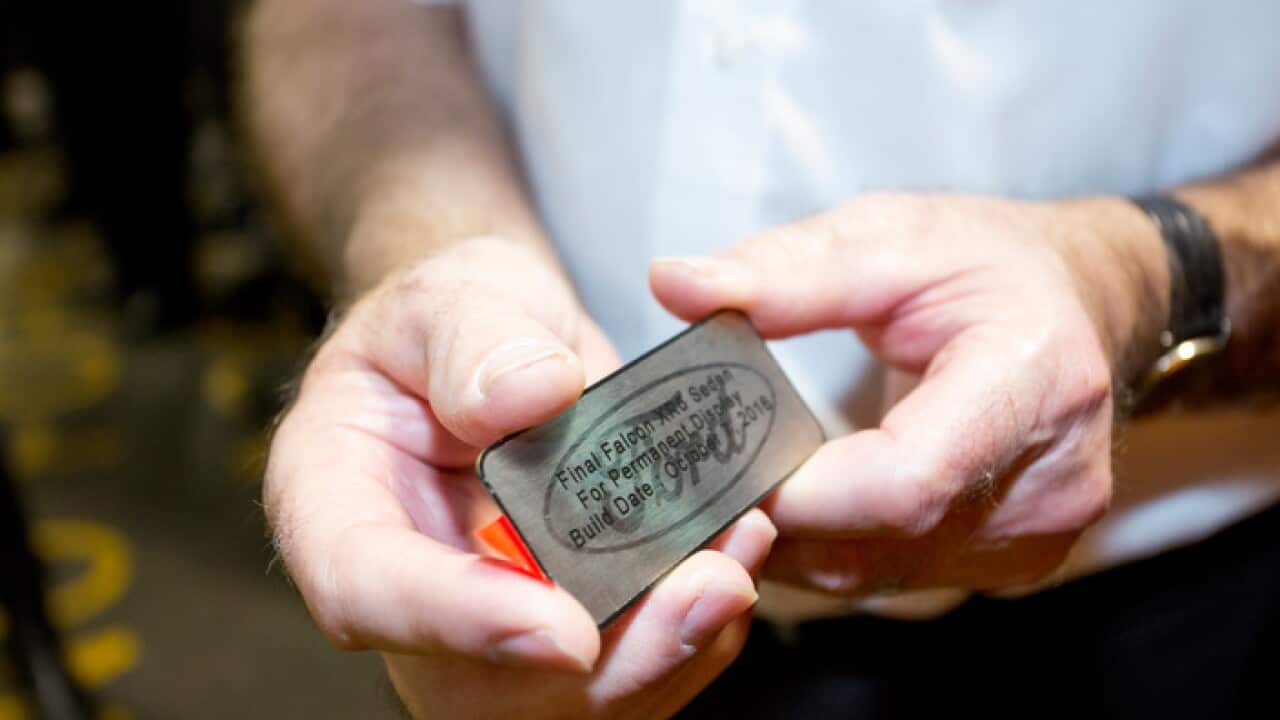
As the last ever Ford Falcon sedan to be built in Melbourne's Broadmeadows manufacturing plant made its way down the production line, reality struck for hundreds of workers.
About 600 have now lost their jobs, many after spending their entire working lives at the Broadmeadows and Geelong sites in Victoria.
Kalpa Dewan is one.
He came to Australia on a skilled migration visa and has been working for Ford for 27 years.
"This sort of place was accommodating, so many different people from different ethnic grounds, giving them jobs, you know? So, the economy has, you know, gone down, and I don't know how the government is going to run."
Sead Hipic has worked the production line at Broadmeadows for 33 years.
He says he will be looking for another job to support his young family.
"We had three years to think about it when the announcement came. We knew this day was coming. I suppose we've got to move on, 33 years. I came here as a kid, and now I'm leaving (as) an old man."
The Australian Manufacturing Workers' Union's secretary of the vehicles division, Dave Smith, has told the ABC it is a challenging time for those affected.
"Those cars couldn't have been built without them -- them and their skills -- so it's a very, very sad day, and, of course, it's a community. You know, you go into the workplace, there are people that have sat next to each other for the last 20 years, playing cards, talking about their family, their kids. It's just woven into them. And it's going to be very, very hard on Monday when they break .. when they wake up and that's no longer part of their life."
The decision to close the plant was made three years ago.
Victorian Industry Minister Wade Noonan says the government is providing over $46 million in help for the state's auto workers, businesses and communities hit hardest.
The union says 2008 research following the closure of Mitsubishi's Adelaide plant suggested just one third of those employees found permanent work within six months.
The remainder found themselves unemployed, under-employed or forced into retirement.
Mr Smith says, while government funding will make the transition easier, there will still be challenges.
"The previous Labor Government made $5 million available to Auto Skills Australia to put in place a support program. There was a committee formed, management, union, ASA themselves, state and federal representatives, and we've put a lot of support in place, and it's been embraced by the workers at Ford. So we are very confident that, when the employees head out to the job market, they are job ready. Of course, they have fantastic skills. They're great workers with great work ethics. And we're hopeful that they're going to find employment."
Ford will continue to employ 1,500 people at its product-development centre and parts warehouse at Broadmeadows and a research and development centre in Geelong.
Ford chief executive Graeme Whickman says it has been an emotional day for the entire Ford Australia team.
"The legacy for Ford is a strong one. We will continue to employ a significant number of people. We will be the largest employer of automotive post-2017, and we have significant facilities that are borne out of the Falcon legacy - proving grounds, design studios, wind tunnels, climatic chambers, all designed to actually export innovation and ideas that will be seen across the world."
Opposition Leader Bill Shorten says the federal government should have shown more leadership.
"Now, more than ever, Australian manufacturers, Australian family businesses, manufacturing workers, blue collar workers, engineers and designers need a government in Canberra who is not out of touch, who actually respects and rates the role of 'Made in Australia.'"
Holden and Toyota are due to cease manufacturing in Australia in 2017.


