
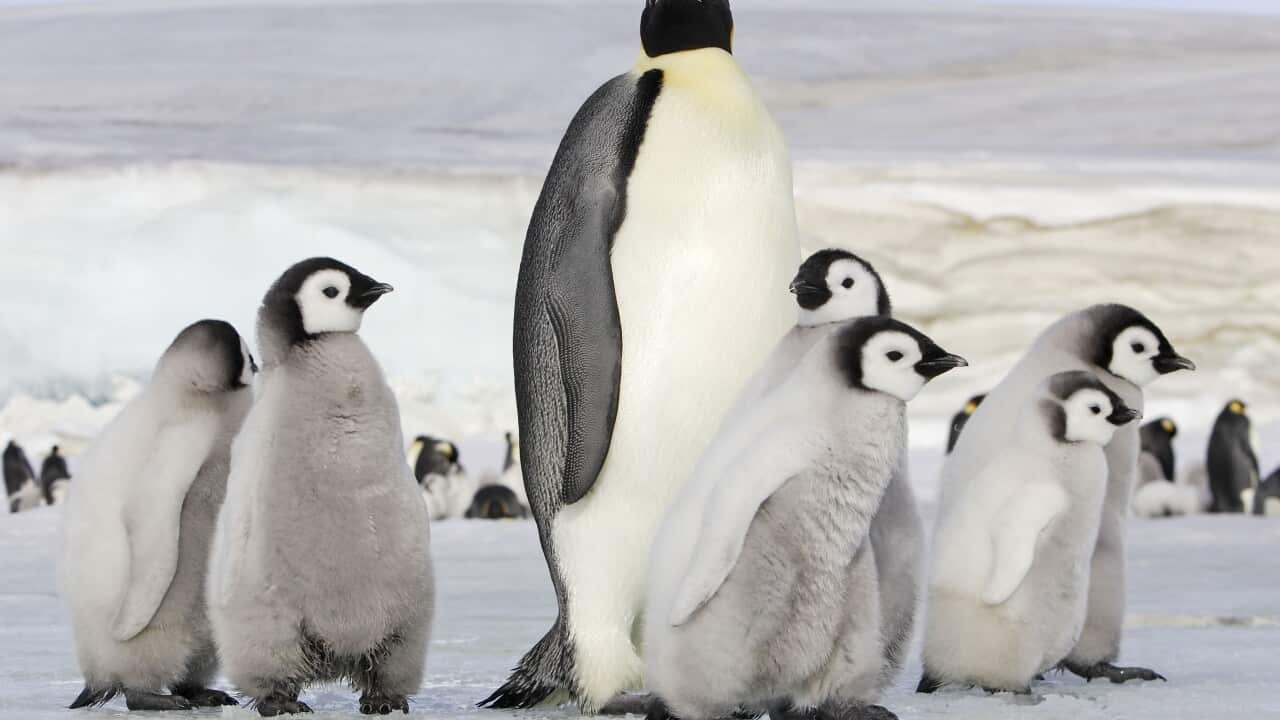
Global warming will send Antarctica's emperor penguins into decline by 2100, scientists project, calling for the emblematic birds to be listed as endangered and their habitat better protected.
The world's largest penguin species came to global fame with a 2005 documentary, March of the Penguins, portraying their annual trek across the icy wastes, and the 2006 cartoon movie Happy Feet.
The new study sheds light on the birds' reliance on sea ice for breeding and raising their young.
The ice also protects their prey - fish and krill - by maintaining the food chain.
Declining sea ice caused by climate change would place all 45 known emperor penguin colonies into decline by 2100, according to the population simulation.
"At least two-thirds (of colonies) are projected to have declined by (more than) 50 per cent from their current size" by the end of the century, said the paper published in the journal Nature Climate Change.
Dynamics differ between colonies, but "the global population is projected to have declined by at least 19 per cent," after growing 10 per cent up to 2048, it added.
The team said colonies located between the eastern Wedell Sea and the western Indian Ocean will see the biggest declines, while those in the Ross Sea will be least affected.
In fact, the Ross Sea penguin population will continue to grow until 2100, after which the trend will reverse.
"Our results indicated that at least 75 per cent of the emperor penguin colonies are at least vulnerable to future sea ice change, and 20 per cent will probably be quasi-extinct by 2100," the paper said.
Given these findings, the emperor penguin "is fully deserving of endangered status due to climate change," the team said - referring to the International Union for Conservation of Nature's Red List of Threatened Species.
The bird is currently listed as "stable" by the IUCN's species bible.





