In brief
- The employment minister has announced sweeping reforms of the employment services system.
- Major changes will be coming to JobSeeker obligations and the structure of Workforce Australia.
Labor is touting the biggest reform to employment services in 30 years, with structural changes on the way for Workforce Australia and JobSeeker. However, advocates are concerned that those looking for work will continue to be penalised.
The $312 million reform package will impact the more than a million Australians on unemployment programs like JobSeeker.
The current system, which forces those looking for work to meet with privately owned employment service providers, costs taxpayers some $2 billon each year.
However, the "one size fits all" approach to employment is being overhauled in favour of a three-tiered system for people seeking employment through the Department of Employment and Workplace Relations' flagship employment service, Workforce Australia.
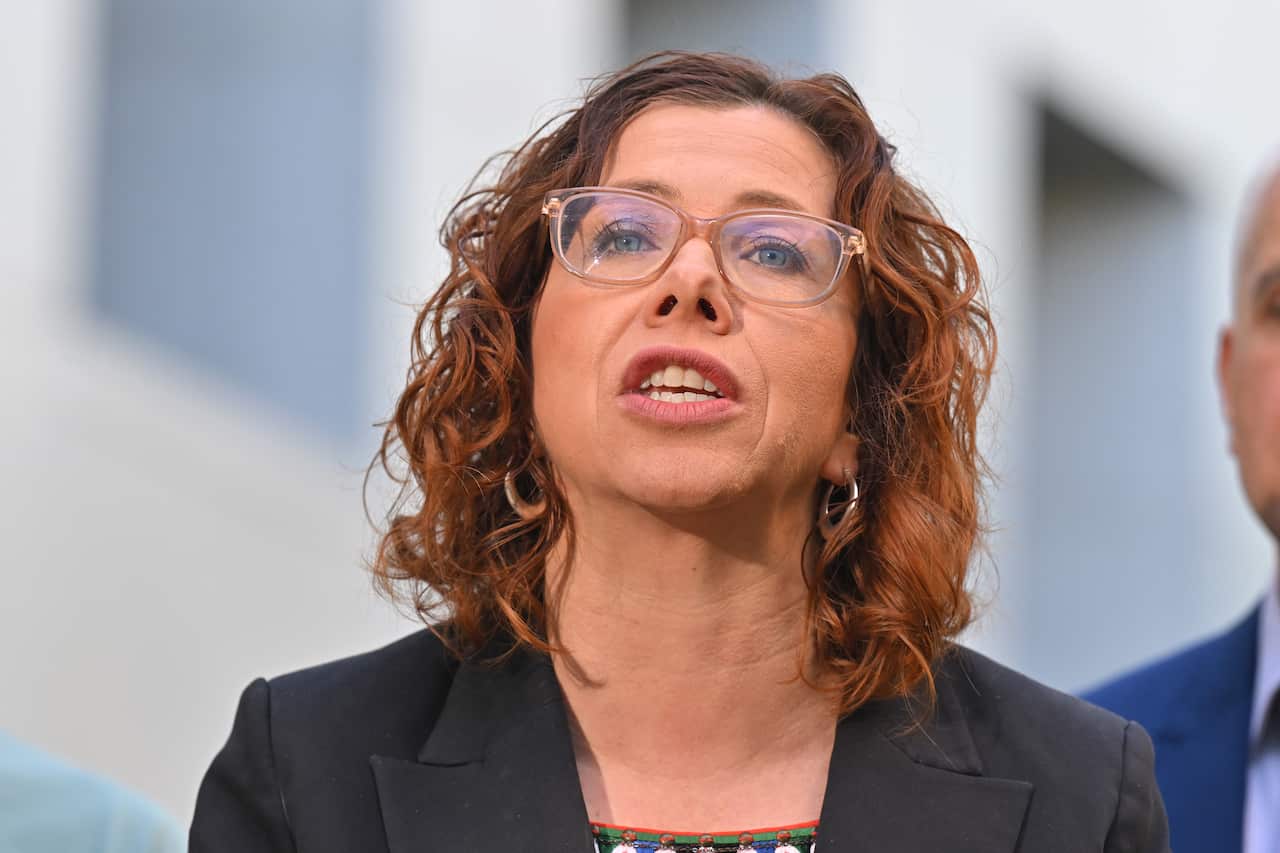
Employment and Workplace Relations Minister Amanda Rishworth has outlined the government's new approach in a speech at the National Press Club on Wednesday, which she said is aimed at making the system fairer.
News that makes sense
Your trusted source for staying up-to-date with the world around you. Get free daily news updates and analysis, straight to your inbox.
"A one-size-fits-all approach, across all elements of Workforce Australia, is letting too many participants fall through the cracks and creating inefficiencies in the system," Rishworth explained.
A key shift will see the introduction of "effective" mutual obligations — the tasks that job seekers complete in order to receive unemployment benefits.
"The second change is the introduction of effective, fair and proportionate mutual obligations, that are reflective of an individual's distance from the labour market and are designed to actually help people get a suitable job," she continued.
In addition, new "Employment Goal Plans" will replace the current Job Plans, which will be developed through a new $27 million "holistic" assessment process.
This will be supported by a news $205 million digital employment service aimed at providing individualised training and resources.
Mutual obligations
Under Workforce Australia, mutual obligations are governed by the Points Based Activation System, requiring participants to meet a specific numerical points target each month if they want to receive JobSeeker benefit payments.
Mutual obligations are also used for those receiving Youth Allowance, Parenting Payment, and the Disability Support Pension. Failure to meet them can result in delays or reductions in these payments.
The baseline target of 100 points per reporting period can be met by doing things like attending job interviews, applying for jobs, or starting a new job, activities that are variously weighted under the points system.
However, if users fail to meet their targets, they are issued demerit points, which can result in automatic suspension of their payments.
JobSeeker payments for a single person with no dependents is $808.70 per fortnight.
The mutual obligation system was introduced under the Howard Coalition government in 1997, developing the Hawke-Keating framework of conditional welfare.
It evolved under Tony Abbott and Malcolm Turnbull to include immediate deductions for those who failed to meet their commitments and a strict rule of 20 job applications per month for each candidate.
"Our Government supports mutual obligations, which reflect the community’s expectation that if you can work, and are receiving income support, you should be taking active steps to obtain work," Rishworth said.
"However, mutual obligations need to be fair, proportionate, and above all, effective, in order to facilitate people into a job.
"I hear from jobseekers and employment service providers that many mutual obligation requirements are a meaningless grab bag of busy activities that simply do not lead to a job."
Three tiers
The new Workforce Australia structure will be broken into a three-tier system, tailored to the needs of different jobseekers, the government has announced.
"Each service stream will have a different service offering, a different approach to mutual obligations for participants, and different funding models for providers, to reflect the varying intensity of supports that participants need," Rishworth said.
Service Stream One is aimed at those who are "digitally literate" and "close to the labour market".
This is designed for people who have little need for career or employment support for whom mutual obligations are something of a box-ticking exercise.
Service Stream Two aims to deliver "high-quality, targeted, provider services" for people who are not digitally literate or who need more support than the online service can provide.
Service providers targeting this stream will offer active job coaching, work-ready supports, and training linked to in-demand jobs.
Service Stream Three is about providing intensive services for "people who are furthest from the labour market".
"We know many people in this service stream won’t have a linear path into work," Rishworth said. "So this service stream will provide more time, more flexibility and more support to build confidence and capability."
Each service stream will have a different approach to mutual obligations, the government has said.
'Groundhog day' punishment
Critics have argued that retaining the mutual obligations system is "punishment as usual" that penalises people for having individual needs.
"You can’t punish people into employment in an economy designed to keep at least 4 per cent of us unemployed," Antipoverty Centre spokesperson Jay Coonan said in a statement.
Tailored support of the kind that Rishworth has announced is "not possible to deliver in any meaningful way under a coercive system", Coonan argues.
"It’s not a major overhaul if you keep 'mutual' obligations in place," he said. "That’s punishment as usual – punishment the government has continued to impose after a Commonwealth Ombudsman investigation raised significant concerns about the number of incorrect penalties applied."
Last year, the Commonwealth Ombudsman announced an investigation into automatic payment suspensions of people receiving benefits under the mutual obligation system.
It found in December that the punitive system relies on "vague and incoherent" information and that unlawful and unfair decisions had been taken by government departments and private job agencies in stopping people's welfare payments.
Australia is unusual in OECD countries in that, while it's emloyment programe is government-run, most of the actual services are delivered by private businesses.
The majority of the 650,000 jobseekers at the time were "unlikely to find ongoing employment no matter how hard they try," given the unemployment rate, the Ombudsman said.
Data released last year shows that almost half of all people using employment services had been threatened with payment suspensions.
Senate estimates in 2025 heard that the government knew its automated target compliance framework was causing harm to people and that questions remain over its legality.
Fifteen welfare and human rights organisations called on the government to end the practice, with questions raised over whether this is Labor's Robodebt — the automated scandal that plagued the Morrison government.
The government's automated debt recovery scheme was ultimately found to be illegal and cost $2.3 billion in repayments and compensation.
"If the use of suspensions is not paused immediately, any promises of a better system will ring hollow in the ears of unemployed people," Coonan said.
"The minister must be held accountable for her failure to respond to this welfare compliance scandal instead of distracting from the issue with announcements that fail to address the legal crisis the system is in."
The government has launched a public discussion paper to facilitate the changes which is open until 31 July.
While there is no firm date for the rollout of the new system, all current Workforce Australia contracts have been extended for at least the next 16 months.
— With reporting by the Australian Associated Press.
For the latest from SBS News, download our app and subscribe to our newsletter.







