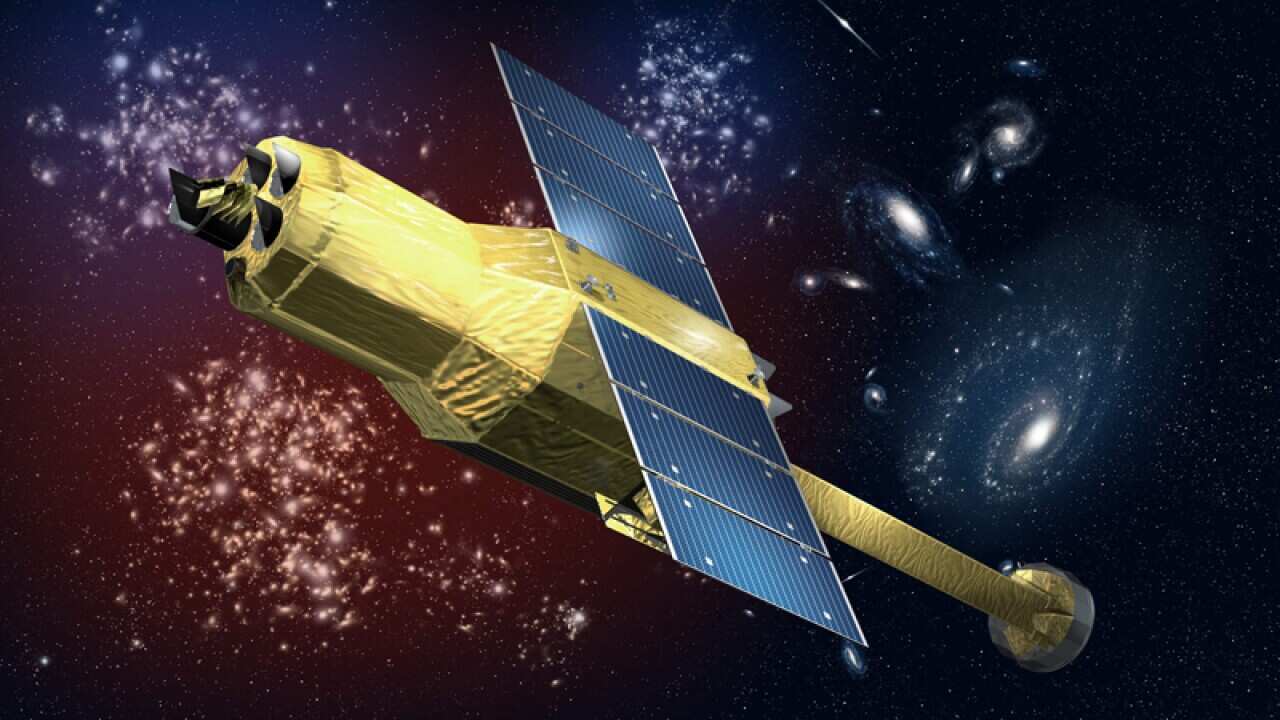
Japanese satellite Astro-H seems to have been damaged by an equipment failure and not by a collision with space debris, as proposed by initial theories.
Agencies of the United States had detected objects up to a metre wide floating close to the Japanese device, suggesting the satellite had collided with something, but the Japan Aerospace Exploration Agency, or JAXA, believes it is highly probable they are pieces of the satellite itself.
"After becoming unable to stabilise itself, (the satellite) sustained some sort of damage," an official of the Japan Aerospace Exploration Agency was reported as saying Friday by news agency Kyodo.
Among the possible faults could be a rupture of the helium tank housing the X-ray telescopes, a fuel leak in the stabilising engines or a battery fault, added the Japanese agency.
It could be several months before JAXA collects sufficient data on the device's conditions to be able to make repairs.
News that makes sense
Your trusted source for staying up-to-date with the world around you. Get free daily news updates and analysis, straight to your inbox.
Communication with the device failed from the start of its operations, scheduled for March 26, and parts of it are supposed to have begun breaking off hours later.
Although the agency has not been able to re-establish contact with the satellite, it has received four "incomplete bursts of data" suggesting some satellite functions are still operating, said Kyodo.
The Astro-H is 14 metres long and weighs 2.7 tons, making it the heaviest satellite launched to date by Japan.
The satellite, developed by JAXA, NASA and other institutions, was meant to fly in an orbit about 580 kilometres above earth and is built to observe black holes and distant galactic clusters with gamma-ray detectors and four X-ray telescopes.







