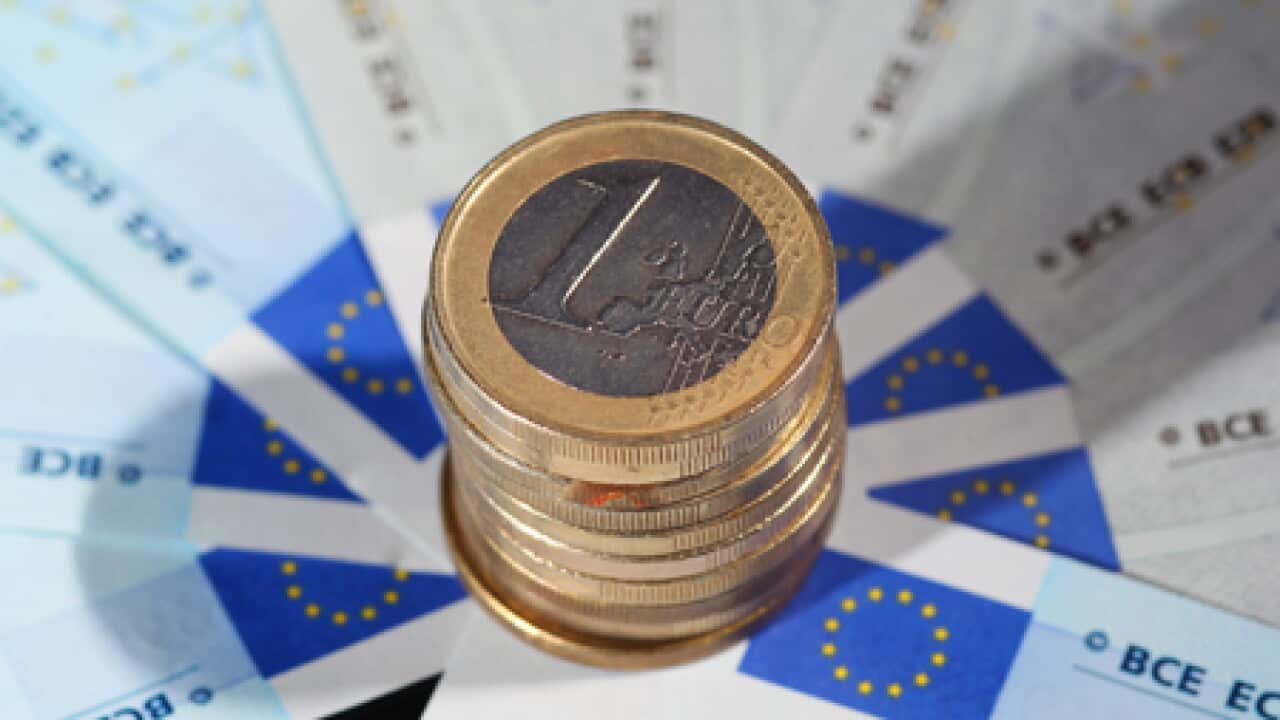
As Estonia prepares to become the third former communist state to switch to the euro, other nations from behind the former Iron Curtain are waiting in the wings.
But while Estonia's January 1 eurozone entry may be a encouraging for fellow Baltic states Latvia and Lithuania, others are more wary, given the currency's current turmoil. Poland is cautious, while the Czech Republic remains downright sceptical.
Members of the 27-nation European Union, except Britain and Denmark who have opt-outs, are all meant to adopt the currency eventually.
News that makes sense
Your trusted source for staying up-to-date with the world around you. Get free daily news updates and analysis, straight to your inbox.
Slovenia became the first ex-communist eurozone member in 2007, followed by Slovakia in 2009.
For small nations such as Estonia, Latvia and Lithuania -- their combined population is 6.8 million -- the euro is seen as one more anchor to the West.
The trio are the only EU members that were full Soviet republics rather than satellite states, winning independence in 1991 after five decades under Moscow.
They created national currencies to replace the Soviet ruble, pegging them to the US dollar or the Deutschmark and then, from 2002, to the euro.
"This marked the beginning of our journey towards the developed world," Estonian President Toomas Hendrik Ilves told AFP.
"Estonia has since become a member of the EU and NATO, in 2004, and joining the eurozone in January 2011 will mean arriving in Europe again."
The trio had originally looked to adopt the euro in 2007 and 2008, but shelved plans when their post-EU entry economic booms went off the rails amid the global crisis.
Instead, they launched biting austerity drives in a bid to tackle their deep slumps and make the eurozone grade.
Lithuania and Latvia are now aiming to to switch to the currency in 2014.
"It gives a positive sign from this region that a year and a half ago was still being doomed by everybody," said Martin Poder, a senior Estonian finance ministry official.
"And of course with neighbours there's always friendly rivalry!"
A spokesman for Lithuanian Prime Minister Andrius Kubilius confirmed this: Estonia's success had boosted his nation's determination, Virgis Valentinavicius told AFP.
"We congratulate the Estonians as pioneers, but we will definitely catch them up," he added.
The currency peg makes eurozone entry a logical step, Lithuanian Finance Minister Ingrida Simonyte told AFP.
"In such circumstances there is not much rationale in staying outside the eurozone, as almost all the restrictions apply but none of the benefits," she said.
"Estonia deserves strong compliments not for the pure fact of eurozone membership, but rather for their strong commitment to prudent fiscal policies," she added. "The Lithuanian government is also following this path".
In Latvia, kept afloat by an EU and International Monetary Fund bailout, central bank chief Ilmars Rimsevics said the short-term impact on his country could be negative.
"I think any investor will choose an environment where the euro has been introduced, without the various risks connected to rumours about a change in an exchange rate," he explained.
In Poland -- with 38 million people the largest of the 2004 EU entrants and the only member to sustain economic growth in 2009 and 2010 -- the issue of timing is hazy.
Warsaw has said it expects Poland by 2015 to meet all the EU's economic requirements for switching from the Polish zloty. But it has not set a target date.
This month, President Bronislaw Komorowski lodged amendments to the constitution to enable Poland to cede money-issuing and monetary policy powers to the European Central Bank.
"This is like getting a passport in order to be able to go on a trip, but without actually being obliged to leave," he cautioned.
Compared with the Czech Republic however, Poland comes across as positively enthusiastic.
Arch-eurosceptic Czech President Vaclav Klaus has reportedly pushed the government to negotiate an opt-out.
Prime Minister Petr Necas, in power since July, has said he will not set a target before his four-year mandate ends, and that joining a turmoil-hit eurozone would be foolish.
Hungary meanwhile, which only avoided bankruptcy thanks to an international bailout, has put its plans on ice.
Romania has not ruled out having to shelve its 2015 target, while its fellow 2007 EU entrant Bulgaria is expected to have to revise its goal of entry in 2013.
"Our experience is that it's good to have a target date when you know that you can stick to it. But if you have target dates and you can't reach them, it can quickly become just a political game," said Estonia's Poder.







