
Many hundreds of deaths at sea, including the drowning of up to 900 on a single vessel in the Mediterranean last month, have jolted European governments into a more robust response, but beyond greater funding for rescue operations, the EU is divided on how to act as anti-immigrant parties gain support at home.
"This is just the beginning. Now the planning starts," EU foreign policy chief Federica Mogherini said of the naval mission, adding that the operation could start next month. Details remain unclear as member states consider their options.
"There is a clear sense of urgency," Mogherini said of the migrants, most of whom make for her native Italy. "As summer comes, more people are traveling."

The European Union wants to capture smugglers and destroy their boats off the Libyan coast to help it tackle the rising number of migrants fleeing war and poverty in Africa and the Middle East. But it wants U.N. authorization to operate close inshore to a country that has descended into anarchy since Western powers backed a 2011 revolt that ousted Muammar Gaddafi.
NATO Secretary General Jens Stoltenberg urged Europe to move, saying Islamic State militants might be "also trying to hide, to blend in among the migrants" in order to get to Europe.
Some 51,000 migrants have entered Europe by crossing the Mediterranean this year, with 30,500 coming via Italy. About 1,800 have drowned in the attempt, the U.N. refugee agency says.
At an emergency summit in Brussels last month, European Union leaders agreed to "identify, capture and destroy vessels before they are used by traffickers".
Mogherini flew to New York this month to seek support for a draft resolution by Britain, France, Lithuania and Spain under Chapter 7 of the UN Charter, which allows the use of force to restore international peace and security.
Without UN authorization, the EU's naval mission, which will be headquartered in Rome, will not have the mandate to intervene in Libyan territorial waters to seize vessels.
"Nothing will happen without a UN mandate," said Austrian Defence Minister Gerald Klug.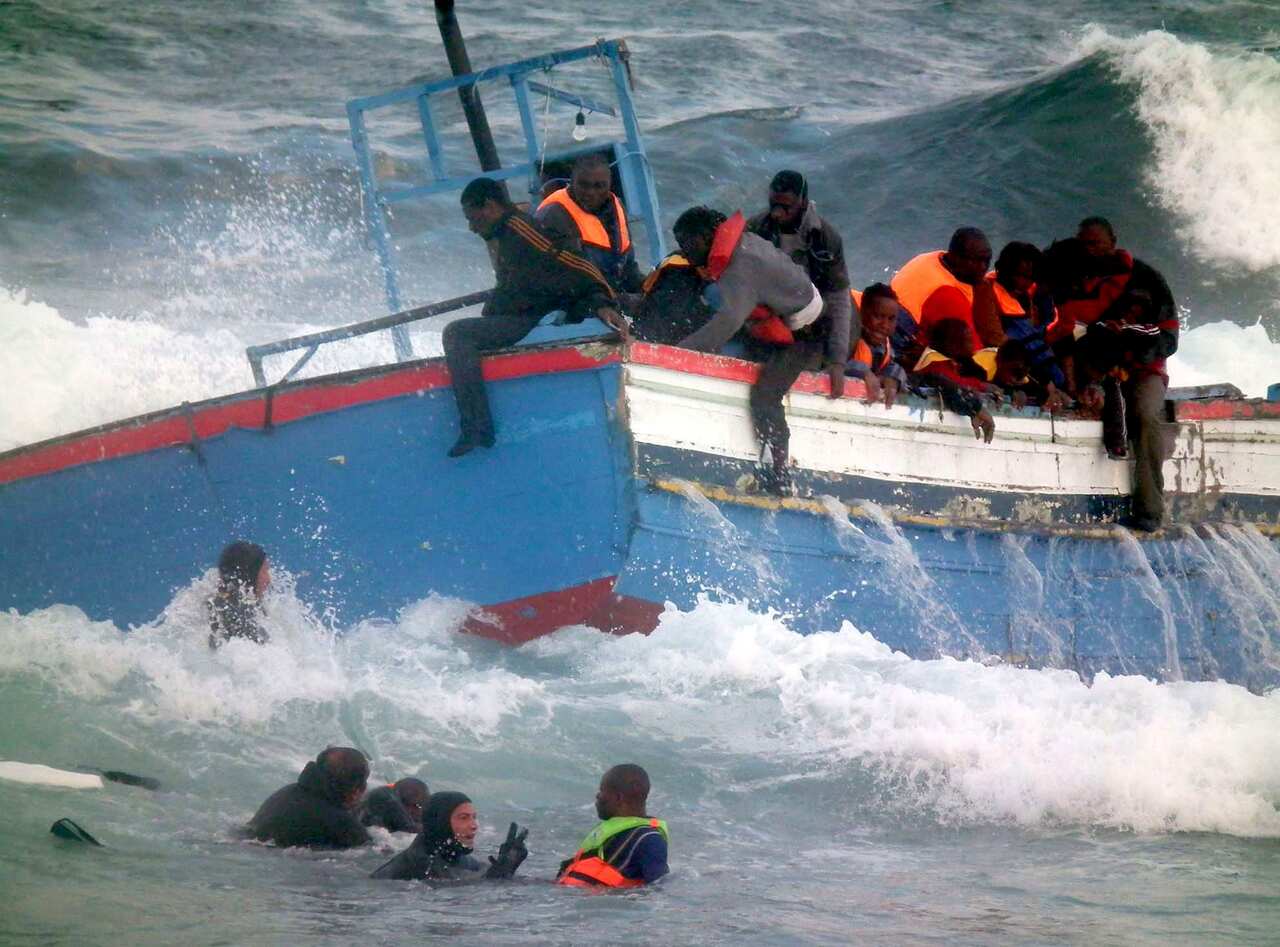
A number of boats with asylum seekers have capsized off Italy's coast over the years, including a migrant boat that sunk near the Sicilian island of Pantelleria 13 April 2011. (File: AAP)
No to migrant quotas
But EU diplomats say the EU can start using ships, drones and helicopters in the high seas to gather intelligence about people smugglers, although the impact will for now be limited.
A 19-page document for EU ministers envisages four phases, starting with deployment and assessment, and culminating in a "disruptional phase". A UN Security Resolution "is not required for the first phase", the document said.
As part of its migrant strategy, the European Commission last week unveiled a plan to take in 20,000 more refugees over the next two years, a response to an emergency that saw over 600,000 people seek refuge in the EU in 2014.
The EU executive also proposed a quota system to spread out among states the burden of housing hundreds of thousands of people while their claims for asylum are processed. At present, a few states, notably Germany and Sweden, take the major share.
The idea appeared to be in jeopardy, however.
Britain has rejected any quota, exercising an established exemption from EU migration policies. The French prime minister has said he is against quotes because France has already taken in thousands of refugees from Syria and Iraq since 2012.
Spanish Foreign Minister Jose Manuel Garcia-Margallo said Spain's chronic unemployment meant it could not help: "Pledging to take in migrants to whom you cannot provide work would be, in my opinion, providing a bad service," he said.
Slovakia and Hungary are also against the quota system.
(Additional reporting by Philip Blenkinsop and Robert-Jan Bartunek; Editing by Kevin Liffey and Toby Chopra)
Share


