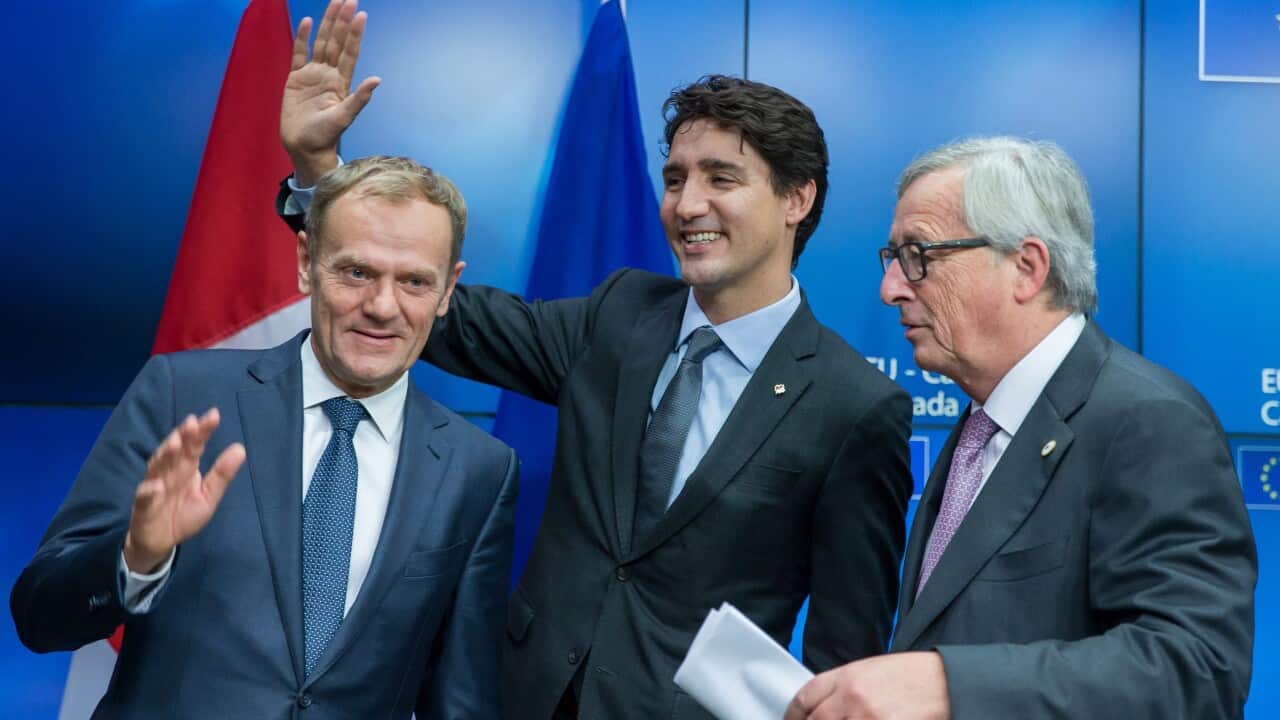
The European Union and Canada have signed a free trade agreement that aims to generate jobs and growth though it must still clear some 40 national and regional parliaments in Europe in the coming years to enter fully into force.
Canadian Prime Minister Justin Trudeau on Sunday signed the treaty along with the heads of EU institutions, a step that should enable a provisional implementation of the pact early in 2017 with the removal of most import duties.
The Comprehensive Economic and Trade Agreement's (CETA) passage has not been smooth.
French-speakers in southern Belgium, a minority within their own small country and accounting for less than one per cent of the 508 million EU consumers likely to be affected by CETA, raised objections that held up the deal until a breakthrough on Thursday, confirmed by regional parliamentary votes on Friday.
"All's well that end's well," said European Commission President Jean-Claude Juncker. "We have 20 ongoing negotiations and today we are fixing the global standards the European Union and the European Commission want others to accept."
News that makes sense
Your trusted source for staying up-to-date with the world around you. Get free daily news updates and analysis, straight to your inbox.
The Canada agreement is seen as a springboard to a larger EU deal with the United States, known as the Transatlantic Trade and Investment Treaty (TTIP), which has been the target of labour unions and environmental and other protest groups.
For Canada the deal is important to reduce its reliance on the neighbouring United States as an export market.
For the EU, it is a first trade pact with a G7 country and a success plucked from the jaws of defeat at a time when the bloc's credibility has taken a beating from Britain's vote in June to leave after 43 years of membership.







