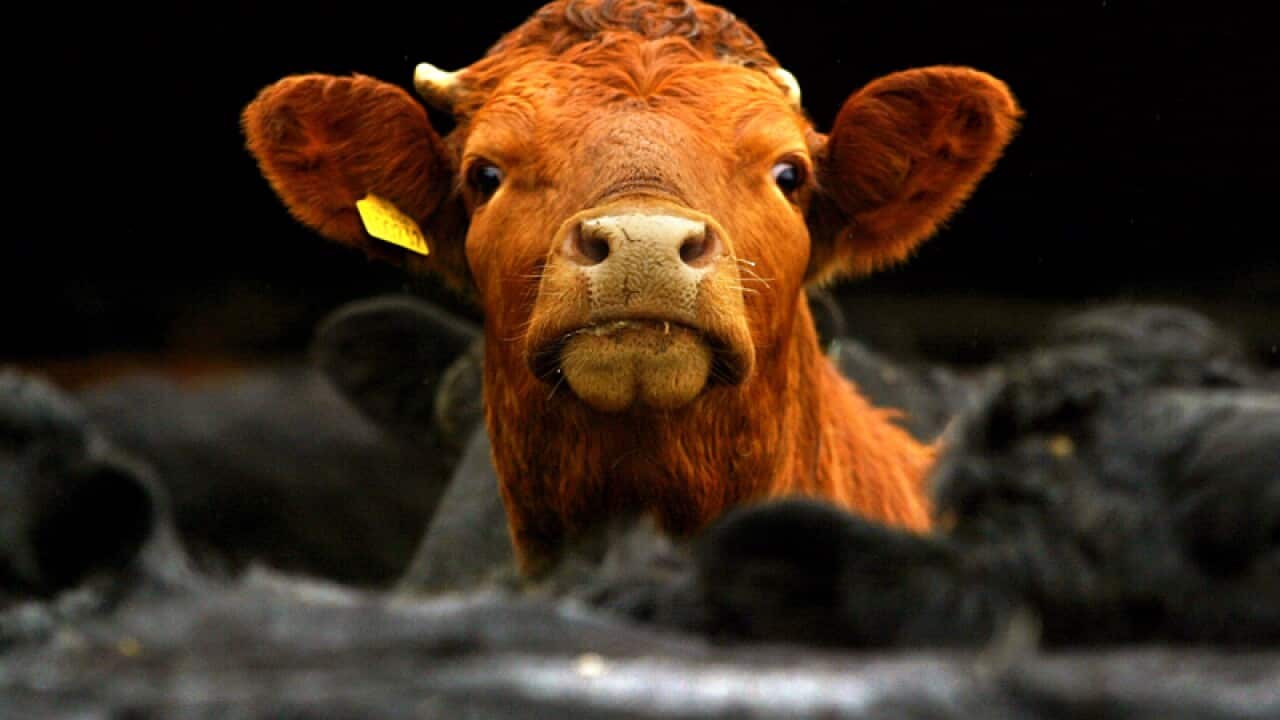
The European Commission says it will ban meat from cloned animals, but has stopped short of imposing restrictions on produce from the offspring of such animals, a potentially sensitive issue in EU-US free trade talks.
Introducing the planned rules, EU Health Commissioner Tonio Borg said the use of cloning for farm animals and the import of cloned animals will be banned in the 28-member bloc.
He added that the marketing of food from cloned animals would also be prohibited.
"These proposals intend to address animal welfare and other ethical concerns related to the use of the technique," the Commission said.
However, "there is no proposal on labelling" any produce arising from the offspring of cloned animals, be it milk or meat, said Borg.
News that makes sense
Your trusted source for staying up-to-date with the world around you. Get free daily news updates and analysis, straight to your inbox.
The only country cloning animals as a food source within the European Union is Denmark.
While cloned meat is not often eaten because of its high price, the embryos and semen of such animals are exported and widely used.
The United States, Argentina, Brazil and Uruguay are among countries that farm the offspring of cloned animals.
Although the European Union imports between 300,000 and 500,000 tonnes of beef from the United States and Argentina, they are not required to specify the origin of the meat with specific labelling.
A move by European parliament lawmakers to impose clear labelling on imported meat fell apart in 2011 over opposition from member states, which deemed such a regulation excessive.
Any such regulation would have required the United States and Argentina to carry out checks on meat sources, and risked sparking a trade war in case of non-compliance.
The EU and United States are now negotiating what would be the world's biggest free trade agreement, with food safety issues and standards a major problem area as both sides seek to win greater market access for their produce.
The latest proposals by the European Commission will have to be put to the European Parliament and member states, and are not expected to come into force before 2016.