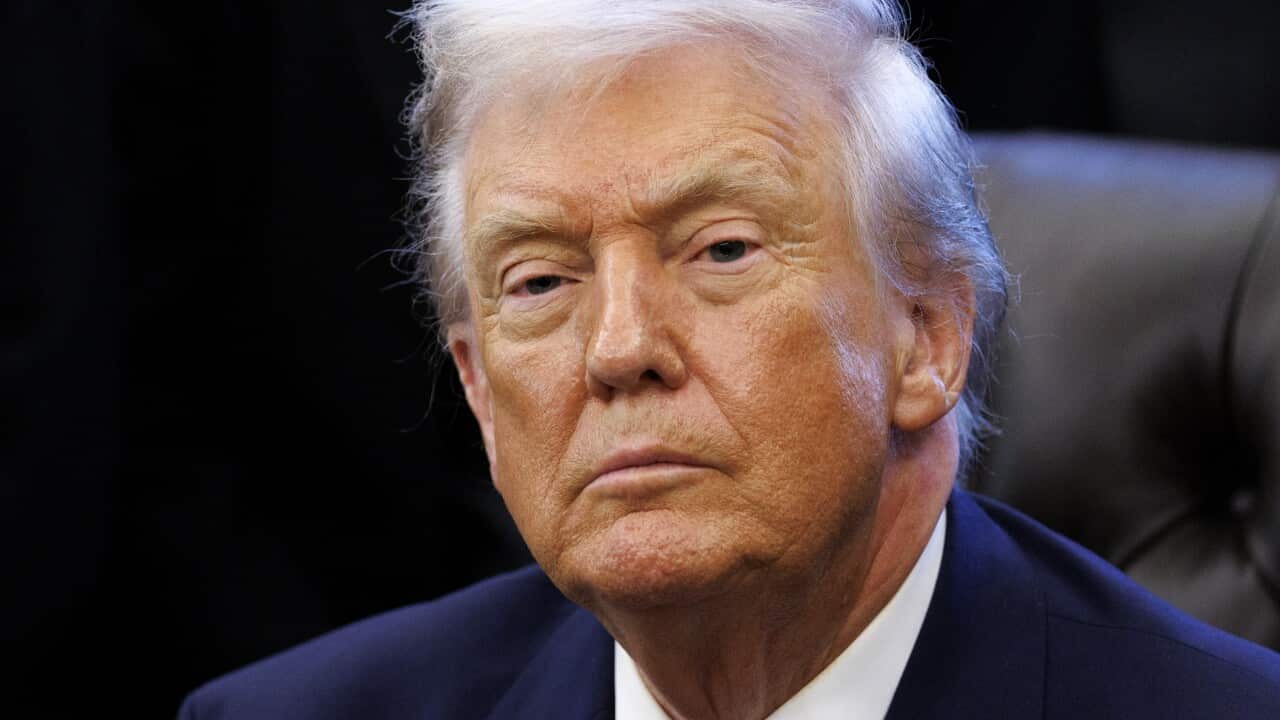
The United States will reassert its dominance in the Western hemisphere, build military strength in the Indo-Pacific, and possibly reassess its relationship with Europe, US President Donald Trump said on Friday in a sweeping strategy document that seeks to reframe the country's role in the world.
The National Security Strategy, released on Friday night AEDT, described Trump's vision as one of "flexible realism" and argued that the US should revive the 19th-century Monroe Doctrine, which declared the Western Hemisphere to be Washington's zone of influence. It also warned that Europe faces "civilisational erasure" and must change course.
The document is the latest — and clearest — expression of Trump's desire to shake up the post-World War Two order led by the US and built on a network of alliances and multilateral groups, and redefine it through his "America First" lens.
"President Trump's foreign policy is pragmatic without being 'pragmatist,' realistic without being 'realist,' principled without being 'idealistic,' muscular without being 'hawkish,' and restrained without being 'dovish,'" the 29-page document says.
"It is motivated above all by what works for America."
News that makes sense
Your trusted source for staying up-to-date with the world around you. Get free daily news updates and analysis, straight to your inbox.
'Restore American preeminence'
The paper, which is released by every new administration and guides the work of many government agencies, said Trump would "restore American preeminence" in the Western hemisphere and puts the region at the top of the administration's foreign policy priorities.
"This 'Trump Corollary' to the Monroe Doctrine is a common-sense and potent restoration of American power and priorities, consistent with American security interests," the document says, suggesting that the large US military build-up in the region is not temporary.
Since taking office in January, critics have said Trump's rhetoric evokes modern-day imperialism in the Western hemisphere. He spoke early on, in vague terms, of retaking the Panama Canal and annexing Greenland and Canada.
More recently, the growing US military presence in the Caribbean and threats of land strikes in Venezuela and in other countries where drug cartels operate have added to concerns in a region where Washington has a troubled history of military interventions.
The US has sent more than 10,000 troops to the Caribbean, along with an aircraft carrier, warships and fighter jets.
"The new National Security Strategy points out pretty clearly that we're not going to go back to the way things were," said Jason Marczak, a senior Latin America analyst with the Atlantic Council think-tank in Washington.
The document also alludes to China's growing economic clout in Latin America, which has been of concern to successive US administrations, and the goal of countering that.
In Asia, the document said, Trump aims to deter conflict with China over Taiwan and the South China Sea by building up the military power of the US and its allies.
Trump has a history of unconventional foreign policy moves, making it hard to predict how this formalisation of national security themes could translate into concrete actions.
Restore 'Western identity' in Europe
In the document, the administration took a dour view of its traditional allies in Europe, warning that the continent faces "civilisational erasure" and must change course if it is to remain a reliable ally for the United States.
The document is the latest in a series of statements by US officials that have upended postwar assumptions about Europe's close relationship with its strongest ally, the US.
"Over the long term, it is more than plausible that within a few decades at the latest, certain NATO members will become majority non-European," the document said.
Europe reacts
The reaction in Europe was swift, with German foreign minister Johann Wadephul saying the country does not need "outside advice".
The document is "unacceptable and dangerous", France's Valerie Hayer, the head of the Renew Europe centrist grouping in the European Parliament, said on X.
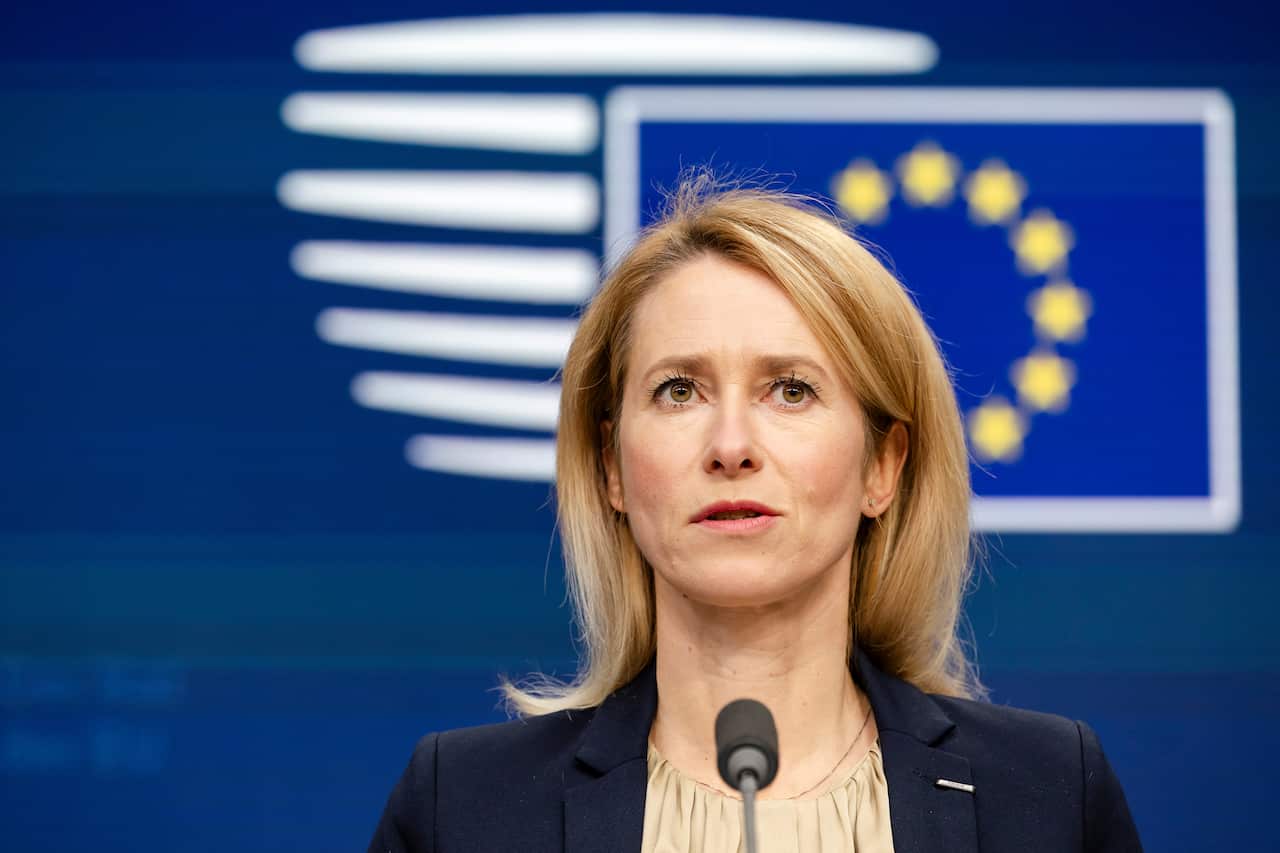
EU foreign policy chief Kaja Kallas said on Saturday that the US was still Europe's main ally.
"Of course, there's a lot of criticism, but I think some of it is also true," Kallas told the Doha Forum, an annual diplomatic conference in Qatar's capital, in response to a question about the US strategy.
"I think we haven't always seen eye to eye on different topics, but I think the overall principle is still there. We are the biggest allies, and we should stick together."
Kallas said that Europe had been "underestimating its own power".
For Evan Feigenbaum, a former adviser to two US secretaries of state and an expert on Asia, "the Europe section is by far the most striking — and far more so than the China/Asia sections".
It "feels inherently more confrontational and pits the US as decisively opposed to the whole European project with this line: 'cultivating resistance to Europe's current trajectory within European nations,'" he said in a post on X.
The Trump administration, the document said, wanted to restore "Western identity" in Europe. It comes as Trump has used increasingly racist rhetoric against immigrants of colour in the US.
The document said it was in the US' strategic interest to negotiate a quick resolution in Ukraine and to re-establish "strategic stability" with Russia.
Trump has a history of making positive and admiring comments about Russian President Vladimir Putin that have long prompted criticism that he is "soft on Russia".
For the latest from SBS News, download our app and subscribe to our newsletter.







