
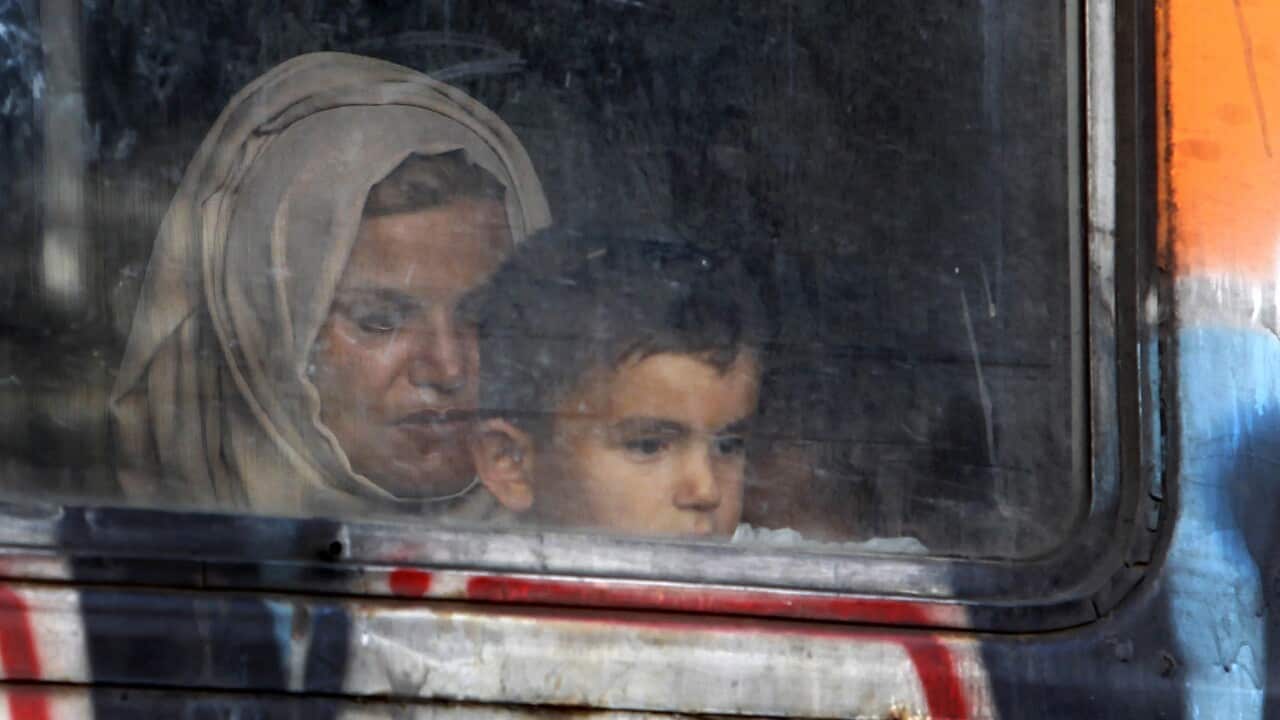
The United Nations' refugee agency has called on Europe to band together in dealing with the ongoing migrant crisis following chaotic scenes at the weekend in Greece, Macedonia and Serbia.
More capacity is required to ensure the safety of migrants on their journeys to other parts of Europe, according to a statement on Sunday night from the United Nations High Commissioner for Refugees (UNHCR).
An estimated 7,000 migrants arrived overnight on Saturday in Serbia after neighbouring Macedonia caved in to pressure and opened its borders following clashes on Friday with police.
UNHCR plans to build more reception centres for refugees in the border region, according to the statement.
The organisation criticised Athens for failing to register migrants before entering Macedonia.
Other European Union member states must step up to help, according to UNHCR Europe bureau director Vincent Cochotel, who said the problem "will not go away any time soon and affects all of Europe".
Last month, the European Union provided Macedonia with just over 90,000 euros ($A145,760) in humanitarian aid to help cover the basic needs of migrants arriving in the country.
Brussels has been "very closely monitoring the situation" in Macedonia over the weekend and is in close contact with the UNHCR, EU foreign policy spokeswoman Catherine Ray said.
The EU is due to provide Greece with almost 260 million euros from the bloc's asylum, migration and integration fund through 2020, along with another 166 million euros from a border-management fund.
Efforts are underway to set up a so-called hotspot in Greece to help local authorities register and fingerprint asylum seekers and process their claims more quickly. The same system has already been implemented in Italy.
"We have to realise that the blame game is not bringing any kind of positive results for any of us," EU foreign policy chief Federica Mogherini said on Monday in Talinn.
"The main point is not saying who is doing his homework or not; the point is how do we face together the challenge and how to we manage together the issue."
EU member states have fallen short of pledges to accommodate 60,000 asylum seekers within the bloc, with countries disagreeing over who should take in how many people.
Besides helping with the influx of refugees, Mogherini stressed the need to tackle the root causes of migration, such as the conflict in Syria, unrest in Afghanistan and parts of Africa, and failure to establish a government of national unity in Libya.





