in brief
- Wildfires have forced tens of thousands of people to evacuate and killed three firefighters amid extreme heat and strong winds.
- Officials warn climate change is driving more intense and fast-moving fires, with the EU recording its second-largest wildfire burn area on record.
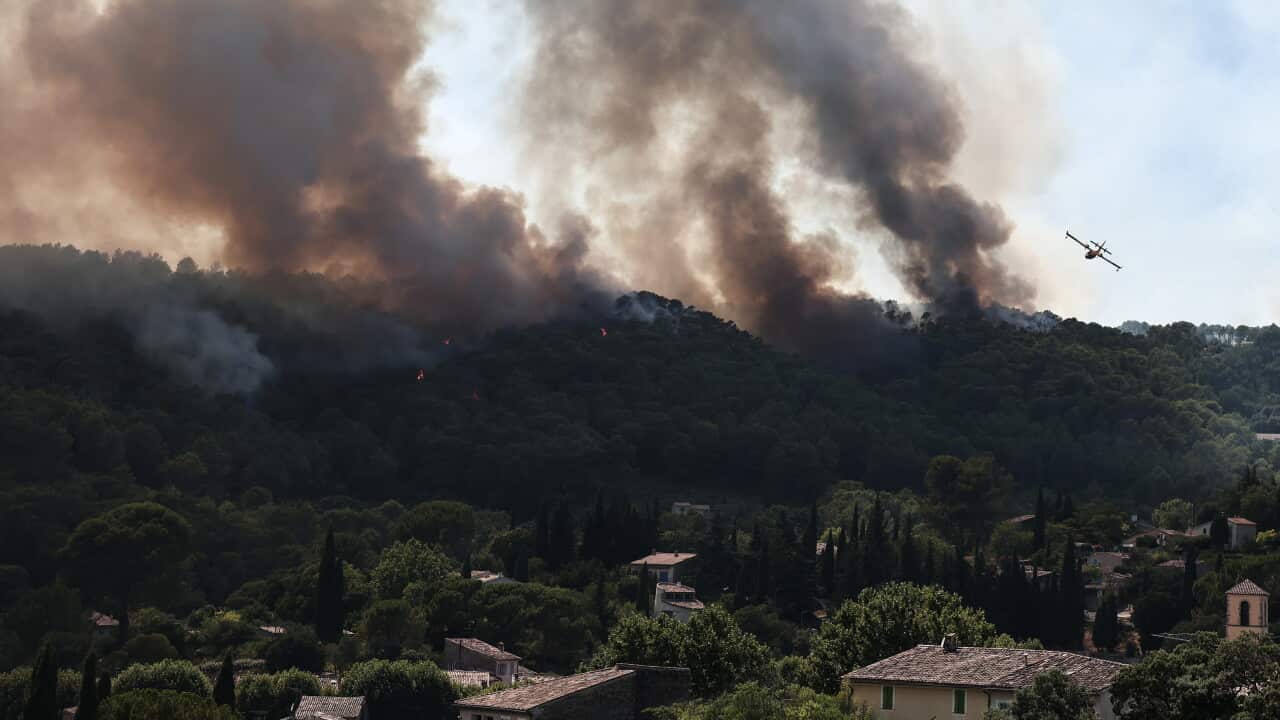
Wildfires sweeping through parts of Italy, France and Spain on Thursday forced thousands of people to flee blazes fanned by scorching temperatures and strong winds.
Thousands of tourists on France's southern Atlantic coast have been forced out of campsites and holiday homes while Spanish authorities ordered another town near Madrid to evacuate late Thursday because of an out-of-control forest fire.
Three firefighters have been killed as southern Europe endures more severe heat, with temperatures topping 40C in some areas.
The total area of land burnt so far this year in European Union countries is the second largest on record, according to satellite data from the European Forest Fire Information System.
Tourists and locals have told of desperate escapes from flames.
News that makes sense
Your trusted source for staying up-to-date with the world around you. Get free daily news updates and analysis, straight to your inbox.
"The gendarmes came and knocked on every door, the fire was about 500 metres away — we grabbed some things and left," said Patrick Martineau, a 69-year-old resident of Le Porge, south of the French city of Bordeaux.
In Sicily, around 6,000 firefighters, forest guards and civil protection officers battled dozens of fires, some raging for several days, across the Italian island. One firefighter died after falling ill while battling the flames, the interior minister said.
Around Bordeaux, more than 20,000 people — mostly tourists in campsites and holiday lets — have been evacuated since Wednesday, as a fire ravaged a seaside pine forest.
"We're dealing with a very dense stand of closely packed pines," firefighter captain Wilfried Schneider told the Agence France-Presse news agency, describing a fire of "rare" intensity.
Two firefighters died on Tuesday tackling another blaze near Bordeaux airport.
'No chance'
"We were on the beach and they told us to go back to the campsite to collect our things," said Belgian tourist Elke Urbain.
"We're not afraid because everyone is taking care of us, but we're sad for the people here."
Skies over Le Porge turned orange as smoke rose from charred and crackling pine trees, while helicopters made repeated runs over evacuated neighbourhoods.
Fires in 2022 damaged 30,000 hectares of the same forest, forcing some 50,000 people to be evacuated.
Fires are breaking out faster because of climate change caused by the burning of oil, coal and gas. European droughts are now more severe, climatologists from the World Weather Attribution group said in a study published on Thursday.
Across the border in Spain, authorities ordered 3,500 people in a town west of Madrid to leave their homes late Thursday because of a forest fire burning out of control.
Emergency services said alert messages had been sent to people in Aldea de Fresno ordering their evacuation.
Eighteen firefighting units with specialist troops were working to contain the blaze, which was close to another wildfire near the city of Toledo on Wednesday, forcing the evacuation of several villages.
Firefighters battled through the night, and most residents were allowed to return Thursday.
Hundreds of firefighters and troops were still struggling to contain a much larger wildfire in Guadalajara province, north of Madrid, which has burnt about 32,000 hectares since it started last Thursday.
"Climate change is what kills, what destroys our villages and our natural and cultural heritage," civil protection chief Virginia Barcones told Spanish radio, warning some fires become so intense that, despite the deployment of aircraft and ground crews, firefighters stand "no chance".
Barcones said conditions at the Guadalajara blaze were improving but that strong winds and extreme heat remained a danger.
For the latest from SBS News, download our app and subscribe to our newsletter.







