In Brief
- Taking place in Vienna, Austria, Eurovision is celebrating its 70th year.
- But this year, some fans and broadcasters are boycotting the contest.
Bust out your sequins, set your alarms: it's Eurovision time again, and this year, some say Australia has good odds.
Thirty-five nations will battle it out across a week in Vienna, Austria, for the 70th anniversary of the Eurovision Song Contest.
This year marks 11 years since Australia joined the competition in 2015 with a wildcard invitation.
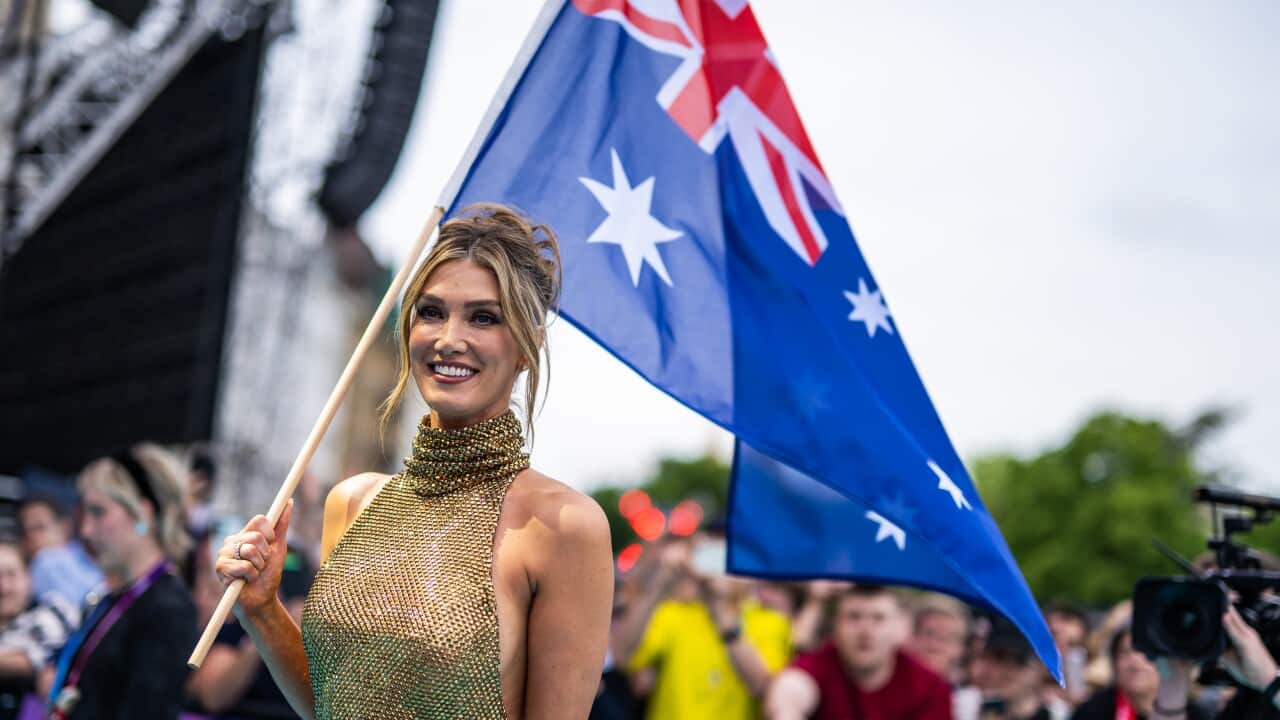
Award-winning singer-songwriter Delta Goodrem is representing Australia with her song Eclipse in Eurovision 2026.
Goodrem could be the key to victory, according to Jess Carniel, a Eurovision researcher and associate professor at the University of Southern Queensland.
News that makes sense
Your trusted source for staying up-to-date with the world around you. Get free daily news updates and analysis, straight to your inbox.
"She's a very experienced professional, polished performer who can really pull off a big show like this," she said.
"And her dress is incredibly sparkly, which is another must!"
Carniel said Goodrem's already established European fan base will help Australia go the distance in the contest.
"So many people from so many countries love Delta," Carniel said.
"She's done tours there, and she has cultivated a European audience who are really looking forward to seeing her perform.
"Looking at the betting odds ... we're currently sitting fifth — that's huge. This is before the contest, before any of the semi-finals or before any of us have seen these performances."
Broadcast to a global audience of 166 million, Eurovision continues to cement its place as the world's most popular singing contest.
In 2025, the competition reached a record 2.21 million Australian viewers.
Carniel believes Eurovision taps into the nation's competitive streak.
"The audience in Australia definitely grew when we started participating; some of that really is just out of the competitive nature of Australians," she said.
"If there's a competition and we're in it, we will support."
How did Eurovision start?
The Eurovision Song Contest started in 1956 with seven competing countries performing two songs each.
"It was a very different contest from the one we see today," Carniel said.
"We often say it started to unite war-torn Europe, but really it was for the European Broadcasting Union (EBU) to generate more traction for its new Eurovision television and radio network ... and encourage collaboration and transnational participation."
Carniel said the hype was attractive for broadcasters.
"People were watching it all over Europe, and it became something that was useful and interesting for broadcasters to sign up to ... it was an international event that had gained a fairly significant national audience, especially for those countries actually competing."
She said the popularity of the contest was the key to participation.
"That's a huge part of what attracts many countries to keep on participating in Eurovision, even when things may be going badly for them in their country, showcasing themselves on a global stage has been really, really important."
Eurovision received a massive boost in the late 90s and early 2000s, after the dissolution of the Union of Soviet Socialist Republics (USSR).
"All these new countries, it was important for them to show themselves as these newly independent states — to be able to show their culture, their language, as distinct from that homogenised idea of the USSR," she said.
When did Australia join?
Almost six decades after the contest began, Australia requested to join and was accepted, with SBS as the host broadcaster.
"Our region is really important because they had been looking to expand the song contest into the Asia Pacific for some time ... where else better than a country that already had an established audience for the contest, who had been screening it for 30 years," Carniel said.
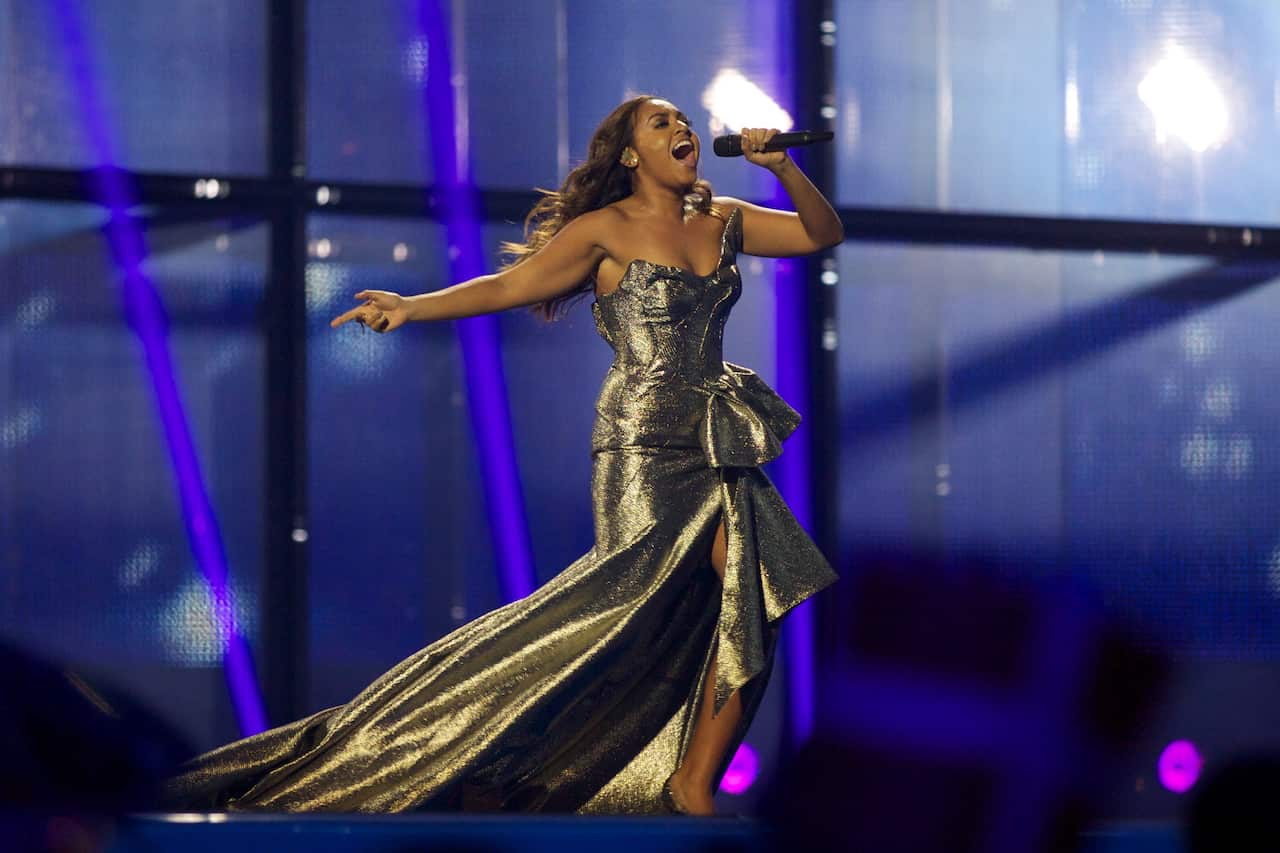
Australia first appeared in the contest in 2014, when Kuku Yalanji and Wakaman singer Jessica Mauboy performed her song Sea of Flags.
The performance wasn't an official entry, just a guest appearance.
A year later, Australia was issued a wildcard invitation to compete in the 60th Eurovision Song Contest — an offer Carniel believes came from the "strong partnership" between SBS and EBU.
How can Australians watch Eurovision 2026?
Performers have already arrived in Vienna, Austria and are rehearsing in preparation for the contest, which begins on 12 May.
The competition will take place at Wiener Stadthalle, with Austria having hosting rights after being crowned Eurovision winner in 2025.
The first of two semi-finals will be broadcast in Australia at 5am AEST on Wednesday 13 May. The second semi-final will be broadcast in Australia at 5am AEST on Friday 15 May.
SBS will also broadcast the grand final live at 5am AEST on Sunday 17 May, with the SBS News online team covering all the action in a live blog.
For those who want a sleep-in — or to relive the excitement — SBS will air prime-time 'access all areas' broadcasts from 15–17 May at 7.30pm AEST.
You can watch the broadcasts live on SBS and SBS On Demand.

SBS PopEuro radio is playing 24/7 non-stop Eurovision hits until 31 May. SBS PopEuro is available on: DAB+ Radio, SBS Audio website and the SBS Audio app, and SBS On Demand in the 'Live' section.
How does the competition work?
The voting process is split evenly between a professional jury and a public televote.
"The professional jury is composed of members of the music industry and the media industry. They have to vote against a set criteria about performances and the artistic quality of the song and performance," Carniel said.
"We've got 50 per cent with the public vote, and we have absolutely no criteria that we have to vote for apart from if you liked the song."
However, Carniel's research indicates a rising trend of "strategic voting".
"They didn't necessarily really like certain songs, but they saw them as strong contenders against songs that they didn't want to win, so they voted for the strong contenders instead," she said.
Backlash and boycotts
Five European Broadcasting Union (EBU) broadcasters — from Iceland, Ireland, the Netherlands, Slovenia and Spain — have boycotted this year's song contest over Israel's military action in Gaza.
Israel launched an offensive in Gaza after an assault led by Hamas — the political and military group that rules the Palestinian territory — in the south of the country on 7 October 2023 that killed 1,200 people, according to Israeli tallies.
More than 72,500 Palestinians have been killed in Gaza since October 7, according to local health authorities.
SBS — an associate member of the EBU and Australia's official Eurovision broadcaster — says it will continue its participation in and coverage of the contest this year, arguing that withdrawing would compromise its editorial independence and impartiality.
"SBS recognises and respects the deeply held views and concerns about the war in the Middle East and its impact, both locally among our audiences and internationally as reflected by other broadcasters," an SBS spokesperson previously said. "Our responsibility is to provide comprehensive, trusted and impartial coverage for Australians across our network, and we will continue to do so."
Police in Austria's capital, Vienna, have also said they expect protests against Israel's participation in this year's Eurovision to include "blockades and disruption attempts".
"There is a bit of caution about how being involved in a conflict can influence public sentiment .... but also concerns about whether or not a country that is involved in various humanitarian issues ... should be able to have this kind of global platform," Carniel said.
Some 95,000 tickets have been sold for this year's song contest — now in its 70th year — with fans travelling from 75 countries and territories, according to the EBU, which expects the event to attract its largest live audience in several years.
Those attending the event should expect international airport-level security screenings, and can only bring small, transparent bags inside, local police have said.
For the latest from SBS News, download our app and subscribe to our newsletter.







