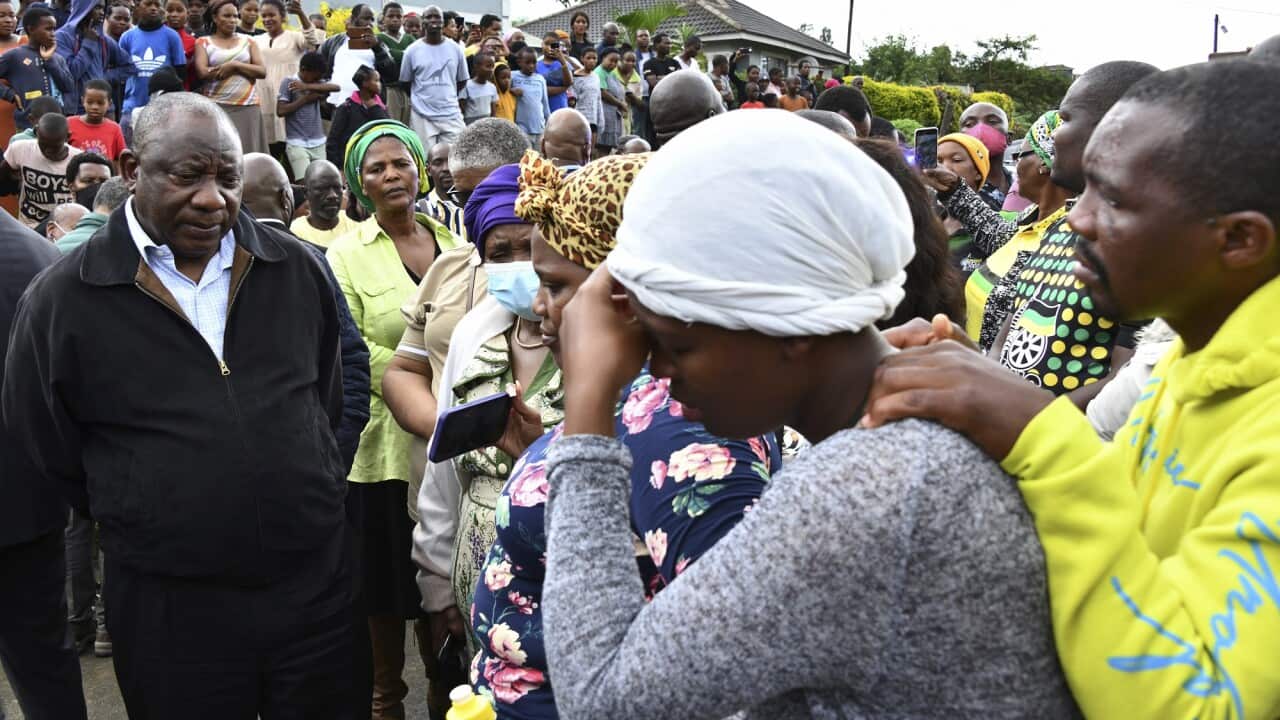
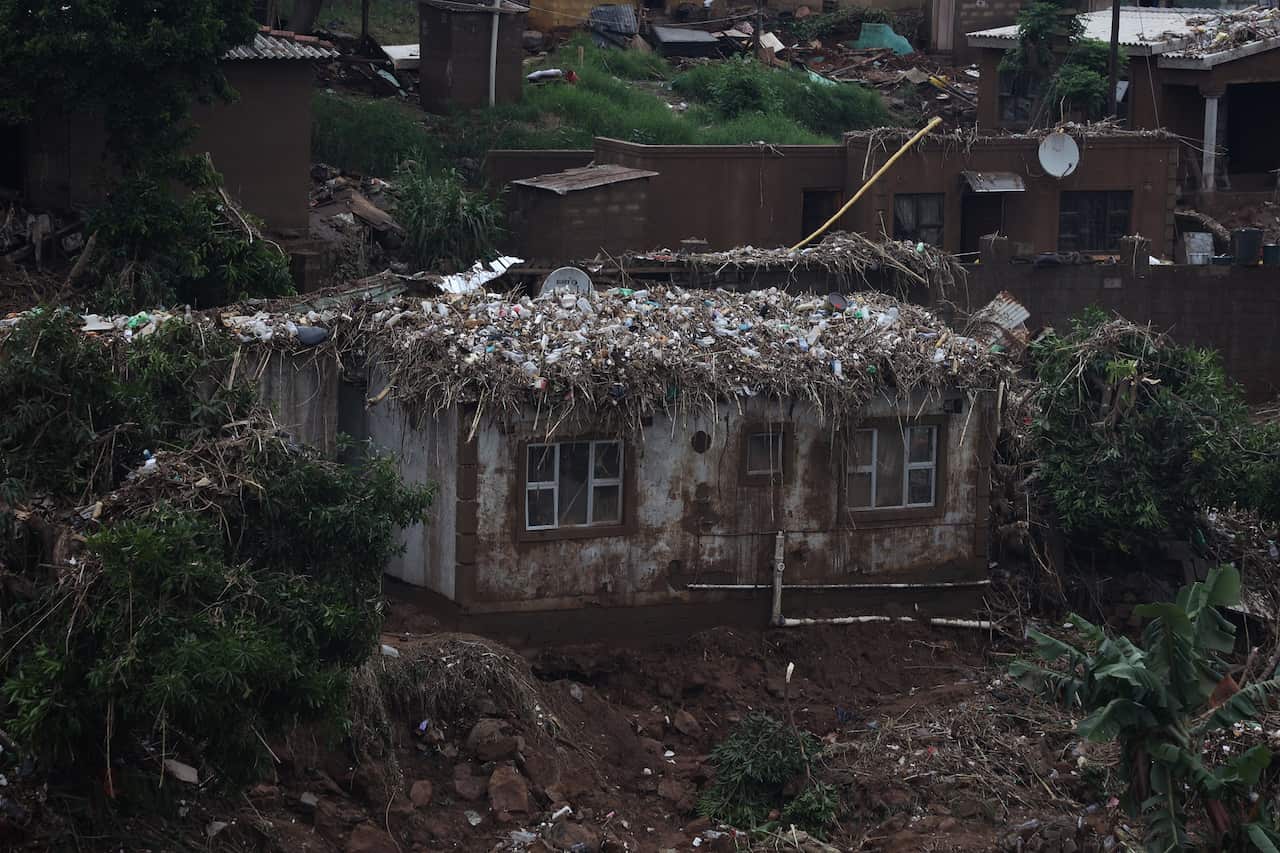
Disoriented and in disbelief, but alive, a crowd of people who watched their homes wash away amid devastating floods in South Africa's coastal city of Durban queued to register for temporary shelter Wednesday.
"Everything is gone," Sinethemba Duka said repeatedly, wearing a grey floppy hat and a salmon coloured golf shirt, after only being able to recover a few pieces of clothing after the floods hit.
More than 300 people have been killed in the heaviest rain in six decades, which wreaked havoc on the city and surrounding region over the weekend, destroying homes and infrastructure.
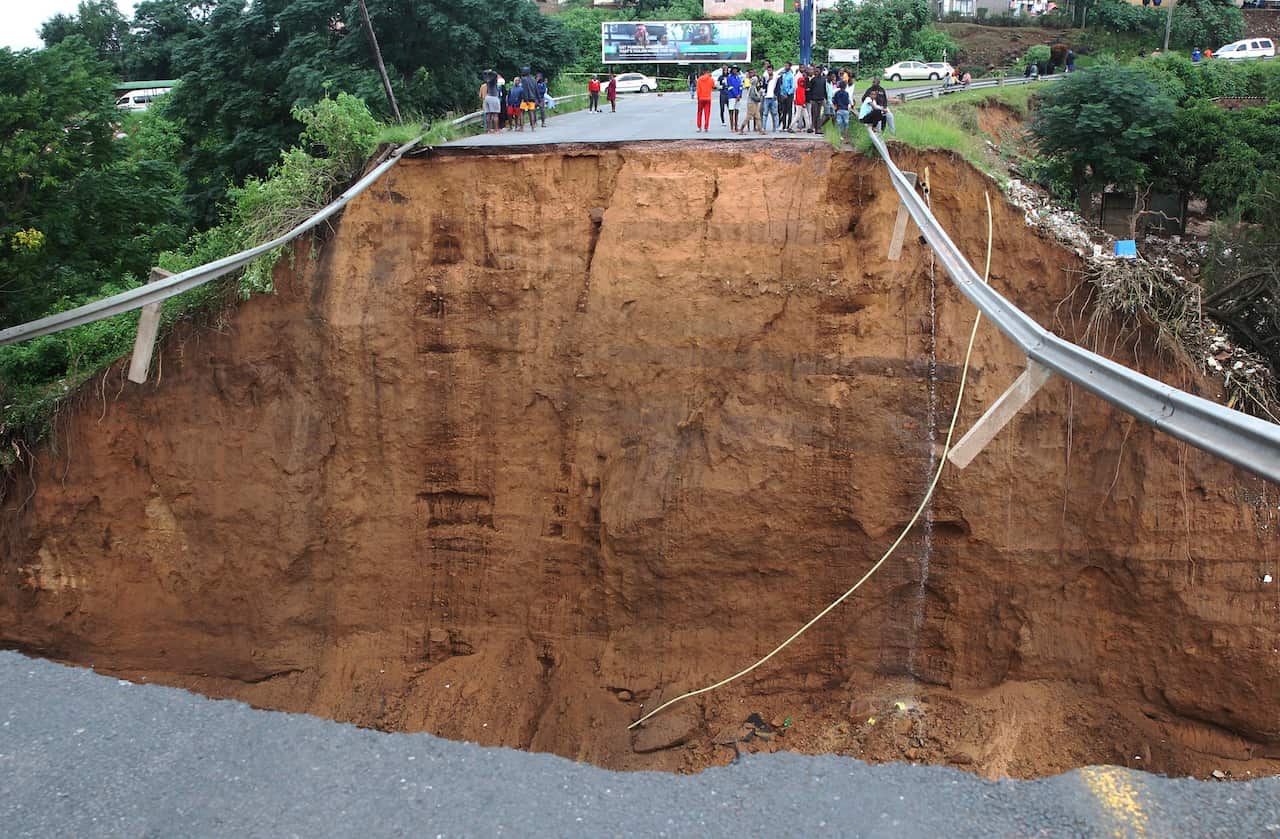
Officials have declared it "one of the worst weather storms in the history of our country".
News that makes sense
Your trusted source for staying up-to-date with the world around you. Get free daily news updates and analysis, straight to your inbox.
At the storm's peak, the South African Weather Service said more than 300 mm of rain fell within a 24-hour period in some regions.
Mr Duka and dozens of other residents of the Mega Village informal settlement, or shack dwellings, south of Durban's central business district were hit badly by the heavy rain.
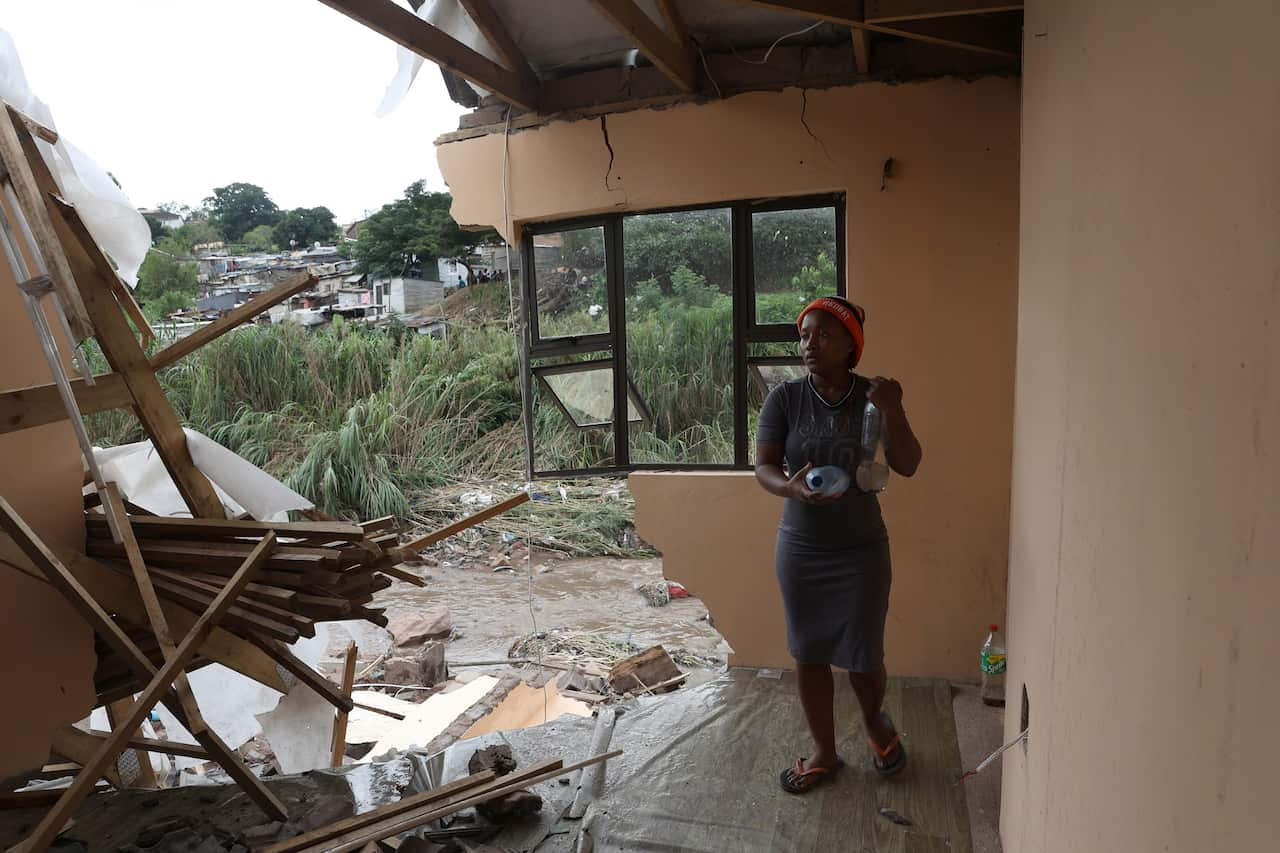
Residents said most homes in the area were made of corrugated iron and wooden boards -- not nearly strong enough to withstand the rushing waters.
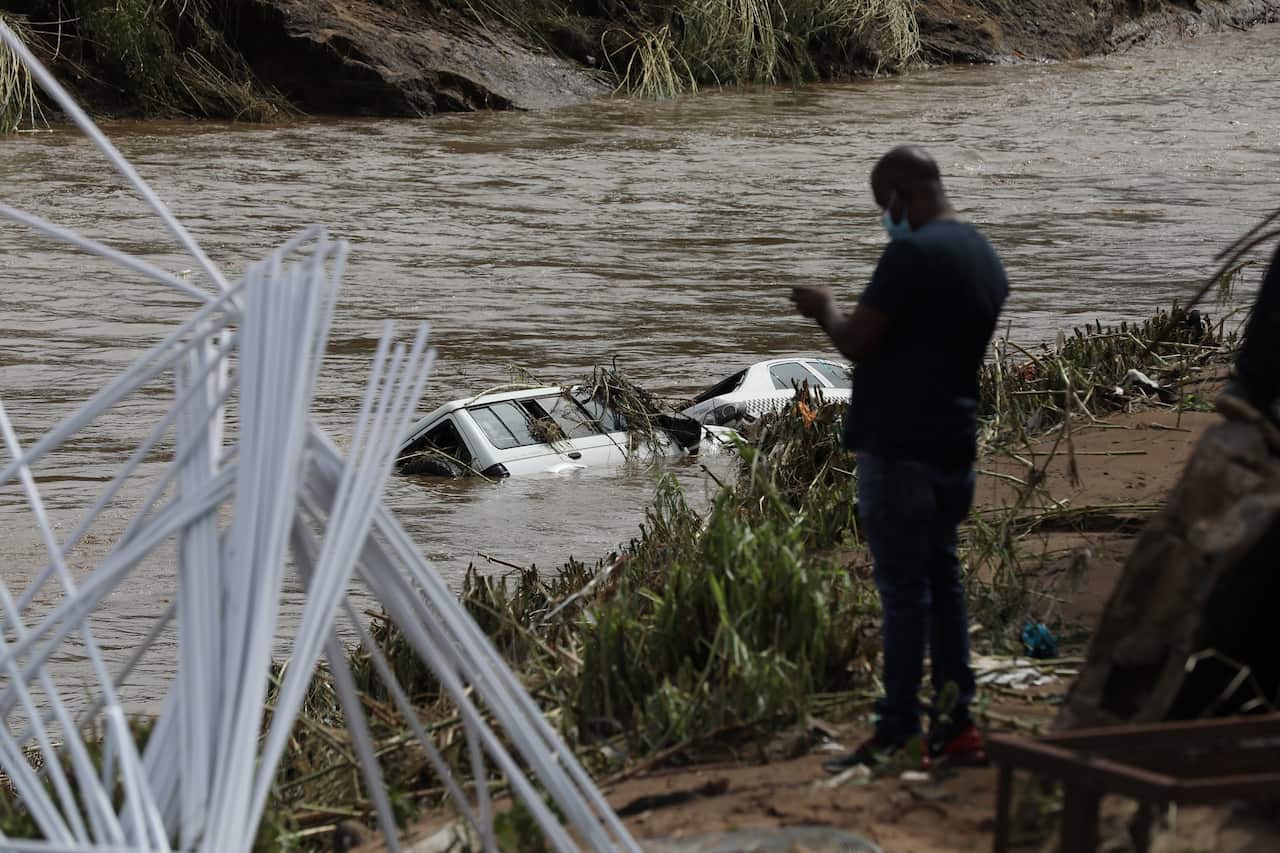
Returning home from work as a street hawker on Monday, Mr Duka said he found himself knee-deep in water.
"I was scared," he said.
Mud and rain continued to rise for 30 minutes, forcing him to make a run for it, he said.
"The water then comes on top of my roof ... and then the roof goes and then walls fell down," he said.
South African President Cyril Ramaphosa visited the city on Wednesday pledging aid for those affected.
'Not enough space'
Volunteers have been helping Duka and his neighbours, which included mothers carrying infants, youths and the elderly.
"We are just helping the people because we care," said Mabheki Sokhela, who helped organise temporary shelter at a community hall.
"These are our brothers and sisters."
Mr Sokhela lives in Glebelands hostels - one of a series of crowded apartment blocks in Umlazi, a township of Durban. He rallied his fellow residents to agree to give shelter to the flood victims in the building.
"We are trying to accommodate these people. There is not enough space," he said.
Many would be sleeping on chairs or on cardboard on the floors of the building, he said.
Volunteers have been desperate to find food, clothes and other supplies for the flood victims.
Destroyed infrastructure including downed mobile phone networks, collapsed roads and bridges have made accessing supplies a challenge, Mr Sokhela said.
Mudslides have buried parts of highways leading into the city. The main thoroughfare connecting Umlazi to the city centre and, critically, the port was lined with now-twisted and overturned shipping containers swept up by a swollen river.
Mr Sokhela said he was optimistic help would come within days as excavators and other equipment had begun to appear on roads in the area on Wednesday.
The South African Weather Service said the tropical storm had passed, but localised rainfall could be expected before the weekend.
Despite dark clouds still hanging over the city, Sokhela said he couldn't imagine more rain. The hostels in Umlazi were without electricity Wednesday and as night approached, flood victims were left registering in the dark.
If it rains again, Mr Sokhela said, "there can be more people like this."







