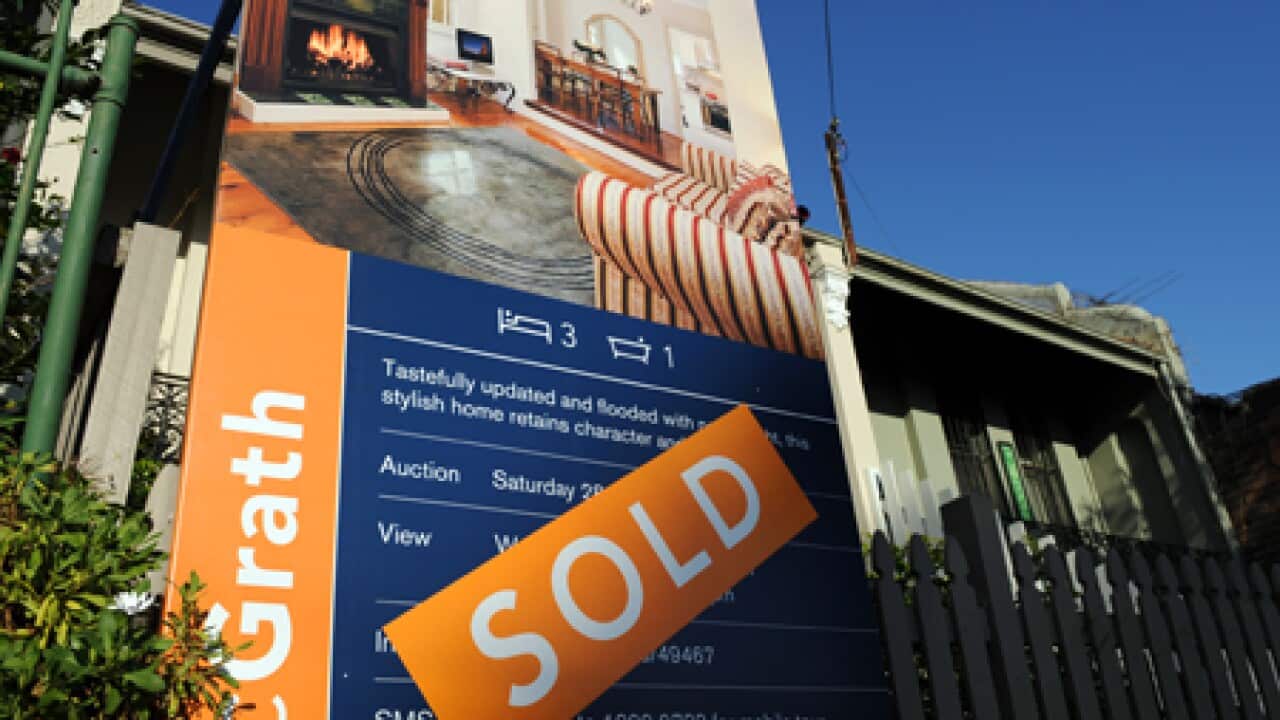
As borrowers eagerly await the outcome of a Reserve Bank of Australia (RBA) monthly board meeting, new Treasury figures show that since the government banned mortgage exit fees a healthy 167,500 households have taken out a home loan.
A majority of economists expect the central bank will cut the cash rate on Tuesday by 25 basis points to 4.5 per cent after last week's surprisingly benign inflation figures, the first official move in rates since Melbourne Cup day last year.
At the time, the RBA raised the cash rate by 25 basis points, a move major banks almost doubled when raising their lending rates, causing uproar from the government and bank customers.
It resulted in the government pressing ahead with a suite of initiatives to try and beef up competition in the bank sector, including the banning of exit fees on loans, as well as the `tick and flick' service from July 1, allowing bank customers the freedom to switch deposit accounts more easily.
From January 1 next year, lenders will also have to issue a simple standardised, one-page fact sheet to help consumers compare loans when shopping around for a mortgage.
News that makes sense
Your trusted source for staying up-to-date with the world around you. Get free daily news updates and analysis, straight to your inbox.
"We know that a lot of Aussies are doing it tough at the moment and that mortgage payments are the biggest burden on the family budget, which is why we've been working so hard to build up competition in the banking system and give customers more power to switch between lenders," Treasurer Wayne Swan said on Tuesday.
"Our reforms, like banning mortgage exit fees on new loans, mean that Australian families can now more easily ditch any bank that tries to rip them off, and walk down the road to get a better deal."
Another banking initiative was making an additional $4 billion available to invest in the residential mortgage-backed securities (RMBS) market to provide a source of funding for smaller lenders.
Through the Australian Office of Financial Management, the government has invested $13.8 billion in 51 securitisation bond deals out of a possible $20 billion since it first undertook the initiative in 2008 during the depths of the global financial crisis.
That has helped 20 smaller lenders raise about $34.4 billion in funding.
Treasury estimates that this government investment has helped about 113,000 households get a new home loan, while it has aided small business to borrow some $1.8 billion.
Mr Swan has previously urged the major banks to pass on any rate cut on Tuesday in full, saying there would be "no excuse" not to do so.
Households would save about $50 a month on repayments on an average $300,000 mortgage should the RBA cut the cash rate by 25 basis points.







