


The taxpayer funded Clean Energy Finance Corporation (CEFC) has acted like a bank for investments in clean energy since its establishment under the Clean Energy Finance Corporation Bill 2012.
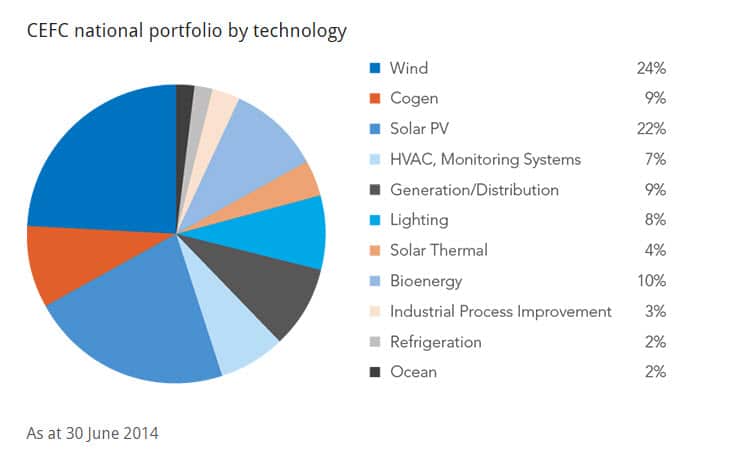
It was set up to support investment, through private lenders and banks in clean energy. As at 30 June 2014, it had contracted investments of over $900 million in projects with a total value of over $3 billion.
"It doesn't really subsidise projects," University of Sydney Professor Anthony Vassallo said.
"It more makes a financial investment into a project and then expect to get a return on that investment."
News that makes sense
Your trusted source for staying up-to-date with the world around you. Get free daily news updates and analysis, straight to your inbox.
The CEFC has invested widely across about a dozen of renewable sectors, and wind and solar have accounted for almost half of those investments to date.
But the CEFC is not supported by the Coalition, which promised it would axe it if elected in 2013.
Why is it in the news?
The Abbott Government wants the green lender to drop wind and household rooftop solar projects, saying they're now mature industries.
The government wants the CEFC to focus on emerging technologies, including large-scale solar projects that generate more than 100 kilowatts.
Prime Minister Tony Abbott has reiterated his commitment to abolish the corporation, but said in the meantime it should only fund "things that might not otherwise get finance".
"As long as it exists it might as well be as useful as possible," he said.
The government is allowed to give the corporation directions about how it should invest under the Act, as a form of guidance.
Any directions given cannot put limitations on any particular investments that would otherwise be authorised.
Why is this upsetting people?
Critics of the government's plan say the Australian Renewable Energy Agency is already tasked with helping emerging technologies.
Green energy trader Ric Brazzale says changes to how the CEFC works could hit low income families, renters and small business seeking solar.
“The impact on our business and the broader solar industry is that it probably reduces the scope for growth,” he said.
"Access to finance might be difficult because these are some of the areas that the existing banks aren't covering yet and this could be an important role for the Clean Energy Finance Corporation to play."
There are also fears for jobs, according to Dave Mier from the Electrical Trades Union.
"Without the adequate funding other countries will be going leaps and bounds in front, whereas we won't have any young fellas getting trained in this industry,” he said.