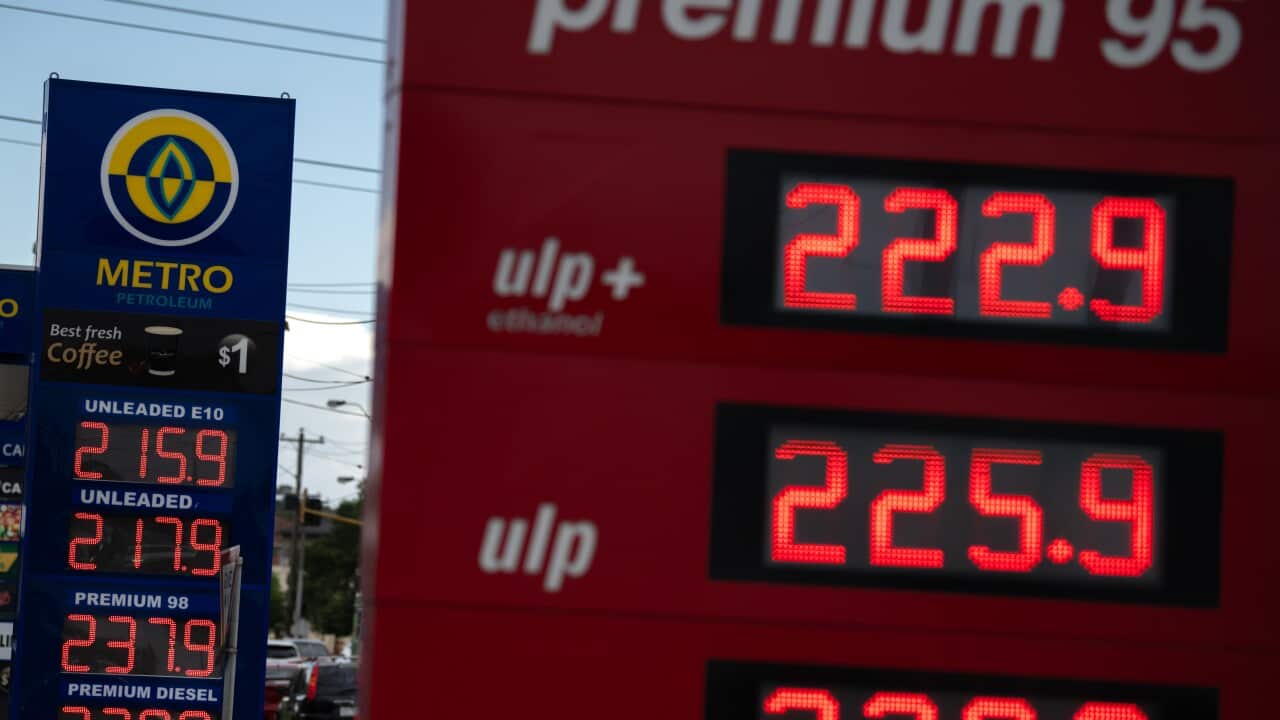
Motorists will get an extra 5.7c a litre off their fuel bills after the states and territories resolved a feud over how to return an expected GST windfall to consumers.
The reduction will be added to a temporary 26.3c-a-litre fuel excise cut announced by the federal government on Monday and will last until 30 June.
The extra top-up by the states and territories appeared in doubt after a rift between Queensland and Victoria, and the other states, over how an anticipated $400 million in extra GST revenue would be returned to consumers.
The 10 per cent GST — a so-called value added tax — is levied separately to the 52.6c a litre excise on fuel.
News that makes sense
Your trusted source for staying up-to-date with the world around you. Get free daily news updates and analysis, straight to your inbox.
While the fuel excise does not go up or down with the price of oil, the GST revenue does increase in line with the fuel price, which has climbed as much as 60 per cent since the start of the war in the Middle East.
Queensland Treasurer David Janetzki had previously preferred to target cost of living measures to people who needed it most, rather than a blanket cut for all fuel users.
But at a meeting of the Council for the Australian Federation on Thursday, they agreed to return the revenue to the Commonwealth which would lower the excise a further 5.7c a litre.
"From the beginning it has been Queensland's position to forego windfalls from higher fuel prices and how this can be calculated, collected and distributed has been facilitated following today's meeting," Janetzki said in a statement.
Western Australia Premier Roger Cook said state and territory leaders were united in their desire to deliver real relief at the bowser.
"We know the price of petrol drives up inflation through higher transportation costs for almost everything else in our economy," he said in a statement.
Prime Minister Anthony Albanese applauded the agreement in an address to the National Press Club in Canberra.
"Give the states and territories a clap," he said.
"This will mean a combined saving of 32c on every litre."
In a statement, Albanese and federal Treasurer Jim Chalmers said it was easier and faster to implement the relief by further cutting fuel excise than by amending the GST itself.
But the decision to give up $400 million in tax revenue will be a blow to state and territory budgets at a time when every jurisdiction, bar WA, is mired in large deficits.
Research institute e61 found the idea that states would benefit from a GST windfall as a result of the conflict was probably an illusion.
E61 economists Josh Clyne and Lachlan Vass said: "More money being spent on fuel due to higher fuel prices likely means less money being spent on other things."
The duo estimated the windfall gain would fully disappear once accounting for changes in consumer behaviour.
For the latest from SBS News, download our app and subscribe to our newsletter.







