MAIN FACTS ABOUT NORTH KOREA North Korean supremo Kim Jong-Il died on Saturday of a heart attack aged 69, state media announced Monday, paving the way for a third generation of family leadership under his son Kim Jong-Un. Here are key facts about the isolated state. GEOGRAPHY: Occupies the northern half of the Korean peninsula, bordering South Korea, China and Russia. AREA: 122,762 square kilometres (47,400 square miles), about the size of the US state of Mississippi. POPULATION: 24 million. CAPITAL: Pyongyang. RELIGION: Buddhism, Christianity. US State Department says the government severely restricts religious freedom. HISTORY: The Korean peninsula was colonised by Japan from 1910-1945 but partitioned after World War II into US and Soviet spheres of influence. Kim Il-Sung founded North Korea as a communist state in 1948. He invaded South Korea in 1950, sparking a three-year war in which a US-led United Nations force backed the South and China fought for the North. It ended in an armistice, leaving the two Koreas still technically at war. Kim Il-Sung fostered an extreme personality cult backed by ruthless repression of dissent. His pursuit of nuclear weapons fuelled tensions with the United States, which came close to attacking the North in 1994. The two sides signed a nuclear disarmament accord later that year which lasted until 2002. Kim Il-Sung died in 1994 to be succeeded by his son Kim Jong-Il, who continued work on nuclear and missile development. Amid strains in a 2005 six-nation nuclear disarmament deal, the North in 2006 staged its first atomic weapons test. It quit the six-party forum in April 2009. A second nuclear test in May 2009, along with missile launches, brought tougher UN sanctions. After suffering a stroke in August 2008, Kim Jong-Il publicly anointed his youngest son Jong-Un as his heir apparent in September last year. But uncertainty shrouds the succession to the inexperienced, 20-something son. POLITICAL INSTITUTIONS: Highly centralised communist state. The most powerful body is the National Defence Commission overseeing the military and lately chaired by Kim Jong-Il. Kim was also general secretary of the ruling Workers' Party of Korea. A rubber-stamp parliament ratifies the party's decisions. Kim Jong-Un was elevated to key party positions last year, cementing his place as the heir. The late Kim Il-Sung officially remains "eternal president". Parliament chief Kim Yong-Nam is nominal head of state. ECONOMY: Agriculture, mining and manufacturing in a state-directed economy. Famine killed hundreds of thousands in the mid-1990s and the country still suffers persistent serious food shortages, but political tensions have reduced external food aid. The country remains under various US and UN sanctions. GDP: $28 billion dollars; GDP per capita $1,800 (CIA World Factbook estimates for 2009). CURRENCY: Won. MILITARY: Armed forces of around 1.2 million. Most estimates say it has enough plutonium to build six or seven atomic weapons. It is unclear whether the North can make nuclear warheads for its missiles. South Korea's defence ministry says the North has at least 1,000 missiles of various types, including some with a range of more than 3,000 kilometres (1,860 miles). It has also test-launched three intercontinental Taepodong missiles. The North has a stockpile of between 2,500-5,000 tons of chemical weapons, the ministry says.
Factbox: North Korea
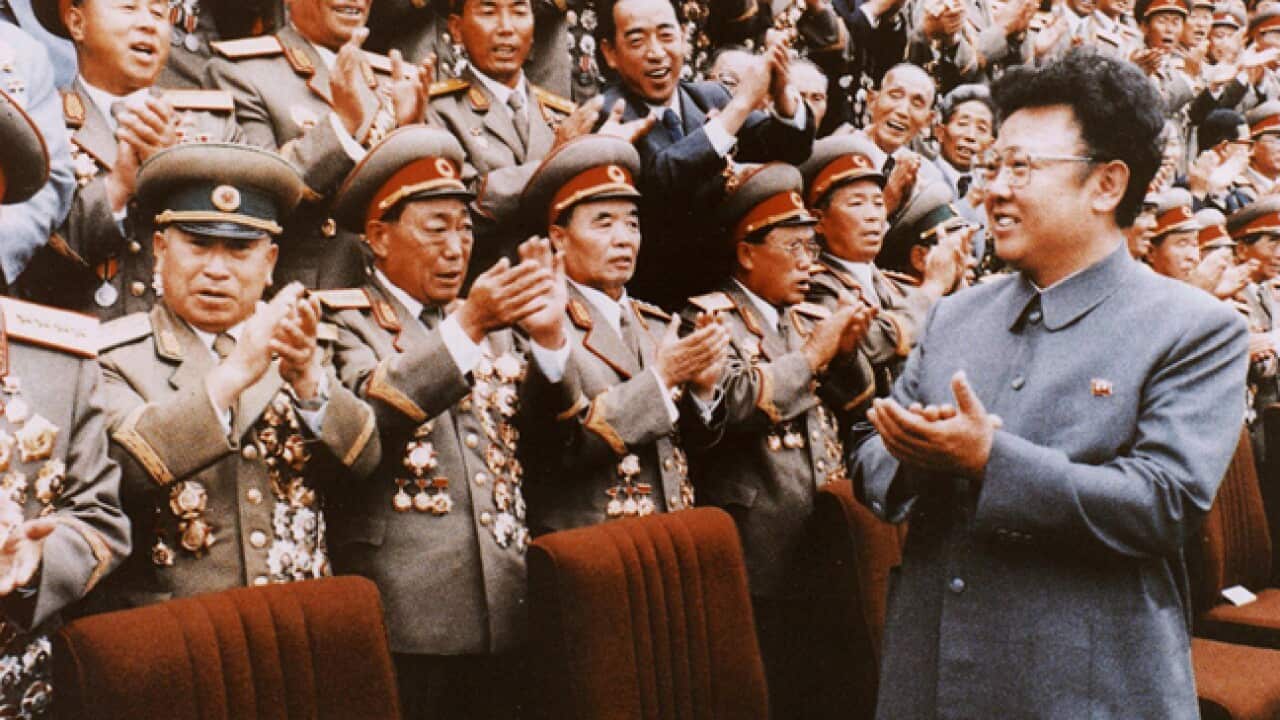
North Korean supremo Kim Jong-Il died on Saturday of a heart attack aged 69, state media announced Monday, paving the way for a third generation of family leadership in the isolated state.
Share







