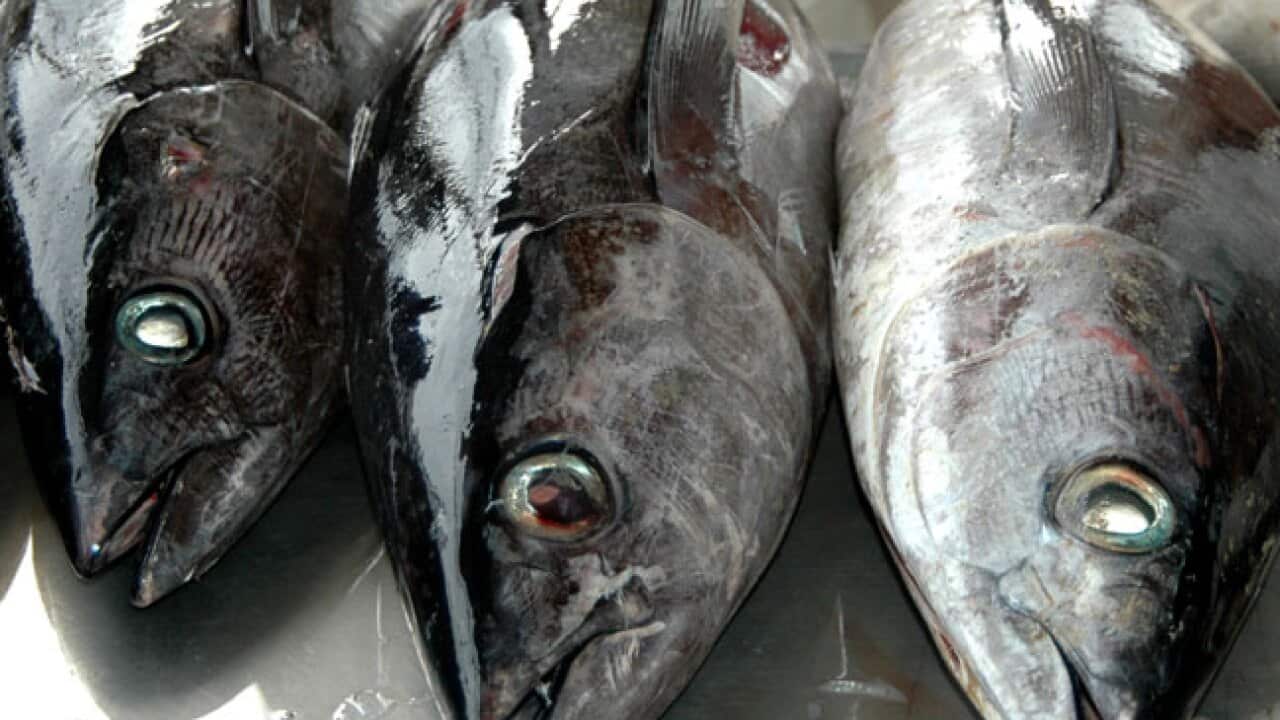
For the average consumer, trying to make ethical choices when it comes to purchasing fish is a veritable minefield. Suppliers tell you what you want to hear, customer service staff are typically uninformed, government regulations vary from state to state and imported product with poor labelling floods the market. So how do you make the right choices without a degree in ichthyology?
“It's quite a grey area, but the main thing is to try and educate yourself a bit better about it,” says Justin North, owner and head chef at Sydney's Becasse restaurant and a vocal proponent of the issue of sustainability.
News that makes sense
Your trusted source for staying up-to-date with the world around you. Get free daily news updates and analysis, straight to your inbox.
“If you wander around the fish markets and start talking to people it can be very confusing as sellers don't usually have the answers and it's not always sign-posted accurately. But people can look on government websites and brief themselves on what's available in their area that's seasonal and sustainable.”
“People don't know where to go to find that information, though it's fairly easy to do,” says author, chef and restaurateur Stefano Manfredi. “You can simply Google 'sustainable seafood Australia' and you'll get lots of information. On a day-to-day basis, when you're confronted with so much choice, I think it's very difficult if you haven't prepared yourself properly before you buy.”
Government regulations around fishery practices are tightening to some degree, but are still a long way from providing a perfect solution. As an example, Manfredi points to the closure of tuna canning facilities in South Australia as a result of Federal Government quotas. “It's a double-edged sword. People aren't going to stop buying canned tuna. Those canneries will defer production to places like Thailand. Unless you're a serial label reader you won't even realise it's not locally produced.”
FARMED FISH OR FREE-RANGE?
“Generally speaking, the larger fish, such as tuna, are more of a problem because they tend to be on the end of a chain and take a lot longer, and a lot more, to grow. If people are going to choose these fish, they have farmed options here in Australia, such as ocean trout, salmon, kingfish and mulloway (formerly known as jewfish), which are probably better choices in terms of sustainability than wild fish. There are also some great fish that are inexpensive and sustainable, such as leatherjacket and garfish.”
In some cases, however, wild fish may be a better choice than farmed, depending on the species and methods of production. “In the past it was thought that if it was farmed it was sustainable and if it was wild it was not, but that's not really the case,” says North. “There are aquaculture procedures out there that are not sustainable and certainly you can get some local wild catches that are, such as blue-eyed trevella and harpuka.”
While clear answers are still hard to come by, here are seven ways you can improve your odds of making better choices.
1. KNOW WHICH QUESTIONS TO ASK
“The first thing to find out about the fish is its origin – its name and species. Not everyone knows what John Dory looks like. The second is where it's from. Then, has it been sustainably caught, following the right quota guidelines,” says North.
Manfredi also suggests employing your skills of investigation: “It's not a stipulation by law here in Australia to actually display the origin of seafood like it is in Europe. Ask where it comes from. Here in Australia we have a much better regulatory framework about how acquaculture is produced than elsewhere.”
2. BUILD RELATIONSHIPS WITH SUPPLIERS
“Another part of the answer is to build a relationship with your fishmonger so you can have a bit of trust opening up a discussion about what is local and sustainable and what is not,” says North. “You can speak to anyone and they'll tell you what you want to hear, but if you have a really nice relationship, like with your local butcher, you can trust them. If they're any good, they'll only sell sustainable produce anyway. But there are a few dodgy operators out there.”
3. BUY FROM REPUTABLE SUPPLIERS
These days most of the produce at reputable fish markets, such as the Sydney Fish Markets, is fairly well policed in terms of license and quotas. Failing that, seek out the most reputable suppliers in your area.
“It really comes down to customers and the general public to support those suppliers who are selling sustainable produce,” says Manfredi. However, he cautions that he doesn't believe the average fishmonger knows much about sustainability. “As a consumer you need to be up on it. I would suggest if you're going to the fish markets you still do some background research first,” he says.
4. BUY LOCALLY AND SEASONALLY
While buying seasonally doesn't guarantee a fish is sustainable, price can be a pointer to fish that are fresher and more affordable. “Generally things that are at the peak of the quota system in terms of life cycle are more readily available and affordable. Very rarely would you find a massive abundance of something that has been illegally caught out of season,” says North.
“If something is cheap and plentiful, it's probably at the peak of its breeding season and good to buy,” says Manfredi. However, he cautions that it's not a black and white solution. “Something like flathead used to be very cheap and a lot of it is sustainable. But a lot of people love it so now the price has gone up even when it's in season.”
5. BE FLEXIBLE
“We tend to have a set idea of what we want when we go to the fish markets. If people are doing a dinner party, they'll look at a few cookbooks, get an idea what they want to do, perhaps tuna, and go find a nice piece of fish. So if the price is $50-60 a kilo they may not have any idea what to substitute that fish with,” says Manfredi. “But similar fish can be cooked in similar ways, so it's always a good idea to be prepared with that information when you go shopping. For example, you could replace salmon, ocean trout or blue eye.”
6. BE ADVENTUROUS
“If you go down to fish markets and see a fish you've never seen before and don't know anything about, just get it and try it. What have you got to lose? You can get the fishmonger to fillet it for you, see if it is a soft fish or a firm fleshed fish, cook it up, and suddenly you've found a fish that you can add to your repertoire,” says Manfredi.
“People moan a lot about price of seafood but there's a thousand different species out there. With the demand for the top half dozen, everyone forgets about all the others that are amazing and beautiful and are often also cheap and sustainable,” says North. “It comes down to having the knowledge and confidence to know how to cook those fish instead.”
A few great, sustainable fish you may not have tried: leatherjacket, garfish, gurnard, jackass morwong (also known as perch, sea bream or silver perch).
7. MAKE MORE SUSTAINABLE CHOICES
The Australian Marine Conservation Society (AMCS) publishes a guide to sustainable seafood, available through their website, which offers advice on sustainable seafood choices.
SAY NO TO...
Among the species on their 'Say No' list are wild eastern gemfish (hake); wild orange roughy (also called Deep Sea Perch); wild southern bluefin tuna; farmed snapper; farmed yellowtail kingfish; farmed Atlantic Salmon; farmed ocean trout and wild barramundi.
SAY YES TO...
Fish species they recommend as better choices include: wild Australian salmon; wild bream; wild king george whiting (also called black whiting, South Australian whiting, spotted whiting); wild leatherjacket; wild mullet; wild trevally and wild whiting.







