What does the Speaker of the House of Representatives do, and how is he or she elected?
Once the Governor General receives a Speaker's letter of resignation, and invites the House to elect a new one, the process can begin - Parliament can't continue with its usual business until a new Speaker is installed.
In Britain, where the role originated, nomination to the role is usually unopposed by the major parties, but this isn't always the case in Australia.
The Speaker's chair is usually filled by a nominee of the government after an election, with the position held for the duration of the Parliament.
News that makes sense
Your trusted source for staying up-to-date with the world around you. Get free daily news updates and analysis, straight to your inbox.
When there's more than one candidate, members of the House elect a Speaker by secret ballot. Around 50 per cent of the time, however, the nomination is opposed.
There is precedent for a Speaker resigning the position to shore up a government, albeit in a slightly more drastic scenario.
In 1911 NSW's first Labor government convinced a Liberal MP to sit as Speaker when two resigning Labor MPs deprived Labor of its majority.
WHAT DOES THE SPEAKER DO?
The Speaker is the servant of the House, and not of the Executive (government) or Crown.
The Speaker carries out basic work as a Member of Parliament, but also attends meetings of the House, represents the Chamber in dealings with the Government, and oversees the Parliament's administration in conjunction with the President of the Senate.
The Speaker maintains order during debate - either issuing warnings, ordering the MP in question to leave the chamber for an hour, or 'naming' them, resulting in a 24 hour ban.
In the UK's House of Commons, the term 'Mr Speaker' was originally more a job description that a job title - the Speaker was the person chosen to speak for MPs in dealings with others - particularly the Monarch. The first use of the term 'Speaker' dates back to 1377, when it was not uncommon for a Speaker to be beheaded as the result of an unfavourable dispatch from parliament.
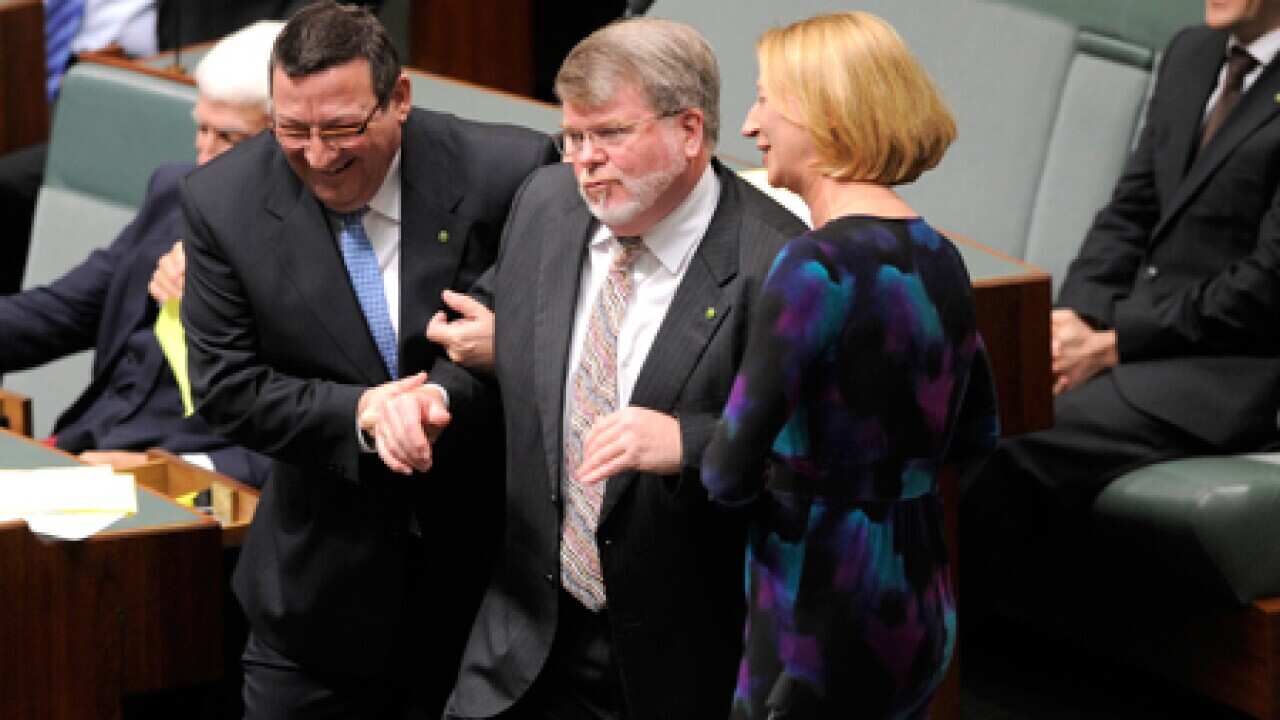
Due to the understandable regret of being chosen for the role, the tradition of being escorted to the Chair was born.
The House of Representatives in Australia has far fewer seats than the British House of Commons, which means there's a greater chance of a hung parliament.







