(Transcript from World News Australia Radio)
When Tommaso D'Orsonga came to Western Australia in 1933, it was with a heavy heart.
He was leaving his beloved Italy for the dry, dusty plains of WA's northern goldfields with no skills and limited job prospects.
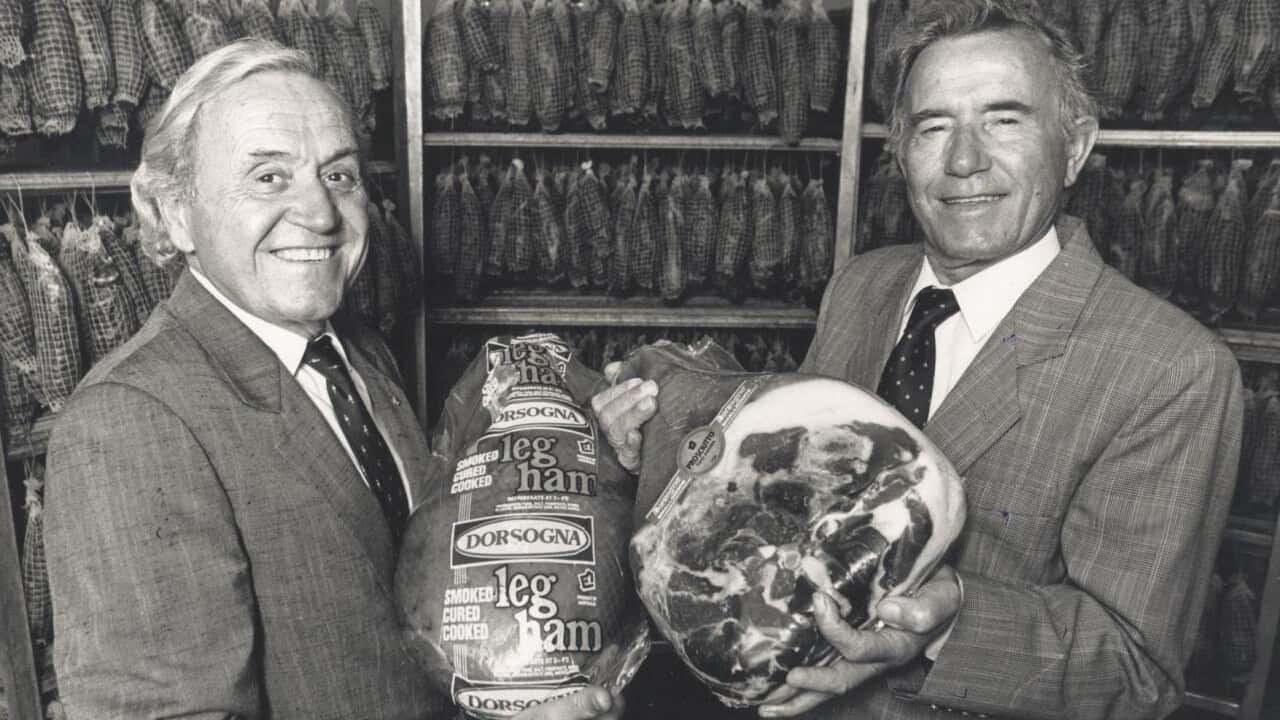
But, after much hard work, he, and his family, built a smallgoods empire in Western Australia that endures to this day.
Tommaso D'Orsonga has passed away at the age of 95.
News that makes sense
Your trusted source for staying up-to-date with the world around you. Get free daily news updates and analysis, straight to your inbox.
Ryan Emery reports from Perth.
(Click on audio tab above to listen to this item)
For many West Australians, there's a smell on Leach Highway in the southern Perth suburb of Palmyra that's unmistakable.
It's the D'Orsogna factory and the smell of smallgoods, particularly bacon, often wafts through the open windows of the cars waiting at the traffic lights.
What many don't know is it all began with a 14-year-old Italian migrant who learnt the beginnings of his trade in the remote West Australian mining town of Wiluna in 1933.
Tommaso D'Orsogna journeyed to the then thriving mining town with his older brother Cesare to be reunited with their father Luigi who they hadn't seen for six years.
Luigi D'Orsonga is Tommaso D'Orsogna's eldest son.
"He talks about when he left Italy, crying, thinking he wasn't sure when he would return to his motherland and many a time shed a tear when he saw where he was going to, but that was life then. They knew that because they didn't have any money there was no other opportunity for them that was the life they had to follow."
Young Tommaso worked in the piggery and abattoir before finding work with a local butcher and learnt how to make English-style smallgoods.
A far cry from Italian goods he knew.
By 1939, he and his brother Cesare and another Giovanni tried their hands at prospecting in the remote WA outback.
They weren't there for long before they were arrested.
The Second World War had broken out and, even though they had renounced their Italian citizenship for Australian, the three brothers were interned as enemies of the state.
Luigi D'Orsogna.
"They arrested him there to take him to Fremantle. I don't know how much of a threat he was for security at the time, but that was the way it was. Dad didn't have any bitterness about it. He understood it was the war and such was life. And, in fairness, he had very strong attachments to Italy. It was his motherland so he was very proud of being Italian so there was no question about that. He supported Italy at the time, but clearly he wasn't fighting for the Italians, he was still very sympathetic to Italy."
But despite his loyalties, after four years locked away, he never moved back to Italy.
Instead he moved to Melbourne in 1947 and after many years in the "meat game" finally learnt how to make Italian smallgoods.
He returned to Perth with a dream to tap the growing European migrant community's demand for continental smallgoods.
At an Italian boarding hostel, Luigi D'Orsogna met a prospector with money to invest and convinced him to buy a butcher shop in West Perth, which he would run.
"And remarkably this person obviously say qualities in my father and his character and felt he was an honest and straight forward person so he said: 'alright, that's fine. You go and make the deal for the place. You try and get as low a price you can and I'll pay for it and you can rent it from me.' And that's how it all started and when he established it, he got his brother Giovanni, John, who has been his lifetime partner in the business and continues today through his side of the family as well. They worked day and night to get the business going and obviously they branched out into continental goods because they say there was an opportunity there for the migrants. And the third brother arrived about two years later, Cesare, and so the three of them then started the D'Orsogna brothers and from there, obviously, it became a household name."
In the 1970s, the business moved to its current home in Palmyra and has gone from strength to strength with the help of many family members and staff that Luigi D'Orsogna says became friends.
"His first apprentice was an Australian and then from that there were many Italians who arrived and other migrants too looking for job opportunities so as the business grew it was certainly very multicultural. I think that's another thing that dad really prides the business on is that it's very much a multicultural, multi-ethnic business and if you were to go down to the factory today you'd certainly see that and I think that was one of the things dad was very proud of."
Tommaso D'Orsogna's funeral will be held at Perth's iconic St Mary's cathedral and his wake will be at the West Perth Italian club, which he helped establish many decades ago.







