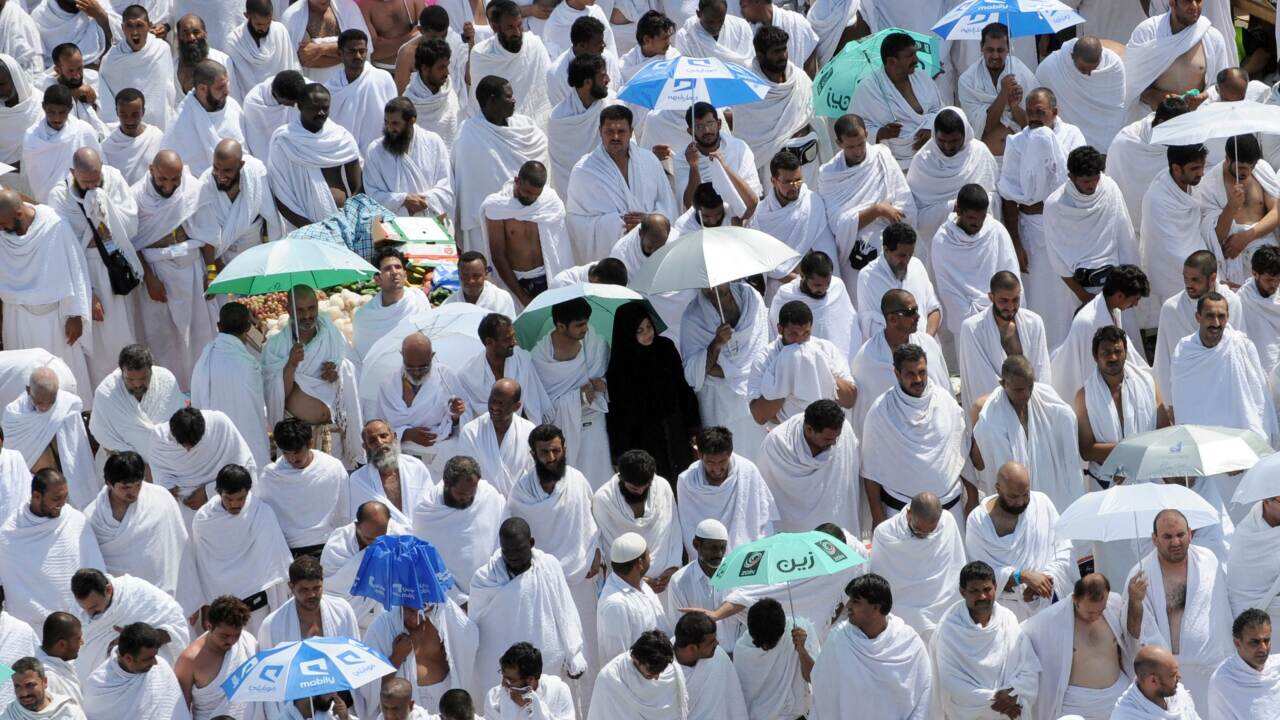
The director of the Forum on Australian-Islamic Relations, Kuranda Seyit, says Australian Muslims travelling to Saudi Arabia for the traditional Hajj pilgrimage are at risk of being caught up in the government’s new anti-terrorism measures.
The traditional Hajj pilgrimage to Mecca is a pillar of the Muslim faith, and the largest gathering of Muslim adherents in the world.
Mr Seyit told SBS Radio that an estimated 5000 Australians performed Hajj each year.
But he said those travelling to Saudi Arabia for the event in October could be at risk.
"Muslims are a very identifiable target when it comes to airport security. I suppose in a way they are racially profiled, although you could say they are also religiously profiled," he said.
Several Muslim travellers have already been mistakenly apprehended by officials, and anxieties are high that further incidents could occur in the coming weeks as people head overseas.
"Inevitably and invariably, many Muslims are usually inconvenienced but also harassed and feel victimised when it comes to trying to live their daily life,” he said.
But Mr Seyit said it was unlikely the risk would dissuade any pilgrims from making the journey.
“I don’t think it would stop anyone from going,” he said. “But I do think that every time there is a problem overseas there is always, in some form or rather, a sort of backlash or an impact on Muslim communities living in Western societies."
He said the question over legitimate and illegitimate reasons for travelling was difficult to prove.
"No-one would openly declare that they're going to fight in a war or in a conflict of some type,” he said. “I think that most people say I'm going overseas to visit family or go on a holiday or do some humanitarian work, and I don't think you could stop someone from going overseas, it's one of our fundamental human rights to have freedom of movement.
“It’s very hard to prove.”
He said a lack of transparency around the government’s new measures was causing anxiety in the general public.
"There hasn't been enough consultation, communication, and there hasn't been clarity around what's actually going on,” he said. “There's a little bit of suspicion and confusion as to what the government is actually doing."
Share


