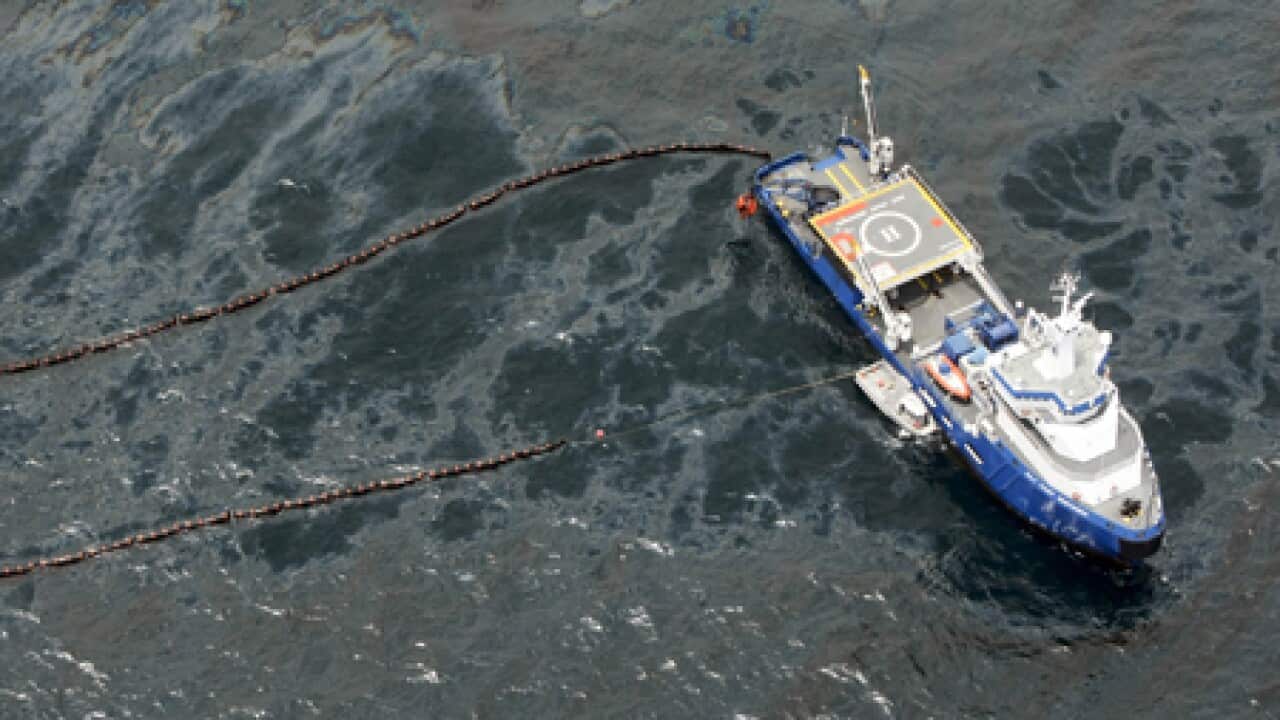
US officials may attempt a controlled burn of a spreading oil slick in the Gulf of Mexico,
as the coast guard warned the deadly disaster could become one of the worst spills in US history.
Southern states are mbracing for the possibility that beaches and fisheries could be gunked up, as early as this weekend, by oily ooze from a huge slick with a 965-kilometre circumference that has moved within 21 miles of the ecologically fragile Louisiana coast.
News that makes sense
Your trusted source for staying up-to-date with the world around you. Get free daily news updates and analysis, straight to your inbox.
Efforts by BP, which leases the Deepwater Horizon platform that sank into the ocean last week, failed on Tuesday to cap two leaks in a riser pipe that had connected the rig to the wellhead, despite the operation of four robotic submarines some 1500 metres down on the seabed.
As a back-up, engineers are frantically constructing a giant dome - the first of its kind - that could be placed over the leaks to try and stop the oil from spreading as some 1000 barrels of oil per day pours from the ruptured pipe.
Officials said they were considering a controlled burn of oil captured in inflatable containment booms to protect shorelines - although such a burn-off and the accompanying air pollution would present its own environmental problems.
"I am going to say right up front: the BP efforts to secure the blowout preventer have not yet been successful," Rear Admiral Mary Landry told a press conference on Tuesday, referring to a 450-tonne machine that could seal the well.
Asked to compare the accident to the notorious 1989 Exxon Valdez oil tanker disaster, Landry declined but said: "If we don't secure the well, yes, this will be one of the most significant oil spills in US history".
The US government promised a "comprehensive and thorough investigation" into the explosion that sank the platform and pledged "every resource" to help stave off an environmental disaster.
The rig, which BP leases from Houston-based contractor Transocean, went down last Thursday, 130 miles southeast of New Orleans, still burning off crude two days after a blast that killed 11 workers.
The widow of one of the dead has filed a lawsuit accusing the companies that operated the rig - BP, Transocean and US oil services behemoth Halliburton - of negligence.
The slick could now reach Louisiana's wetlands - a paradise for rare waterfowl and other wildlife - within days if the winds change.
BP has sent a flotilla of 49 skimmers, tugs, barges, and recovery boats to mop up the spill, but their efforts were hampered at the weekend by strong winds and high seas.
Northwest winds blowing the oil away from Louisiana were predicted to keep the slick from reaching shore until Thursday at least.
BP officials say the relief wells will take up to three months to drill, and with oil gushing into the Gulf of Mexico at the rate of 42,000 gallons a day, the dome is seen as a better interim bet.







