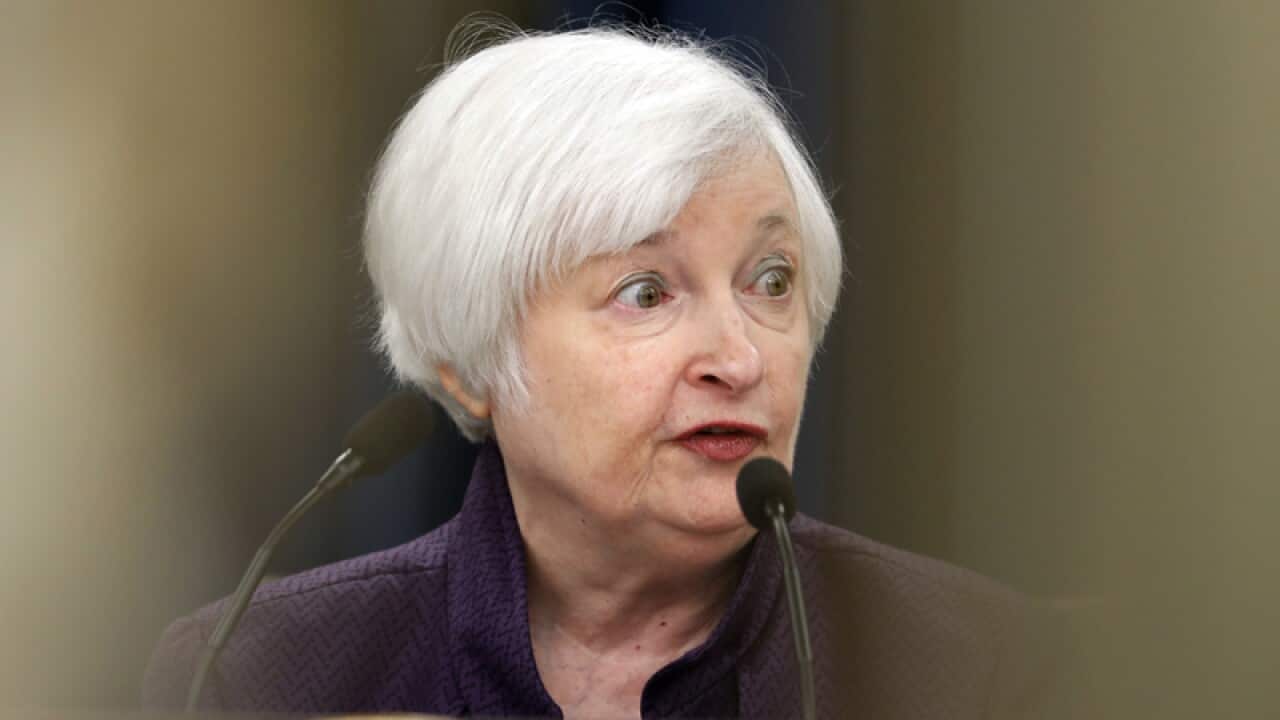
The US Federal Reserve has kept interest rates unchanged but is strongly signalling it could still tighten monetary policy by the end of this year as the labour market improved further.
The Fed said US economic activity had picked up and job gains were "solid" in recent months.
"The case for an increase in the federal funds rate has strengthened," the US central bank said in a statement on Wednesday following a two-day policy meeting.
It added that its rate-setting committee had decided against raising rates "for the time being", until there was more evidence of progress towards its employment and inflation objectives.
The Fed has held its target rate for overnight lending between banks in a range of 0.25 per cent to 0.50 per cent since December, when it raised borrowing costs for the first time in nearly a decade.
News that makes sense
Your trusted source for staying up-to-date with the world around you. Get free daily news updates and analysis, straight to your inbox.
The central bank has appeared increasingly divided over the urgency of raising rates.
On Wednesday, Kansas City Fed President Esther George, Cleveland Fed President Loretta Mester and Boston Fed President Eric Rosengren dissented on the policy statement, saying they favoured raising rates this week.
At the same time, policymakers cut the number of rate increases they expect this year to one from two previously, according to the median projection of forecasts released with the statement.
Three of the 17 policymakers said rates should remain steady for the rest of the year.
The Fed also projected a less aggressive rise in interest rates next year and in 2018, and cut its longer-run interest rate forecast to 2.9 per cent from 3.0 per cent.
But in a sign of growing confidence, the Fed said the near-term risks for the economic outlook "appear roughly balanced". That means policymakers think the economy is about as likely to outperform forecasts as to underperform them.
The Fed in December signalled that four rate increases were likely this year, but that was scaled back in March due to a global growth slowdown, financial market volatility and concerns about tepid US inflation.
The economy expanded sluggishly in the second quarter and added fewer jobs than expected in August. Inflation also showed signs of stirring last month.
The Fed has policy meetings scheduled in early November and mid-December. Economists believe policymakers would avoid a rate hike in November in part because the meeting falls just days before the US presidential election.







