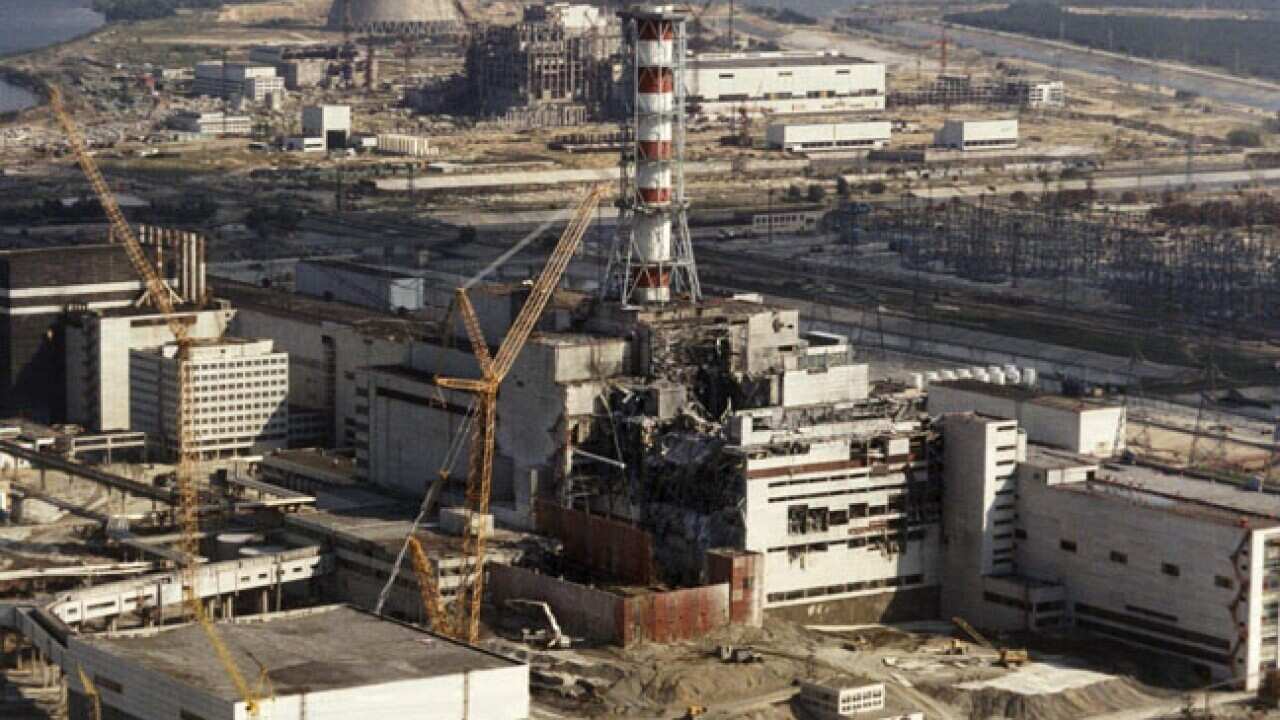
Amid the continuing nuclear crisis at Japan's Fukushima power plant, some nuclear experts say the international community has in fact learnt little from the Chernobyl disaster 25 years after it happened.
Japan's nuclear emergency was ranked as equal to the Chernobyl disaster on an international scale of atomic crises only weeks before Ukraine began commemorating those who died in the calamity.
Doctor Peter Karamoskos, a nuclear radiologist and public representative on the Radiation Health Committee of the Australian Radiation Protection and Nuclear Safety Agency, says the fall-out of the Chernobyl meltdown and the Fukushima crisis are comparable.
But he says the accidents have been managed very differently.
News that makes sense
Your trusted source for staying up-to-date with the world around you. Get free daily news updates and analysis, straight to your inbox.
“They evacuated a lot of people for starters and they didn't try and hide the disaster like what happened in Chernobyl. They also distributed iodine tablets to children in Japan when they didn't do that in Chernobyl,” he says.
He says this may mean fewer people will develop thyroid cancer as a result of the Fukushima disaster.
“The other thing is that despite the earthquake and tsunami and the devastation related to that the Japanese have been able to mount a half credible response to the nuclear catastrophe and involved international agencies relatively early on.”
Richard Broinowski, author of Fact or Fission - the truth about Australia's nuclear ambitions, says lessons have not been learnt from Chernobyl.
“I think there has been … a thorough disinformation cover-up campaign. There has been no epidemiological study really written that is worth a dame about how many people have been irradiated,” he says.
“The pro-nucs [say] only a few people at the [Chernobyl] plant were killed. The fact is that much more [independent] and more thorough surveys have indicated that between nine and 90 000 people have been killed or are going to have short lives because of the radiation they have suffered. Not just in Chernobyl and its environs, but around northern Europe as well.”
Now, Fukushima
Doctor Karamoskos describes the situation at Fukushima as "static", but still "quite serious", and questions the credibility of plant operator Tepco's claim that they will be able to stop radiation leaks within three months, and make the site safe in nine months.
“More credible estimates say it will drag on for the next couple of years. The more credible estimate of the time to decommission the plant has indicated that it may take up to 20 to 30-years for the whole thing to be properly decommissioned,” he says.
He believes it will be years before evacuees regain self-sufficiency, and resume normal, healthy lives.
“You've got 140 000 people evacuated from their homes, which they will probably never go back to, and they are drifting around. These are massively traumatised people and the knock on effects of the trauma will be felt for quite some time,” he says.
The crisis has also thrown the future of nuclear power into doubt, sparking anti-nuclear demonstrations across Japan.
The President of the European Commission Jose Manuel Barroso says the Fukushima nuclear crisis is a powerful reminder of the need to remain vigilant.
He says it is crucial that safety standards at all nuclear plants be reviewed.
“Chernobyl and recently, the accident in Fukushima, are stark reminders that nuclear risks may not stop at our borders - responsibility and solidarity should also not stop at our borders,” he says.
But Doctor Karamoskos is sceptical that the latest accident will bring about significant change.
“The Japanese nuclear regulator reports to the same ministry that is responsible for the promotion of nuclear industry. So there's an inherent conflict of interest there.
“We've got a private nuclear power industry that is driven by profit so therefore there is an enormous incentive for cost cutting and corner cutting. And I think where you have that you have the seeds of poor transparency.”







