In Brief
- The FIFA boss does not anticipate the violence seen in recent days will affect the games.
- A cartel member has warned of further violence while tourists say Mexico is "like a war zone".
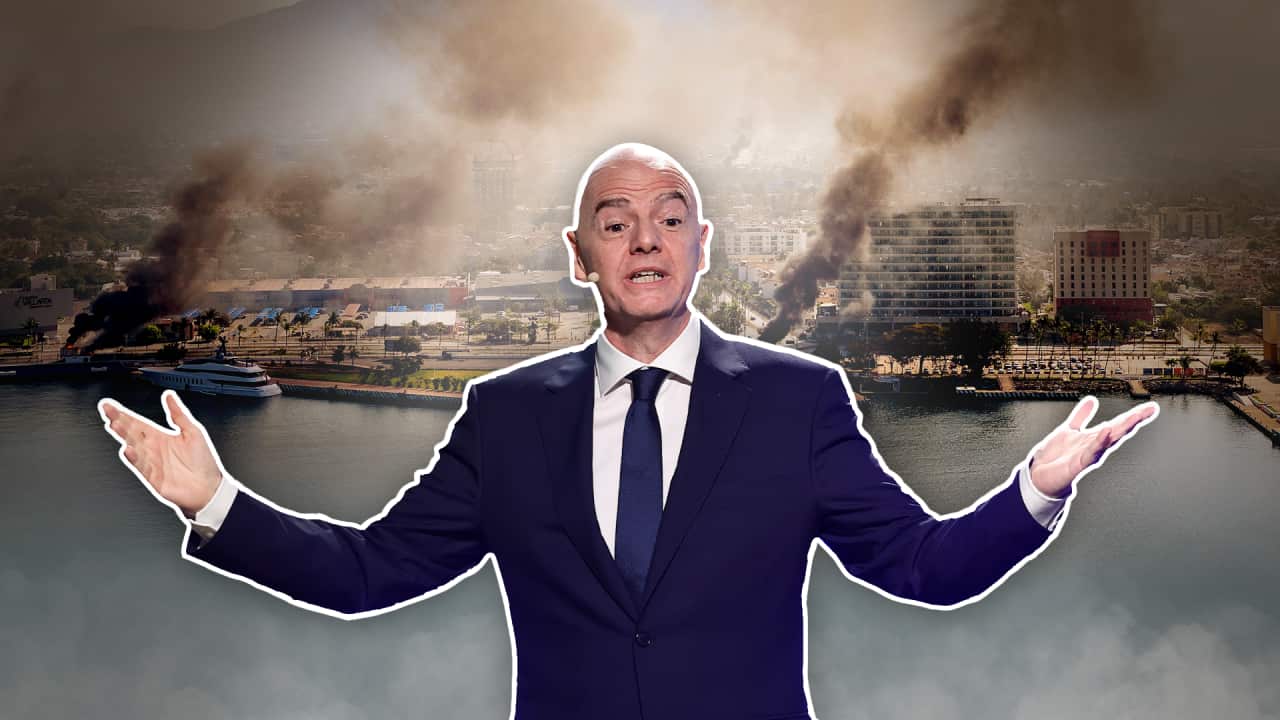
FIFA boss Gianni Infantino has said he has "total confidence" in Mexico's ability to host FIFA World Cup 2026 matches in July despite the violence that has gripped the country in recent days.
Gunmen suspected to be the supporters of the cartel leader Nemesio Oseguera blocked major roads across several states, setting cars and businesses alight in the hours after he was killed in a military operation on Sunday morning.
The raid sparked a wave of "revenge attacks" across the country that is just four months from welcoming millions of fans at the World Cup, jointly hosted by Mexico, the United States, and Canada.
"Of course we are monitoring the situation in Mexico right now, but I want to say from the outset that we have total confidence in Mexico, in President Claudia Sheinbaum, in the authorities, and we are convinced that everything will turn out in the best possible way," Infantino told reporters while on a trip to Colombia this week.
"We have some matches in Mexico in a month for the play-offs; the new Azteca Stadium will be inaugurated. Mexico is a great country, a football country."
News that makes sense
Your trusted source for staying up-to-date with the world around you. Get free daily news updates and analysis, straight to your inbox.
Tourists were urged to remain inside in parts of the country amid the violence on Sunday, while US and Canadian airlines cancelled flights. Videos posted to social media taken from holiday villas showed black smoke rising into the sky, but Infantino has said that "things happen".
"As in every country in the world, things happen, which is why we have states, police and authorities who will ensure order and security. From my side, and from FIFA's side, I have absolute confidence.
"Very reassured, everything's good. It's going to be spectacular."
Gang war
Oseguera was one of the most-wanted men in the US and Mexico and had a US$15 million ($21 million) bounty on his head.
A founding member of the Jalisco New Generation Cartel (CJNG), the 59-year-old grew the group to the largest cartel in Mexico with the use of extreme violence and military-style force.
Known as "El Mencho", he overtook his former allies, the Sinaloa cartel, after the capture of their leader, Joaquin "El Chapo" Guzman.
At least 74 people were killed during the operation to capture him at a ranch near the Jalisco state capital of Guadalajara and in subsequent clashes between security forces and suspected cartel members.
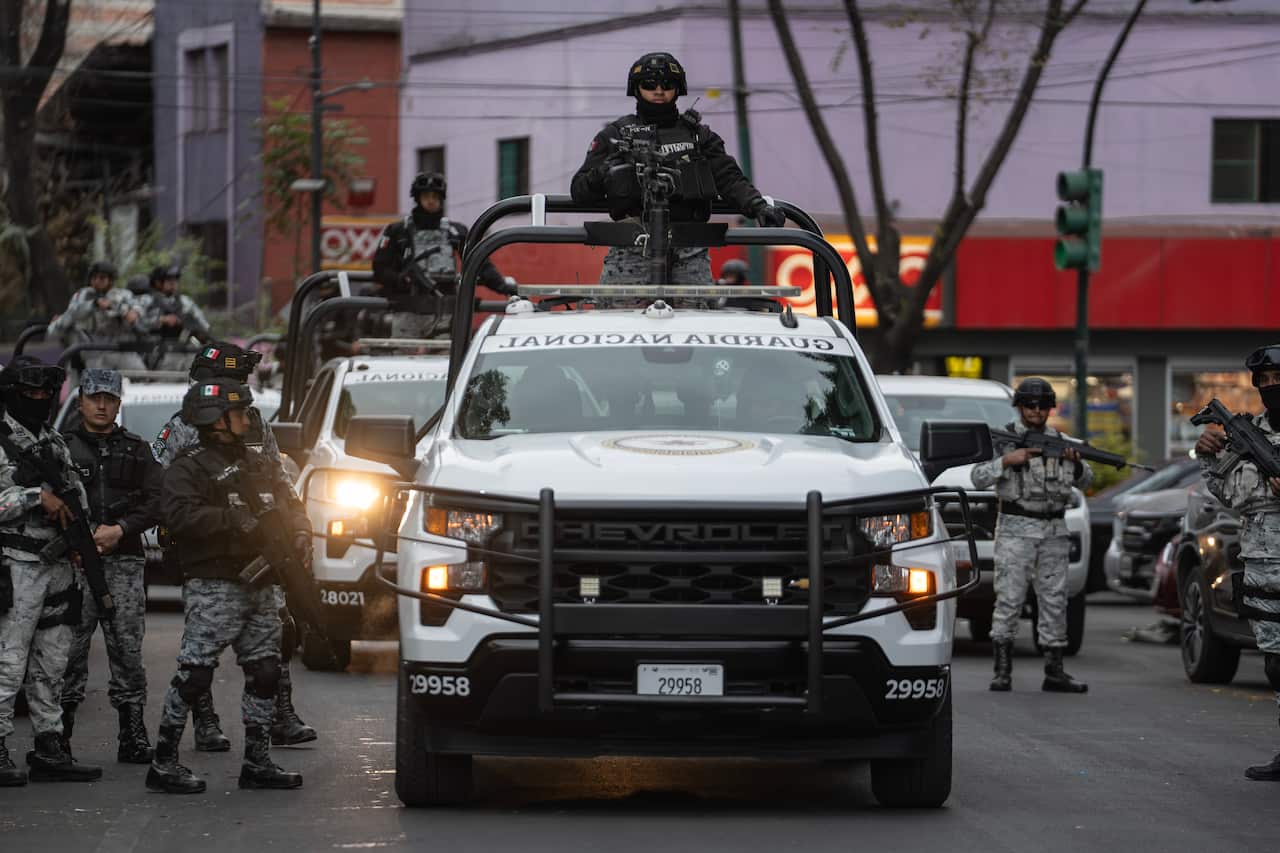
While Donald Trump claimed credit for the killing in his State of the Union address on Wednesday, Mexico insists that no US forces took part in the raid and that they were assisted only with the help of "complementary information" from America.
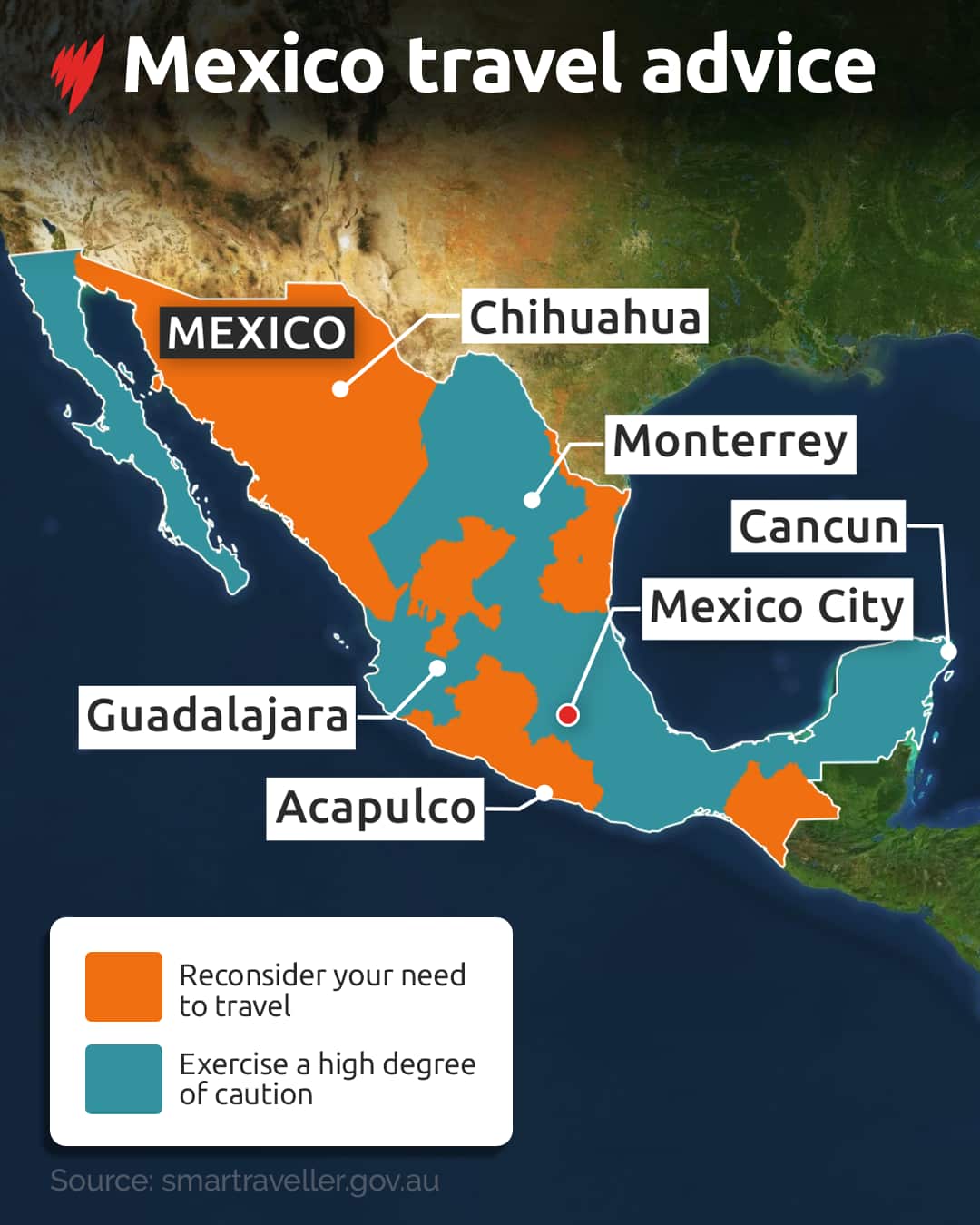
Twenty of Mexico's 32 states were affected by the ensuing violence, which prompted the Australian government's Smartraveller site to issue warnings to tourists in large parts of the country.
"It feels like we're in a war zone," Javier Perez, a 41-year-old engineer, told Agence France-Presse on Tuesday in the car park of a grocery store replete with burnt-out cars in the Jalisco tourist resort of Puerto Vallarta.
Daniel Drolet, a Canadian who has spent years wintering in Puerto Vallarta, said he was concerned that a new era of violence is taking root in the typically peaceful resort zone.
"I have never seen anything like this before," Drolet said.
A member of CJNG warned Reuters that further bloodshed was likely as rivals seek to claim territory in the power vacuum left by Oseguera.
"The attacks were carried out in revenge for the leader's death, at first against the government and out of discontent," the person said, speaking on condition of anonymity.
"But later the internal killings are coming, by the groups moving in to take over."
'No risk' to football fans
Infantino's optimistic comments were the first made by the boss after FIFA initially refused to address the matter on Monday.
However, his outlook was not shared by the Portuguese Football Federation, which cast doubt on whether their team would play a friendly on 29 March in Mexico City and that they were "closely monitoring the delicate situation currently unfolding in Mexico".

It added that the safety of players, coaches, and supporters was a top priority and security considerations would be the deciding factor.
Mexico national team coach Javier Aguirre was more upbeat, declaring: "All is going ahead as planned."
Earlier, Sheinbaum stated that there was "no risk" to World Cup fans and said the situation was "gradually returning to normal".
Guadalajara will host four group-stage matches during the tournament, while Mexico City and the north-eastern city of Monterrey will also host games. The state of Jalisco was the worst-affected region during the unrest, but the other two cities — which are not in Jalisco — were largely spared.
In addition to the four matches, including one of the most anticipated of the first round between Uruguay and Spain, Guadalajara and Monterry will co-host the playoff tournament that determines the last two teams to qualify for the World Cup at the end of March.
Jalisco governor Pablo Lemus ruled out the prospect of Guadalajara being dropped from the tournament over security concerns, saying there was "absolutely no risk" of a change in the line-up.
All eyes will be on the central state of Queretaro on Wednesday, when Mexico meets Iceland for a friendly.
A first-division game was suspended on Sunday in Queretaro over the violence.
For the latest from SBS News, download our app and subscribe to our newsletter.







