Key Points
- FIFA'S use of electronic technology is extending to the World Cup match ball.
- The ball will send information back to officials.
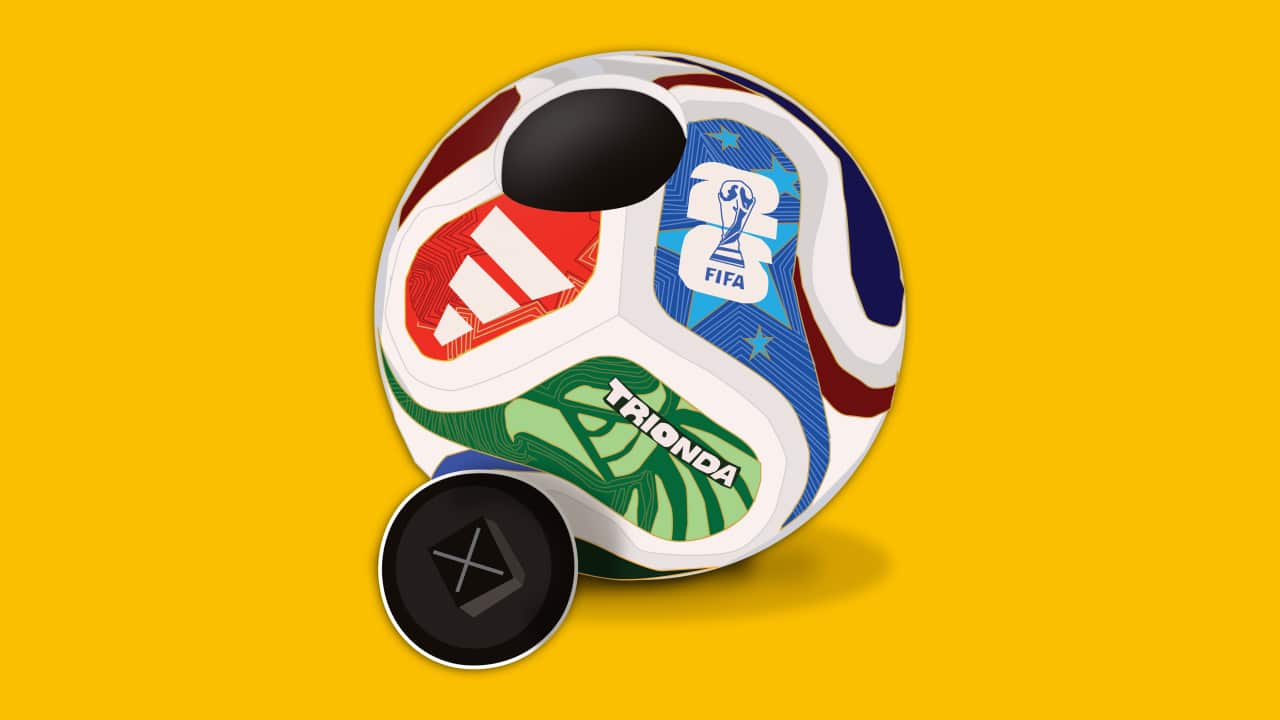
The ball used at the 2026 FIFA World Cup will not only need to be pumped up before kick-off, it will need to be charged.
Adidas’ official match ball, the Trionda, contains a motion sensor designed to track the ball’s movement and help officials determine when it has been touched.
The technology is part of football’s governing body's latest push to use artificial intelligence and tracking technology to make refereeing decisions faster and more accurate.
- All the FIFA World Cup 2026 coverage on our World Cup page
- How to watch the FIFA World Cup 2026 on SBS
- Watch all 104 matches of the FIFA World Cup 2026 at our On Demand hub
How the technology works
News that makes sense
Your trusted source for staying up-to-date with the world around you. Get free daily news updates and analysis, straight to your inbox.
The connected ball will work alongside cameras positioned around stadiums. Together, the systems will feed into FIFA's semi-automated offside technology, to help officials judge whether a player was offside at the moment the ball was played.
But the chargeable ball, which needs to be plugged in for 90 minutes to last six hours, is only one element of the wider technological overhaul, as FIFA also turns to artificial intelligence to track players themselves.
Each footballer at the tournament will be digitally scanned to create an AI-enabled 3D avatar, which FIFA says will provide clearer visualisations of tight decisions and make them easier for fans to understand.

FIFA president Gianni Infantino has said the avatars will "ensure precise player identification and tracking", describing the technology as "a big advancement" for semi-automated offside decisions providing "great images, faster decisions and a clear understanding by everyone."
This is the latest iteration of FIFA's "connected ball technology". Versions of it have been used at tournaments including the 2022 FIFA World Cup in Qatar, the 2023 Women's World Cup in Australia and New Zealand and last year's Club World Cup in the US.
Why some fans are sceptical
But the rollout comes amid frustration for some with football's growing reliance on technology, particularly since the introduction of the video assistant referee (VAR).
A 2026 Football Supporters' Association survey of nearly 8,000 English Premier League fans found more than three-quarters opposed the use of VAR, with more than nine in 10 saying it had removed the spontaneous joy of celebrating goals.
Critics argue technology has not removed controversial game-deciding decisions from football but shifted it into longer reviews and delayed celebrations.
While the new systems can help determine where a player was standing, when the ball was touched or whether it crossed a line, many of football's most contentious decisions still rely on human interpretation.
Under the VAR protocol, referees are still responsible for the original decision, which should only be overturned when there has been a "clear and obvious error".
That means officials will remain central to the process, even as more of the game is tracked, scanned and converted into data.
The 2026 World Cup will test whether supporters see the technology as a step towards fairness, or another layer between them and the spontaneity of the game.
This year's World Cup is co-hosted by the United States, Canada and Mexico with 104 matches between 11 June and 19 July.
A record 48 teams will compete at the tournament, up from 32 sides at recent previous World Cups.
You can watch all 104 matches of the FIFA World Cup 2026™ live, free and exclusive on SBS, SBS VICELAND and SBS On Demand.
FIFA World Cup 2026™ at SBS On Demand: get match ready.
For the latest from SBS News, download our app and subscribe to our newsletter.







