In brief
- The 2026 FIFA World Cup will be co-hosted by the United States, Canada and Mexico and feature a record 48 teams.
- FIFA has introduced new rules targeting time-wasting and expanded the use of VAR during matches.
With less than a month until the FIFA World Cup kicks off, excitement is building for what will be the biggest tournament in the competition's history.
Millions of fans and a record 48 national teams will descend on the United States, Canada and Mexico for the opening match on 11 June.
But fans can expect several major changes that will make this year's tournament unlike any before it.
From the return of co-hosting to a crackdown on time-wasting, SBS News breaks down the key changes to expect at the 2026 FIFA World Cup.
Co-hosting returns
News that makes sense
Your trusted source for staying up-to-date with the world around you. Get free daily news updates and analysis, straight to your inbox.
For the first time in World Cup history, the tournament will be hosted by three nations — Canada, the United States and Mexico.
It marks a return to co-hosted World Cups, with the previous and only example before being the 2002 tournament in Japan and South Korea.
Despite being widely viewed as a success, former FIFA president Sepp Blatter spoke negatively about the costs and logistics involved in the 2002 World Cup and said future co-host bids would be rejected if a single-nation bid was available.
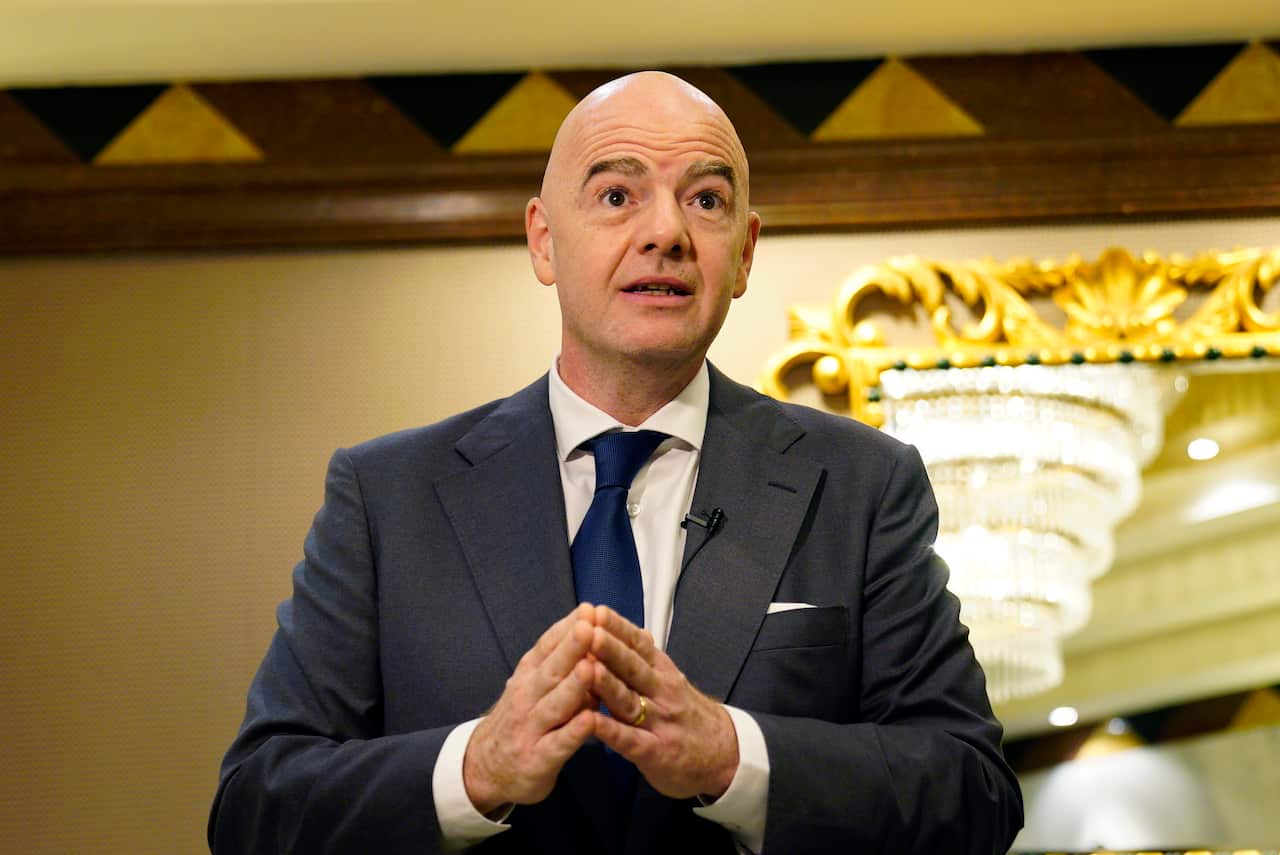
Blatter’s successor, Gianni Infantino, took a different view, publicly backing co-host bids, which he said made tournaments more sustainable.
Dr Steve Georgakis, a sports studies expert from the University of Sydney, agrees, saying there were financial benefits to sharing events between countries.
"You don't want to put too much pressure on countries to host games, because if there's too much of a financial burden, we've now realised that a percentage of the population doesn't really get behind the sporting event," he said.
The three-host format means this year’s World Cup will be the largest in history by area, spanning 16 cities from as far north as Vancouver to as far south as Mexico City — a distance of nearly 4,000km.
However, Georgakis noted relations between the US and its co-hosts had soured since US President Donald Trump returned to office.
"Six months ago, you would have said having it carved up into three countries is a great idea for FIFA. But looking at the geopolitical situation at the moment around the world, it perhaps may be … a little problematic," he said.
Trump has previously referred to Canada as the 51st US state and said Mexico would pay for a border wall. Both countries have also been subject to US tariffs.
Questions also remain about Iran's involvement, with FIFA potentially having to make a last-minute replacement if the country pulls out.
'More inclusive' format
This year will see the biggest expansion in the World Cup’s 96-year history, with 48 countries competing, up from 32 teams.
Infantino was behind the move, previously saying the tournament had to be "more inclusive".
The expansion means countries from smaller confederations that were historically overlooked have a better chance of qualifying.
The Oceania Football Confederation, which Australia was previously part of and which New Zealand competes in, now receives a guaranteed spot rather than needing to earn one through an intercontinental playoff.
The change brings a lot of hope to many nations and four countries will make their World Cup debut: Cape Verde, Curaçao, Jordan, and Uzbekistan.
More teams also mean more games and an additional knockout round.
Since 1998, when the tournament expanded from 24 teams to 32, the group stage has featured eight groups of four, with the top two teams from each group progressing to the round of 16.
Now with 48 teams, there will be 12 groups of four and the top two teams will still go through, as well as the eight best-performing third-place teams, leaving 32 teams in the first knockout round — the round of 32.
For teams that reach the final, it means playing one extra match compared with previous tournaments.
- All the FIFA World Cup 2026 coverage on our World Cup page
- How to watch the FIFA World Cup 2026 on SBS
- Watch all 104 matches of the FIFA World Cup 2026 at our On Demand hub
For viewers, the number of matches will increase from 64 to 104 across the five-week tournament.
But the move has not been without critics, with some describing the expansion as a "money grab" that could lower the standard of play. It's now easier than ever to progress beyond the group stage, with only 12 of 48 teams getting knocked out.
Georgakis said the expansion made commercial sense for FIFA and also increased football’s popularity.
"It cements its dominance in probably areas where it's not the dominant sporting code," he said.
Time-wasting crackdown
The changes are not just happening off the field, with FIFA introducing new rules that aim to at "enhance match tempo and reduce time-wasting".
Officials will now have greater powers to stop players wasting time, whether by delaying restarts or taking too long to leave the pitch.
Under the new rules, referees can start a five-second countdown if they believe a throw-in or goal kick is being deliberately delayed. If the ball is not played before the countdown ends, the opposing team will receive the throw-in or a corner kick.
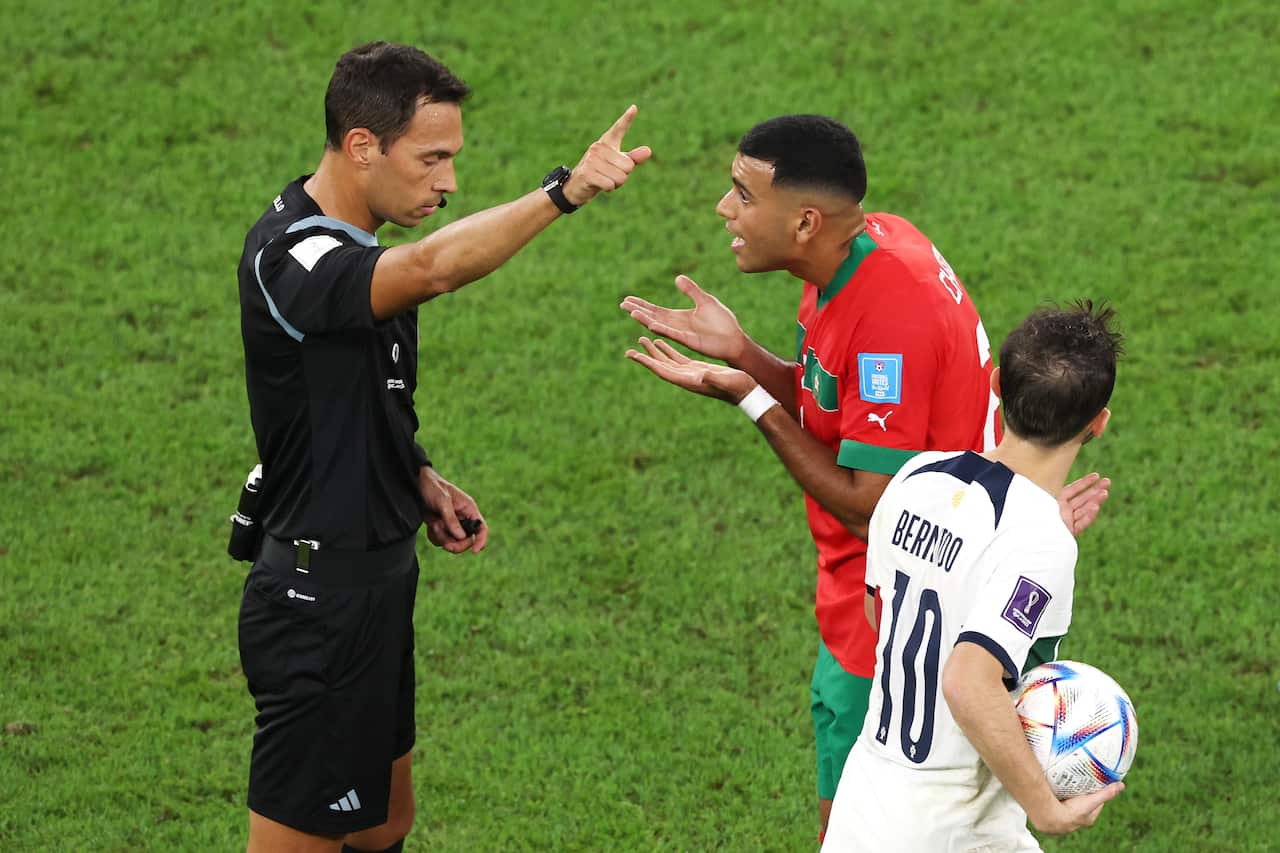
Players leaving the field will have 10 seconds to do so. They may exit from any point around the pitch, but must be completely off the field of play within that time.
If they fail to do so, the substitute replacing them will be forced to wait an additional 60 seconds before entering play, giving the opposition a temporary advantage.
Similarly, if a player goes down injured and requires on-field medical treatment, they will also need to remain off the field for 60 seconds before returning — unless the opponent who caused the injury receives a yellow or red card.
The use of video assistant referees (VAR), which was previously used for fouls and penalty decisions, will also be expanded at this World Cup.
VAR will now allow reviews of corner-kick and goal-kick decisions, cases where the referee may have penalised the wrong team, and incidents where officials believe a second yellow card — resulting in a player being sent off — may have been issued incorrectly.
Yellow cards will also be wiped at the end of the group stage and after the quarter-finals, meaning fewer players will be suspended for knockout matches.
Players can be suspended if they collect two yellow cards in different matches, a rule that previously sidelined star players during elimination games.
FIFA will also introduce three-minute hydration breaks in each half of every game at this year's tournament, regardless of how hot it is.
Under previous rules, drink breaks were only mandatory when the temperature exceeded 32C.
FIFA says the move shows its commitment to player welfare, but cynics have noted it provides more slots for TV advertisers.
The FIFA World Cup 26ᵀᴹ kicks off on 12 June (AEST) — with the tournament opener between Mexico and South Africa, kicking off at 5am (AEST).
You can watch all 104 games of the FIFA World Cup 2026™ live, free and exclusive on SBS, SBS VICELAND and SBS On Demand.
For the latest from SBS News, download our app and subscribe to our newsletter.







