
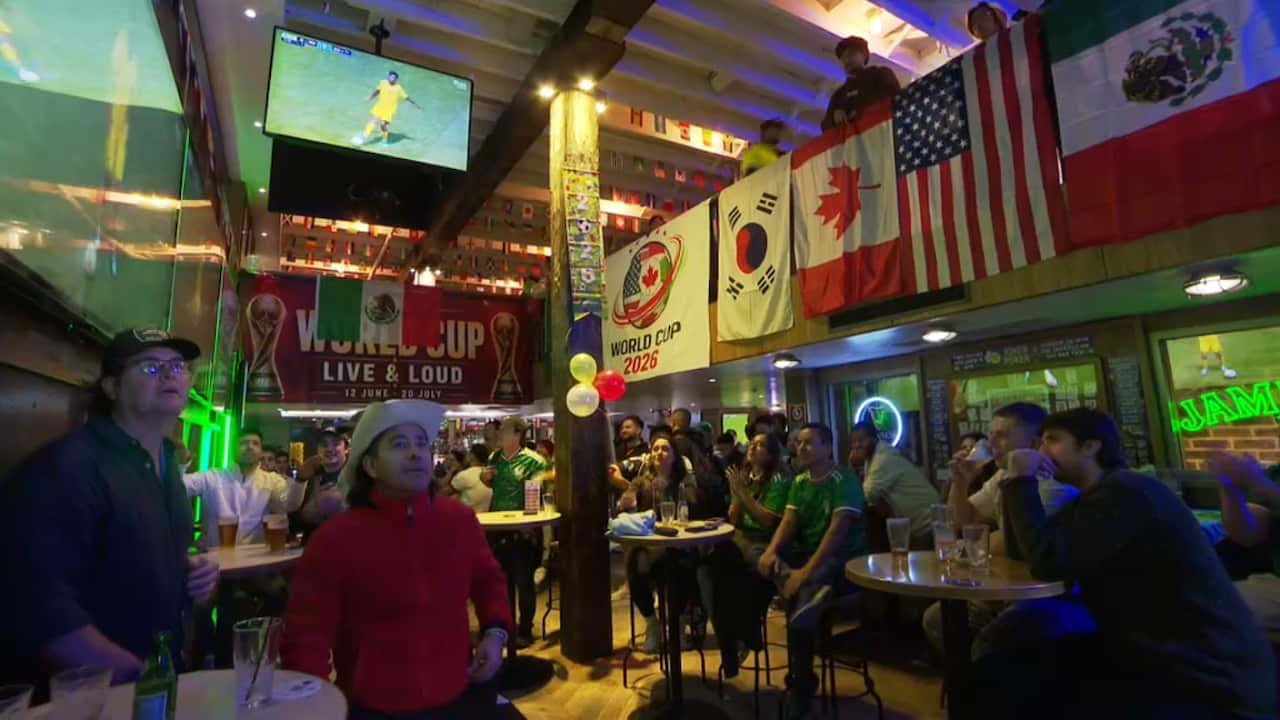
Bleary-eyed football fans packed sports bars and watch parties across Australia before dawn as the FIFA World Cup 2026 kicked off with Mexico's opening clash against South Africa.
The tournament arrives at a time of global uncertainty, as wars rage in Ukraine and the Middle East, and under a cloud of controversy, including the United States' decision to deny an entry visa to a Somali referee and Iranian officials, as well as criticism over ticket prices.
Yet for 90 minutes (plus stoppage time) at Cheers Bar in Sydney's CBD, those concerns faded into the background.
The venue was packed with predominantly Mexican fans for the 5am kickoff, many sporting green Mexico jerseys and with drinks in hand as they watched their side cruise to a 2-0 victory.
Thousands of kilometres away in Mexico City, the tournament opened before more than 80,000 fans at the iconic Estadio Azteca with a ceremony filled with music, fireworks and colour.
News that makes sense
Your trusted source for staying up-to-date with the world around you. Get free daily news updates and analysis, straight to your inbox.
The opening ceremony and match went off without a hitch despite nearby protests.
On the eve of the tournament, FIFA President Gianni Infantino returned to a message of unity, saying the World Cup could provide a welcome distraction to global events.
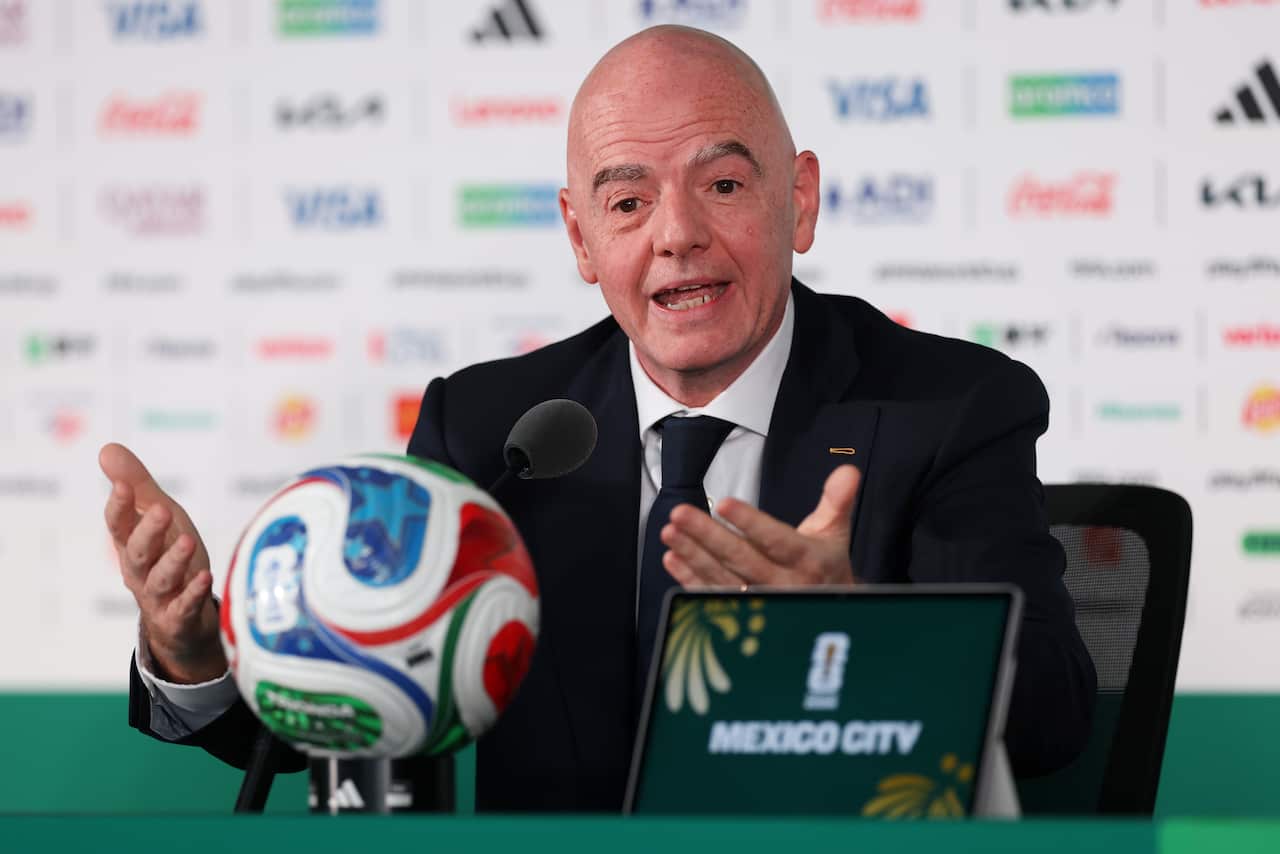
"When Iran plays, the stadium will be full and I hope there will be a positive atmosphere because this is football," he said.
"We want to unite the world."
But as the action gets underway on the pitch, political and logistical controversies continue to circle the tournament.
The war in the Middle East
Most notable is the war in the Middle East, which began when the US and Israel launched strikes against Iran in February.
For a period, it looked like US President Donald Trump might be preparing to launch strikes on Iran at roughly the same time period as the World Cup's opener — he threatened to "bomb the s—t out of them", but backed down on further airstrikes.
There has been doubt for months about whether Iran would play in this year's tournament, which would make it the first country to play in a World Cup while actively at war with a host nation.
Earlier this year, Iran's sports minister Ahmad Donyamali said "under no circumstances" could the team play, while US President Donald Trump suggested it wouldn't be "appropriate that they be there, for their own life and safety".
Iran now appears set to compete after the US granted visas to players, although some administrative and technical staff have been denied entry.
Infantino cited Iran's participation in the tournament as evidence of FIFA's efforts to navigate complex political circumstances and as a demonstration of football's ability to bring people together.
"People were saying Iran couldn't come to the World Cup," he said.
- All the FIFA World Cup 2026 coverage on our World Cup page
- How to watch the FIFA World Cup 2026 on SBS
- Watch all 104 matches of the FIFA World Cup 2026 at our On Demand hub
- When the Socceroos matches start
"I promised them they will come."
Iran will play its first group match against New Zealand at Los Angeles Stadium on Tuesday AEST.
Somali referee denied entry
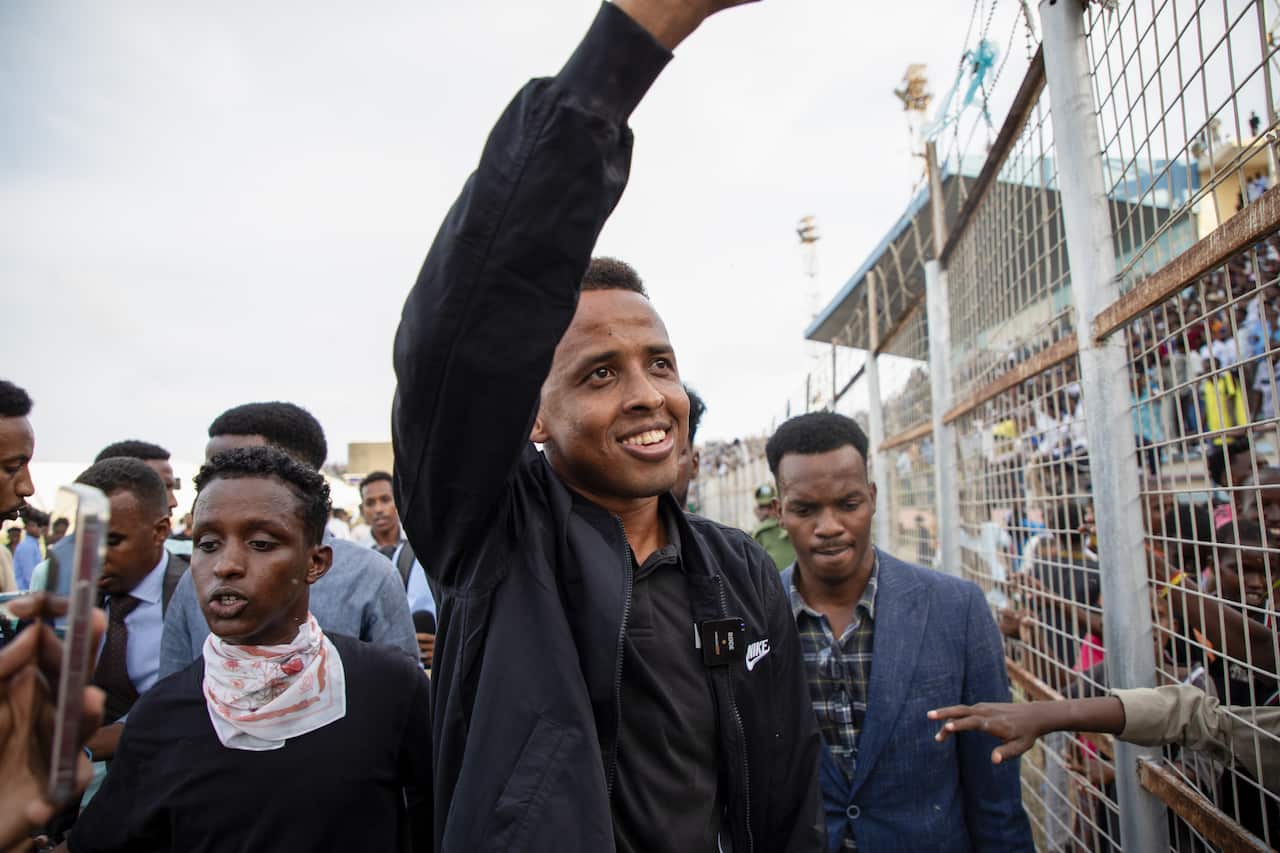
Somali referee Omar Artan was denied entry to the US after arriving at Miami International Airport from Istanbul ahead of the tournament.
He was detained and ultimately sent back on a return flight to Istanbul after the US said he was inadmissible due to vetting concerns.
Arriving in Mogadishu, Artan was greeted with a hero's welcome and has now been assigned to officiate the UEFA Super Cup, one of Europe's highest-profile fixtures, between Aston Villa and Paris Saint-Germain in August.
Asked about the visa controversy on Thursday, Infantino had a blunt message: "Chill, relax."
"It is unfortunate what happened to the referee from Somalia," he said.
"We try, we'll discuss, we'll see. Maybe sometimes it's good as well to chill, relax. We work on everything, we try to resolve everything.
"We are not the kings of the world who can rule over governments and police forces. We are a sports organisation."
Surging prices
Beyond geopolitics and US border security, the tournament has come under fire from fans for soaring costs, with many lamenting having been priced out.
Much of it is driven by higher accommodation and transport costs, and expensive long-haul flights to North America amid a spike in oil prices due to the war in the Middle East. FIFA's controversial dynamic pricing model has also been blamed.
Under the new model, ticket prices fluctuate in real time based on supply and demand, rather than being fixed as in previous tournaments.
Last month, Australian fans told SBS News they paid about $700 for tickets for Australia's group match against the USA.
The cheapest tickets for the sold-out game on FIFA's official resale platform were listed for about $1,300 when checked by SBS News earlier this month, while the most expensive were an eye-watering $32,000.
Amid the criticism, Infantino argues it reflects the US market.
FIFA has sold more than six million tickets for the tournament, which now has 48 teams, and says demand has exceeded expectations by "a factor of 10 or more".
"The starting price at $60 is the lowest entry price of any of the American sports in the playoff phases," Infantino said.
"If you sell it at a lower price point, it would have gone on secondary markets at much higher prices. Every dollar that comes in goes back to the development of football."
With now 102 matches left to play, it remains to be seen whether football will be the focus of the tournament.
— With additional reporting by Reuters new agency.
For the latest from SBS News, download our app and subscribe to our newsletter.







