
This audio is voiced by AI and may occasionally mispronounce words.
Share your feedback and help us improve this feature. Read more about how we use AI at SBS here.
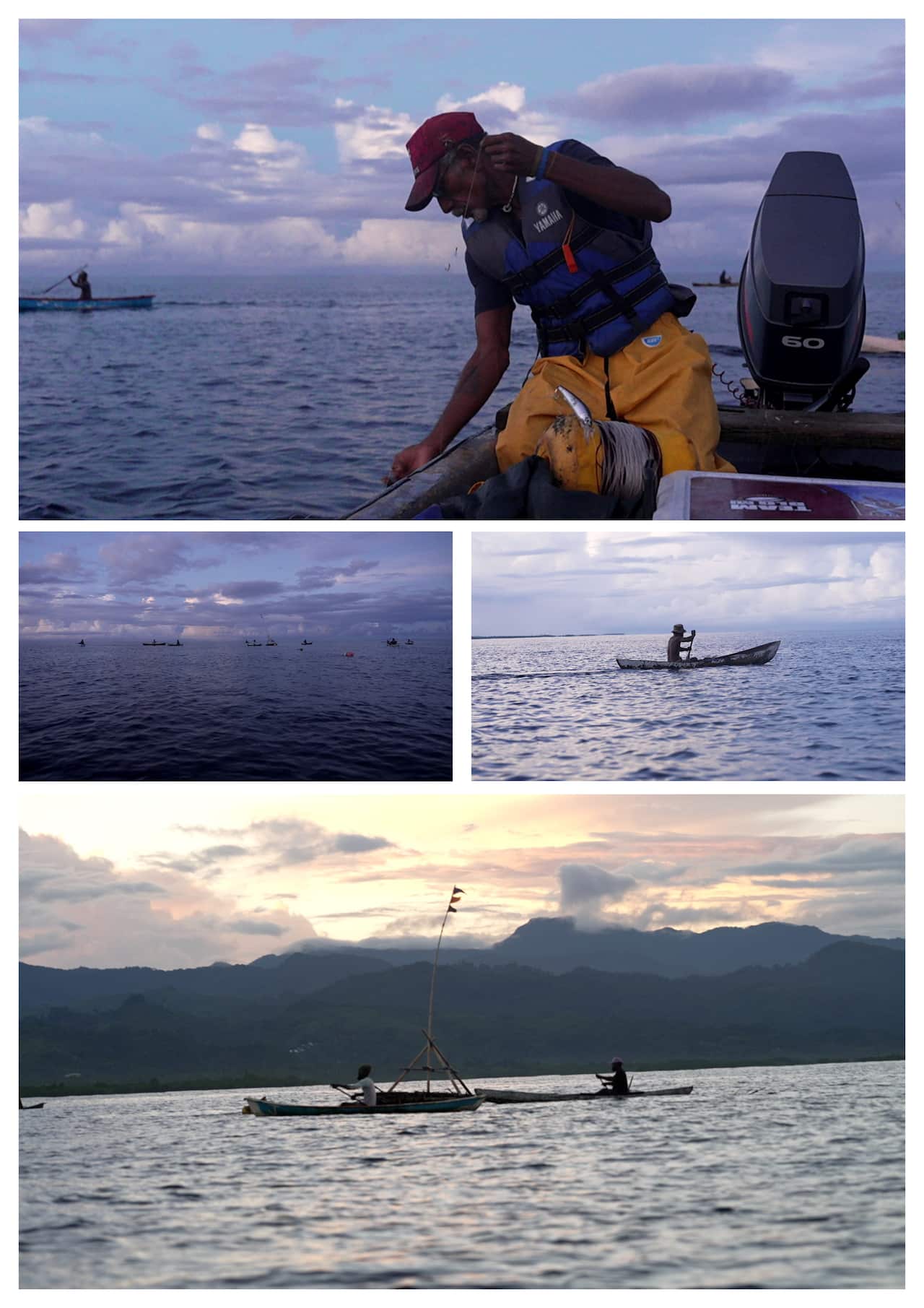
As dawn breaks, a purple sky stretches over Langa Langa Lagoon on the rugged island of Malaita in Solomon Islands.
It's prime fishing time here, and local fishers aboard a cluster of dugout canoes dot the lagoon's calm waters, slowly paddling toward a bamboo platform moored about 2km from the nearest shore.
The structure is called a fish aggregating device (FAD), and it's what local fisherman and community leader Ben Waleilia credits with saving the lagoon's fish stocks.
"The FAD is actually like an artificial reef ... the small fish are attracted to the FAD, and then the bigger fish follow," Waleilia tells SBS News, as he manoeuvres a speedboat towards it.
"The number of fish being caught by fishermen is increasing only because of the fishing aggregating device."
News that makes sense
Your trusted source for staying up-to-date with the world around you. Get free daily news updates and analysis, straight to your inbox.
According to modelling from 2021 published in the journal Nature Sustainability, continued ocean warming is projected to impact the patterns of tuna migration, resulting in a redistribution of stocks, as species such as yellowfin and skipjack shift toward cooler waters.
This is likely to affect species found in the waters of 10 Pacific Island countries, including Solomon Islands, which could result in stocks declining by an average of 20 per cent by 2050 and threaten food security and economies across the region.
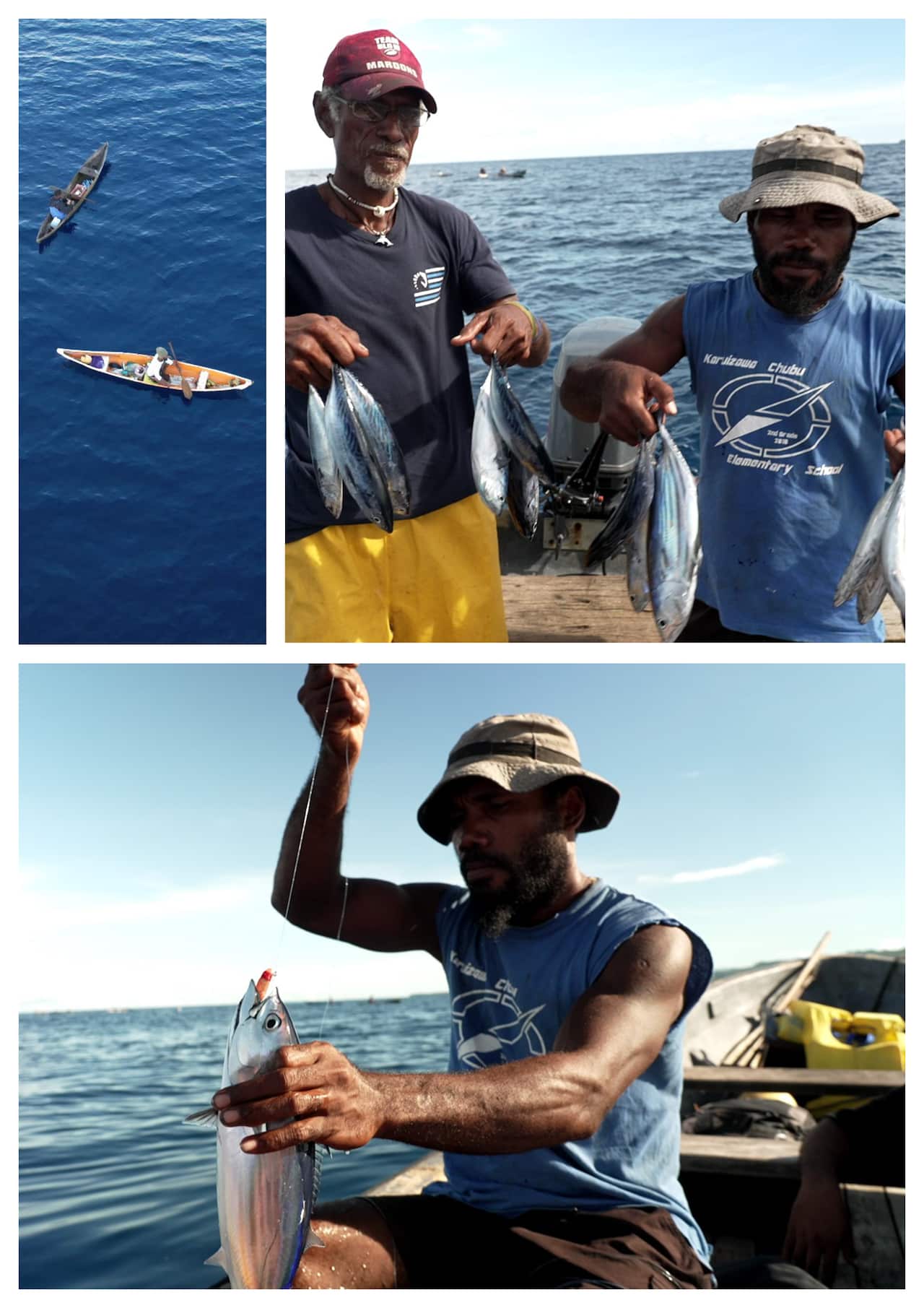
This will also impact the catch of local fishermen like James Waleronoa, who uses a hand reel to hook fish he either eats or sells at the local market.
"Fishing is important to my life because it helps me to survive as someone that's struggling to make ends meet," he tells SBS News, one hand gently pressed against his fishing line.
"When I started fishing on the reef, I saw many fish, but over the past seven years, I have seen a decline in the fish stocks."
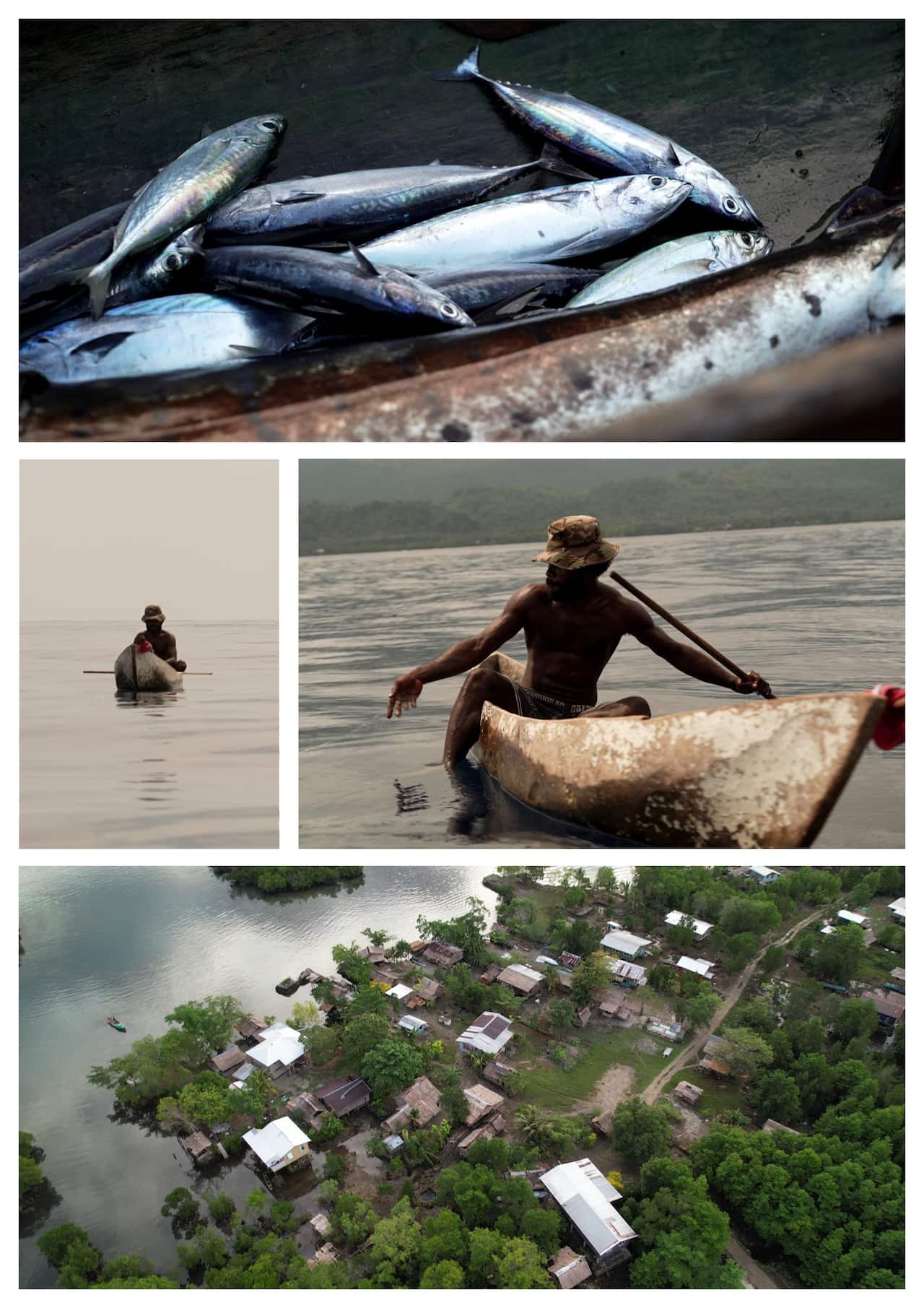
Lawrence Sale, another fisher from a nearby village, stays out on the water for hours most days. Sitting at the stern of his canoe, he shows SBS News his catch for the day: a pile of around 10 fish ranging in size, including skipjack tuna and mackerel, which he says are common on the reef.
"I learned to fish from my dad. Now I am able to fish for myself," he tells SBS News.
"Fishing can help me pay for my daughter's education as well as food for the family. So fishing is like my full-time job.
It's no longer like before where you normally catch bigger sizes of fish. Now you would struggle to catch fish that are suitable for selling at the market.
All morning, the lagoon is murmuring with the voices of fishermen — some shouting words of encouragement or sidling up to another canoe to compare their haul.
While Sale says a wrestle with a large fish in this lagoon is rare, a fortuitous bite on the handline of local fisherman Sani turns into a spectacle.
The young fisher strategically tussles with his strong competitor — eventually managing to reel in a 2m billfish.
It's an impressive feat, especially since he's only been fishing for three years.
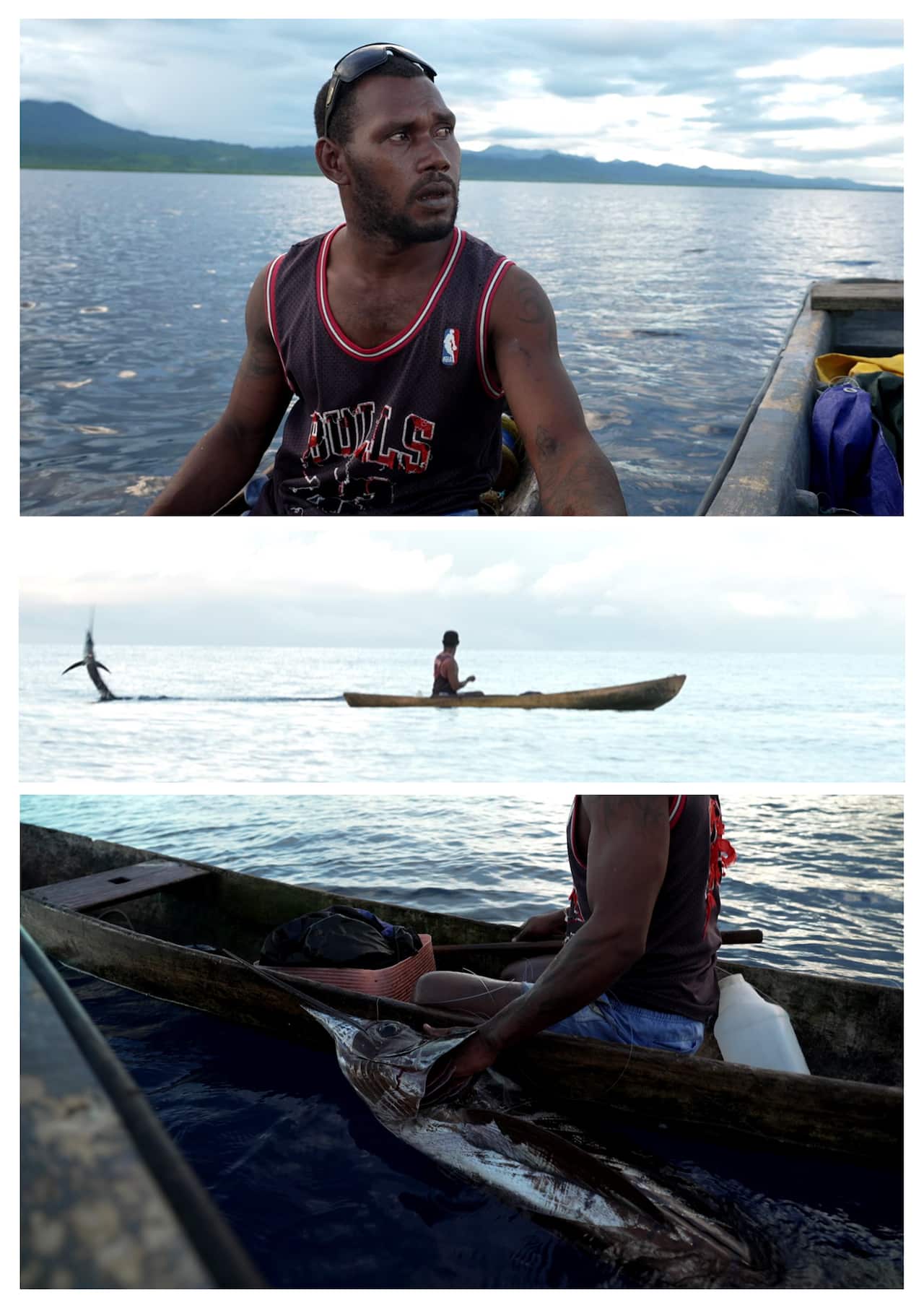
"It depends on your lucky day, but it's difficult to catch this kind of fish," he tells SBS News.
"I think with the FAD ... fish are coming back."
Fishing with dynamite
Located in the Coral Triangle, the waters surrounding Solomon Islands form part of what's been dubbed the 'Amazon of the Seas', but a combination of factors, including rising ocean temperatures, acidification and sea-level rise, as well as human-driven pressures such as overfishing, are impacting local stocks.
"The coming of big fishing companies, I have noticed especially tuna [and] pelagic species [those that live in the open ocean, away from the seafloor] have receded, and this is affecting our communities, our livelihoods," Waleilia says.
"As a kid growing up, if you go to the reef, there was sea cucumber everywhere ... the colour of the reef is very, very different from what it used to be.
"As far as I'm concerned, fishing is not like what it used to be. We are destroying part of our environment."
Meshach Sukulu is a research analyst with the international research organisation WorldFish Center, based in Malaita. He tells SBS News the destruction of Langa Langa's ecosystem is also coming from another unlikely — and dangerous — source.
"Langa Langa is known for dynamite fishing. In a single day, you can hear more than one explosion," Sukulu explains.
"It involves explosive material being put together in a small bottle with a fuse, lit up and then thrown [into the water] when a school of fish is identified. It explodes and kills the fish."
The dynamite is procured from unexploded World War Two ordnance — such as heavy aerial bombs, hand grenades and landmines — thousands of which are still scattered across the Solomon Archipelago, making it one of the most contaminated places in the Pacific.
Waleilia says the provincial fishing officer is from the lagoon, and attributes this to the method slightly subsiding.
"I've seen where they've used dynamite, and it's totally destructive," he says.
"The reefs, the corals, even small fish floating on the surface of the sea."
These underwater explosions are also destroying seashells, required to craft "shell money" — a local form of currency central to customary practices, including bride price ceremonies, resolving disputes or paying fines.
"Langa Langa is only special because it has shell money — not found [anywhere else] in the Solomons," Waleilia says.
"It has value to us."
Community-based resource management
For the villagers of Oibola, where Waleilia is from, diversifying income sources has long been another concern.
To take the pressure off fishing as its primary industry, the community recently implemented a project to begin seaweed farming.
Waleilia explains the product is "harvested, dried here and then sold".
Seaweed is a nutrient-rich staple in the diet of many Solomon Islanders. The Oibola seaweed farm has brought other benefits too.
"The population of squid has increased," Waleilia says.
We have squid fishermen who are getting more, which means [they're] also getting more money.
Sukulu specialises in community resource management, which assists villages to promote self-sustainability. He says the seaweed growing on long lines suspended across Oibola's sheltered bay can further revive biodiversity, at times also attracting turtles.
According to Solomon Islands government's Community Based Coastal and Marine Resource Management Strategy, more than 90 per cent of inshore coastal areas fall under customary marine tenure.
"It's about gathering communities to look after their resources, have a management plan in place and enforce those rules to make sure that the stocks are recovering," Sukulu says.
He says mismanagement of fishing grounds would be a "disaster" for the community.
"For Islanders, fish stocks are very important because it is the main source of protein.
"Most of the household diets, fish is part of it."
Sustainability for the future
Oibola is part of a cluster of seven communities with a management program involving more than 2,500 people.
"They formed a committee to look after the reef, and two mangrove plots," Sukulu explains.
"Mangrove [replanting] is so important to Langa Langa because a lot of these communities use mangroves for firewood … it resulted in deforestation of mangroves."
Waleilia has long championed this project, following in the footsteps of his father, who started planting mangrove trees more than a decade ago after watching the forest disappear and the tide move in. He has been planting ever since.
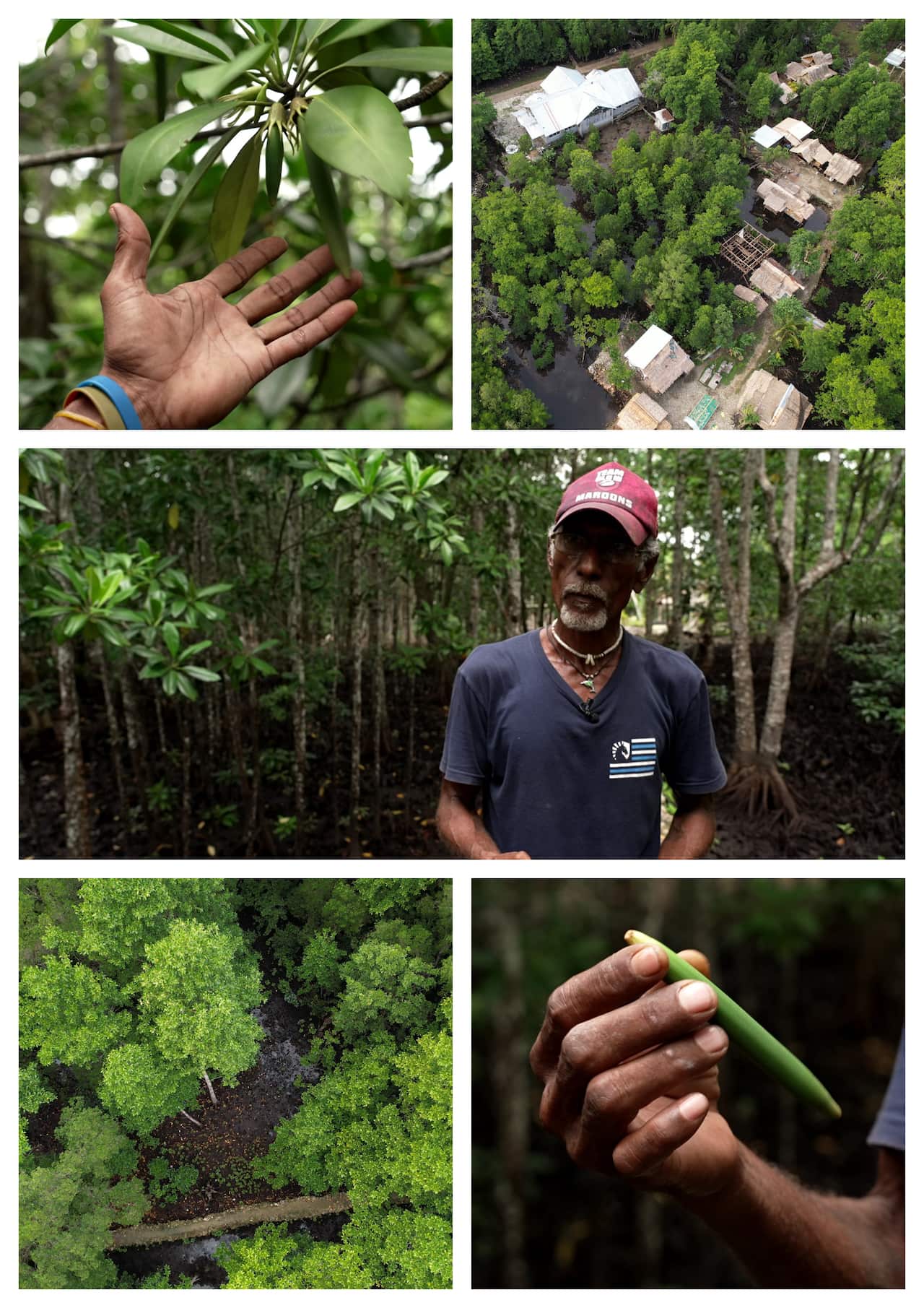
Moving through the mangrove forest, he motions to where the ocean has risen to lap at the doorstep of some of the houses in the village.
"Replanting is in the blood," Waleilia says.
Reviving the mangrove means protection against erosion, and a breeding ground for fish, birds, shells that we eat [and] the mangrove crab.
He has so far planted more than 17,000 shoots, and says he'll keep planting, driven by his deep concern for the future of his community.
Solomon Islands is among the world's most vulnerable nations to a changing climate. The challenges set to be inherited by future generations are never far from Waleilia's mind.
"When we started the project … I had a son, a third son. He was maybe five, six," he recalls.
"He came up to me and asked for food, and I was watching him and thinking ... Here's me feeding you. What about you feeding your children?
"'Will you be left with the same environment that I grew up in?'"
This story was produced with support from the Pulitzer Center.
For the latest from SBS News, download our app and subscribe to our newsletter.







