(Transcript from World News Radio)
European environmentalists are campaigning to prevent the damming of the continent's few remaining wild rivers.
They say more than 500 hydro-electric plants are planned for streams in south east Europe, putting at risk one of Europe's great natural treasures.
Kerry Skyring reports.
(Click on audio tab to listen to this item)
News that makes sense
Your trusted source for staying up-to-date with the world around you. Get free daily news updates and analysis, straight to your inbox.
(Sound of singing)
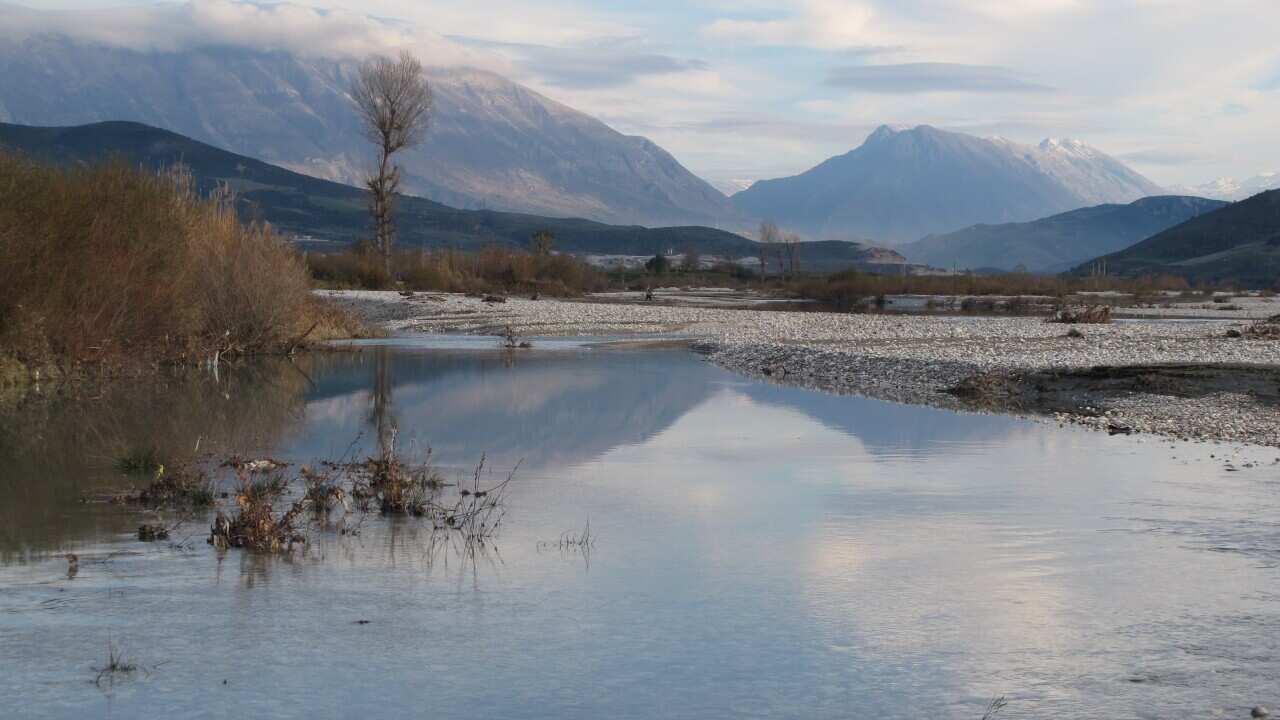
Along Albania's Vjosa river, the local women sing about the stream and what it means to them.
UNESCO calls this music "an intangible cultural heritage" - something to be protected.
"People from time immemorial have been copying what is happening in the river. So the valley itself, the water flow, together with the wind, actually are creating an atmosphere that have been copied by the people."
Spase Shumka is an Albanian scientist and an expert on rivers and their fish life.
He points out that the music inspired by the rivers is listed for protection but the rivers themselves are not.
More than 400 new hydro-power plants are planned for Albania and Professor Shumka worries about their ecological impact.
"What is happening in our country in Albania with some small hydro-powers - no minimum ecological standards have been respected. The fishes are doing really very very bad."
With hundreds of dams planned for the area between the Austrian border and Albania, the river protection non-government group Riverwatch and the German charitable foundation EuroNatur have launched a campaign against this wave of construction.
Ulrich Eichelmann is the fresh water expert for Riverwatch.
"We call it the Blue Heart. It's really the centre of the intact rivers. Nowhere else on the continent have we such an amazing amount and diversity of rivers and creeks but the bad side is that there is no place on the continent where there are so many dams under construction or being planned - so it's like a dam tsunami that is threatening the Blue Heart."
(Sound effects)
The rushing waters of the Sulm River in Austria - a country with thousands of small hydro-power plants on rivers like this.
Together with large dams on the Danube they supply around 60 per cent of the country's electricity.
Erwin Mayer heads the industry lobby group, the Austrian Small Hydro Power Association, and says, if safeguards are in place, the Balkan dams should be built.
"Yes they should go ahead. Fish migration can be guaranteed and this is the crucial thing. And if you have these fish passes then you should use these renewable energy sources that is already there because you can use wind, you can use solar, but you also need a baseload production of renewable energy and this can be provided by hydro power."
The push for renewable energy from hydro is itself driven by an environmental issue - the need to fight climate change by reducing greenhouse gas production.
Erwin Mayer champions the role of small hydro power stations but says larger ones can also bring benefits if well designed.
"Also this could be good but then you have to be even more careful on the consequences for the river because then the flooded area might be bigger."
(Sound effects)
At the town of Parmet on Albania's Vjosa river children dive into clean clear waters.
They tell film-maker Ilir Kaso:
"I like jumping into the river most of all. I cannot imagine Parmet without the Vjosa river."
In Kaso's film "I am The River", locals talk about their connection with the Vjosa and their fears about what a large dam nearby will mean for them.
Spase Shumka says the locals are now starting to join the international campaign against dams.
"They started to protest actually about that because nobody was asking them and sometimes the hydro power has been constructed without permission from the local government, without asking people."
Albania's government is currently reviewing over 100 previously issued hydro-power dam permits.
But across the Balkans there's enormous pressure for international money to flow in, and for hydro-electricity to flow out.
Despite the anti-dam campaign it seems inevitable that many streams will be dammed.







